
At a Glance:
| What’s Normal Most sensitivity after a filling is temporary. Mild zings from cold, sweet, or pressure are common as the nerve settles over a few days to a few weeks. What Helps Use desensitizing toothpaste, brush gently, avoid temperature extremes, and keep up consistent dental hygiene habits to calm irritated nerves faster. When to Call If pain lasts over 2–4 weeks, gets sharper instead of better, or comes with swelling or biting discomfort, it’s time to book an evaluation for proper relief. |
It’s not unusual to notice some tooth sensitivity after getting a filling. In fact, many patients experience mild discomfort when eating, drinking, or even breathing in cool air following the procedure.
While this can feel concerning, the good news is that in most cases, sensitivity is a normal part of the healing process and typically fades with time. Understanding why sensitivity happens and how long it should last can help ease worries and give you a clearer idea of what to expect.
Do you want to know the most common causes of post-filling sensitivity, how long it usually lingers, simple steps you can take at home for relief, and when it’s time to contact your dentist? Our team at Yaletown Dental Boutique is here to help.
Why do teeth become sensitive after fillings?
It’s common to experience short-term sensitivity after a filling because the tooth has just been treated, the nerve is adjusting, and your bite may still be settling. Most symptoms improve steadily within days to weeks.
➤ Dentist insight: Most post-filling sensitivity follows a predictable pattern and settles within two to four weeks.
| Causes of Sensitivity After Fillings | |||
| Cause | Sensation | Typical Course | What to Do |
| Irritated Nerve | Sharp Cold Zings | Fades over Days–Weeks | Use Desensitizing Paste; Avoid Cold |
| Reversible Pulpitis | Lingering Heat/Cold Ache | Improves as Pulp Calms | Monitor; Keep Brushing Gently |
| Bite High Spot | Pain on Biting | Persists until Corrected | Visit Dentist for Quick Adjustment |
| Mixed Materials | Mild Electric Feel | Resolves as Tooth Adapts | Usually no Treatment Needed |
| Referred Pain | Nearby Teeth Feel Sore | Short-Lived; Follows Main Tooth | Observe; Maintain Routine Hygiene |
1. Irritated Nerves
If a cavity is deep, the filling may get close to the nerve inside the tooth. Normally, the enamel and outer layers protect the nerve, but once these are removed to treat decay, the nerve endings can become irritated.
This irritation can cause sharp, uncomfortable sensations, especially with hot, cold, or sweet foods. The good news is that in many cases, the nerves gradually settle down as the tooth heals.
2. Pulpitis (Inflammation of the Pulp)
The pulp is the soft tissue at the center of your tooth. Sometimes, the irritation from drilling or a very deep cavity can inflame this area.
- Reversible pulpitis means the pulp is irritated but with medication may heal on its own, so the sensitivity should improve with time.
- Irreversible pulpitis means the pulp cannot recover, and in this case, root canal treatment is needed.
Signs of irreversible pulpitis can include lingering pain, gum swelling, or even a small pocket of pus near the tooth.
3. Change in Bite or Incorrect Alignment
If the new filling is slightly taller than your other teeth, it can create extra pressure when you bite down. This not only makes chewing painful but can even risk cracking the filling.
Sometimes bite sensitivity improves on its own, but if it continues, your dentist can adjust the filling to restore balance.
4. Multiple Tooth Surfaces
Having different materials in your mouth, like a gold crown on one tooth and a silver filling on the opposite tooth, can create a strange sensation when the teeth touch. This doesn’t necessarily mean there’s a problem, but it can cause temporary discomfort.
5. Referred Pain
Sometimes the tooth that received the filling isn’t the only one that feels sensitive. Pain signals can “radiate” to nearby teeth, making it seem like multiple teeth are sore. This phenomenon is known as referred pain and usually resolves on its own.

Types of Sensitivity You May Experience
Not all tooth sensitivity feels the same. After a filling, patients can experience different types of discomfort depending on the depth of the cavity, the filling material used, and how the tooth responds during healing. Common types include:
Cold Sensitivity
A quick, sharp reaction when drinking cold beverages, eating ice cream, or even breathing in cool air. This is the most common form of post-filling sensitivity and often improves within days.
What it suggests:
- Typical nerve irritation
- Usually temporary and part of normal healing
Hot Sensitivity
A burning or aching sensation triggered by hot foods and drinks. If this type of pain lingers after the heat source is gone, it may signal pulp inflammation that requires attention.
What it suggests:
- Possible pulpitis
- Should be monitored if lingering
Biting Pressure Sensitivity
Pain when chewing, biting down, or clenching your teeth. This may happen if the filling is slightly too high and can usually be corrected with a simple adjustment by your dentist.
What it suggests:
- High bite or bite imbalance
- Needs quick evaluation if persistent
Lingering vs. Sharp Pain
Sharp, brief pain often points to temporary nerve irritation.
Lingering pain that continues after the trigger is removed may indicate deeper pulp issues and should be evaluated.
What it suggests:
- Sharp = common, short-term irritation
- Lingering = possible pulp damage requiring assessment
How long should tooth sensitivity last after a filling?
Sensitivity is common after procedures like tooth-coloured fillings, but it usually fades within two to four weeks as your tooth heals and the nerve calms.1 During this period, it’s normal to notice gradual improvement in how your tooth responds to hot, cold, or pressure.
If the discomfort doesn’t seem to be getting better within that time frame, or if it lasts longer than four weeks, it may be a sign of an underlying issue such as bite misalignment, or pulp inflammation.
In that case, you should contact your dentist for an evaluation to ensure proper healing and lasting comfort.
| Table: Sensitivity Timeline2 | |
| Phase | Typical Sensation |
| Day 0–2: Early Zings | Mild Sensitivity to Temperature and Pressure |
| 2-7 Days: Steady Improvement | Less Frequent Zings; Easier Chewing. |
| Weeks 2–4: Mostly Resolved | Mild Triggers Only; Nerve Settling. |
| Beyond 4 Weeks: Time to Assess | Ongoing Pain or Heat Sensitivity Needs a Check-Up. |
When to See a Dentist for Post-Filling Pain
Even though sensitivity after a filling is usually normal, certain symptoms indicate something deeper is going on. Use this quick decision guide to know when to monitor and when to call.
Decision Guide
Mild discomfort is common after a filling, but certain symptoms signal it’s time for professional evaluation. This guide helps you know the difference.
➤ Does the sensitivity improve each week?
- Yes: Keep monitoring; this is typical healing.
- No: Move to the next question.
➤ Is the pain sharp, lingering, or waking you at night?
- Yes: A dentist should evaluate for pulp inflammation.
- No: Continue gentle care and reassess in a few days.
➤ Does biting down feel “high,” uneven, or painful?
- Yes: Likely a bite imbalance; needs a quick adjustment.
- No: Proceed to the red-flag checklist.
Red-Flag Symptoms (Call Immediately)
Some symptoms fall outside the normal healing process; if you notice any of these, contact our team for prompt care. We offer expert support for dental fillings in Yaletown, including adjustments and follow-up treatment when needed.
- Lingering pain that continues after the trigger is gone
- Swelling, throbbing, or heat sensitivity
- Biting pain that does not improve
- Bad taste or signs of infection near the tooth
- Pain lasting beyond 4 weeks
Immediate Care When Needed
If any red-flag symptoms appear, get prompt help.
Our Emergency Dental Services team can evaluate and relieve pain quickly.
Book emergency care in yaletown now!
How to Manage at home
If you’re dealing with sensitivity after a filling, there are several simple steps you can take at home to find relief and protect your teeth:
Use Over-The-Counter Pain Relief
Nonsteroidal anti-inflammatory drugs (NSAIDs), such as ibuprofen (Advil, Motrin) or acetaminophen, can help ease discomfort and reduce inflammation, as long as you are medically cleared to take these types of medications.
Watch What You Eat and Drink
What you consume can make a big difference when managing sensitivity. Certain foods and drinks can trigger discomfort or slow down healing, so being mindful of your diet can help reduce irritation.
- Avoid very hot or cold foods and beverages until sensitivity improves.
- Limit acidic items like citrus fruits, wine, and yogurt, which can wear down enamel and worsen sensitivity.
- Try chewing on the opposite side of your mouth to give the treated tooth a break.
Adjust Your Oral Care Routine
Brushing and flossing the right way is essential when your teeth are sensitive. Gentle habits protect enamel and gums, while the right products can soothe discomfort.
- Brush gently using small, circular strokes to avoid irritating your teeth and gums.
- Choose a soft-bristled toothbrush and a toothpaste made for sensitive teeth.
- Skip whitening or bleaching toothpastes, as these can make sensitivity worse.
- Avoid brushing immediately after eating, since enamel is more vulnerable right after meals.
Adjust your oral care routine. Gentle, consistent dental hygiene habits protect enamel and help sensitivity fade more quickly.
Use Desensitizing Toothpaste
These toothpastes are specially formulated to block nerve signals from the tooth surface, reducing sensitivity over time. They often contain active ingredients like potassium nitrate or stannous fluoride, which help calm the nerve endings inside exposed dentin.
For best results, use the toothpaste twice daily and avoid rinsing immediately after brushing to allow the formula to work longer. Relief is usually noticeable within one to two weeks of consistent use.
Check Your Bite
One of the most common causes of lingering sensitivity is a filling that doesn’t quite match your natural bite.
If you feel discomfort when biting down, contact your dentist. They can adjust the filling so it aligns properly with your other teeth.
Know When to Seek Further Care
If sensitivity does not improve within a few weeks, or if pulpitis (inflammation of the tooth pulp) develops and doesn’t resolve on its own, you may need further treatment such as a root canal.
It’s important to see your dentist so they can determine the exact cause and provide lasting relief.
At-Home Relief Checklist
A few simple habits can calm sensitivity and support smoother healing in the days after a filling.
✔ Use desensitizing toothpaste (daily for steady improvement)
✔ Switch to a soft-bristle brush
✔ Brush gently using small circular motions
✔ Rinse with warm saltwater if gums feel irritated
✔ Chew on the opposite side for a few days
✔ Stay consistent with hygiene to keep the area clean
| Smart Habits for Faster Comfort | |
✅ Do | ❌ Don’t |
|
|
Our Approach at Yaletown Dental Boutique
At Yaletown Dental Boutique, we understand that even routine procedures like fillings can leave patients feeling anxious, especially if sensitivity or discomfort lingers afterward. That’s why our approach focuses on comfort, precision, and personalized care:
- Digital X-Rays for Clarity: High-resolution imaging helps us confirm healing, rule out deep decay, and assess nerve health.
- Occlusal Analysis & Adjustment: Even slight bite imbalances can trigger sharp pain. Our team corrects these micro-high spots with precision.
- Protective Liners & Desensitizers: When needed, we place specialized medicated liners beneath the filling to calm irritated nerves.
- Material Guidance: For patients with recurring sensitivity, we help choose the most compatible filling material based on tooth location and history.
- Gentle Technique: Our minimally invasive methods aim to preserve tooth structure and reduce postoperative irritation.
➤ Dentist insight: Most sensitivity settles within days—but the right diagnosis and the right material make all the difference.
For patients who continue to feel discomfort after treatment or have cosmetic concerns, we also offer tailored options such as composite fillings in Yaletown, ensuring both comfort and aesthetics are fully addressed.
How a Dentist Can Help If Pain Persists
If sensitivity doesn’t improve after a few weeks, your dentist can step in to identify the cause and provide lasting relief. In some cases, the issue may be as simple as a filling that sits slightly higher than your natural bite, creating pressure and discomfort when chewing.
Your dentist can easily smooth or reshape the filling so it aligns comfortably with your other teeth. Sensitivity can also sometimes be linked to the type of material used.
If that’s the case, your dentist may recommend replacing the filling with a different material that’s better tolerated. In more serious situations, such as when deep decay or pulp damage is present, further treatment like a root canal may be required.
This procedure removes the affected tissue and helps preserve the natural tooth, ultimately resolving the pain.
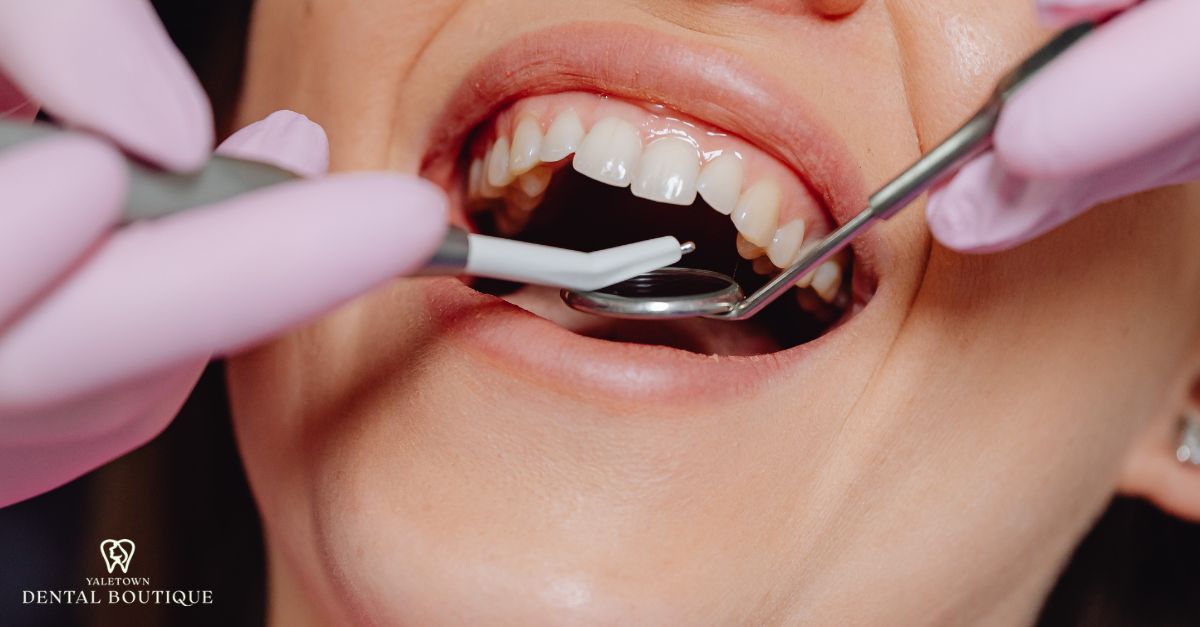
What Your Visit Typically Includes
Before we fix the sensitivity, we start by pinpointing its exact cause through a structured in-office assessment.
- Exam & Symptom Review: We begin by assessing the tooth, gums, and filling margins for visible clues, such as cracks, inflammation, or high spots.
- Bite Test (Shimstock or Articulating Paper): A thin bite film helps detect even tiny height imbalances in the filling that can cause sharp pressure pain.
- Vitality Test & Digital X-Ray: We check nerve response and take a digital X-ray to evaluate the pulp, rule out deeper decay, and identify early signs of pulpitis or infection.
- Treatment Fix: Adjust • Replace • Add Liner: Depending on the findings, we may:
- Adjust the filling height for proper bite alignment
- Replace the filling if the material isn’t tolerated or if micro-leakage is detected
- Add a protective liner to calm nerve sensitivity
- Follow-Up Review: A short follow-up is booked to confirm that symptoms are improving and the tooth is healing normally.
Preventing Sensitivity Next Time
A few proactive steps, both chairside and at home, can greatly reduce the chance of post-filling sensitivity.
- Early Detection Matters: Catching decay when it’s shallow helps avoid deep drilling near the nerve, which is the leading trigger for sensitivity.
- Choose the Right Material: Your dentist may recommend composite, glass ionomer, or other biocompatible materials, depending on cavity depth and tooth location, each chosen to minimize nerve irritation.
- Gentle, Conservative Technique: Minimally invasive preparation saves more natural enamel and dentin, reducing trauma to the tooth and lowering the risk of sensitivity afterward.
- Check Your Bite Before Leaving: Even a slightly high filling can create pressure sensitivity. A quick bite test at the end of your appointment ensures everything aligns comfortably.
- Strengthen Your Daily Routine: Consistent brushing, flossing, and regular cleanings help prevent deep cavities, which are most likely to cause nerve irritation in the future.
Conclusion
Experiencing some sensitivity after a dental filling is common, and in most cases, it’s only temporary. Your tooth and nerves often need time to adjust, and with the right care, the discomfort usually fades within a few days to weeks.
Still, it’s important to pay attention to your symptoms. If pain becomes sharp, lasts longer than expected, or is accompanied by swelling or other signs of infection, it’s a signal that you should see your dentist.
At Yaletown Dental Boutique, our goal is to make sure your smile feels as healthy and comfortable as it looks. If tooth sensitivity is interfering with your comfort, Yaletown Dental Boutique in Vancouver is here to help.
Book a quick comfort check in Yaletown and get personalized guidance to feel better sooner.
Why do my teeth hurt after a filling?
Teeth may hurt due to irritated nerves, bite misalignment, or pulp inflammation from the procedure. Most discomfort is temporary.
How long should teeth be sensitive after a filling?
Mild sensitivity usually lasts a few days to a couple of weeks (within two to four weeks), depending on the size and depth of the filling.
Is it normal to have sharp pain after a filling?
Some sharp pain is normal at first, but if it worsens or doesn’t improve, it may signal an issue that needs dental care.
Why does my filling hurt when I bite down?
The filling may be slightly too high, causing extra pressure. A dentist can adjust it for proper bite alignment.
Can sensitivity mean I need a root canal?
Only if pain lingers, throbs, or comes with swelling. These signs suggest deeper pulp inflammation.
Do white (composite) fillings cause more sensitivity?
Sometimes temporarily, because composites bond chemically to the tooth. Sensitivity usually improves as the nerve settles.
Should I avoid cold or hot foods?
Yes, temporarily. Extreme temperatures can trigger the nerve while it heals.