Missing teeth can affect how you eat, speak, and feel about your smile. Over time, even a single gap can change your bite alignment and cause bone loss in the jaw. Fortunately, modern dentistry offers natural-looking, durable ways to restore function and confidence.
From single-tooth implants to bridges and custom dentures, there are several effective ways to replace missing teeth, each with unique benefits depending on your oral health and long-term goals. This guide explores today’s most reliable options, how they compare, and what to consider when choosing the right solution for your smile.
Why Replacing Missing Teeth Matters
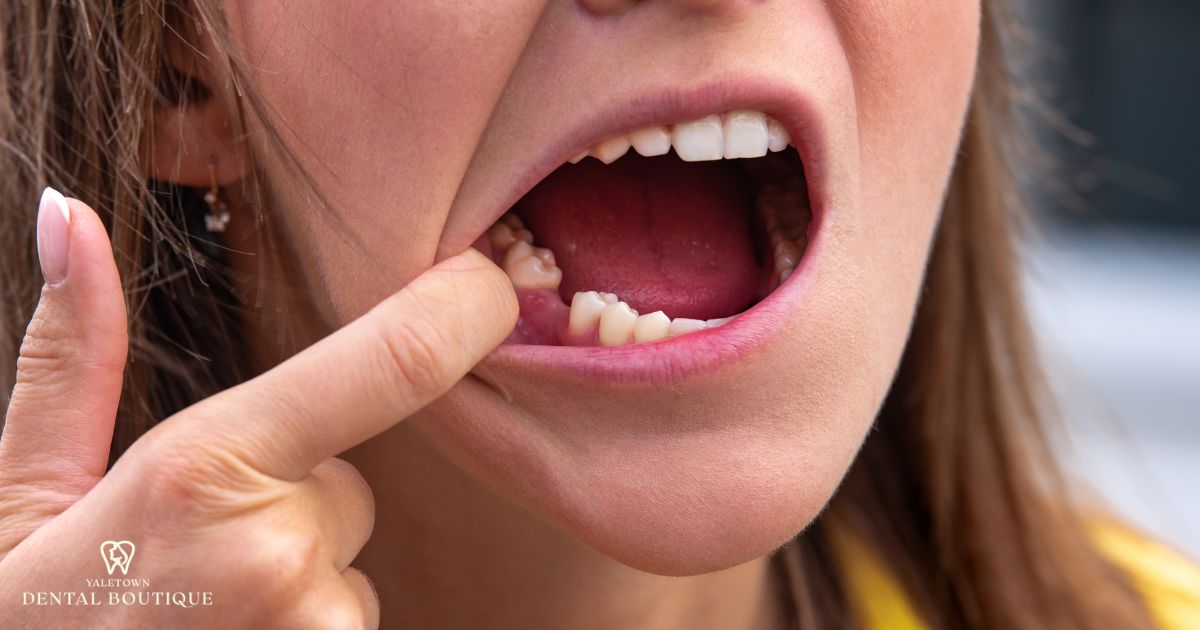
Replacing a missing tooth isn’t just about improving appearance; it’s essential for maintaining long-term oral health and facial structure. When a tooth is lost, the surrounding bone begins to shrink in a process called bone resorption. Over time, this can affect neighbouring teeth, your bite, and even the shape of your face.
The Hidden Effects of Tooth Loss
Here’s what can happen when a missing tooth isn’t replaced promptly:
- Bone loss and facial changes: Without stimulation from a tooth root, the jawbone gradually deteriorates, leading to a sunken or aged appearance.
- Shifting teeth: Adjacent teeth can drift into the empty space, creating bite misalignment and increasing the risk of future dental problems.
- Chewing and speech difficulties: Missing teeth can make eating certain foods uncomfortable and alter speech.
- Gum and oral health issues: Gaps can trap food and bacteria, leading to gum irritation or infection.
- Reduced confidence: Many people feel self-conscious when smiling or talking, affecting their social and professional interactions.
Replacing missing teeth as soon as possible helps prevent these issues, supports healthy bone density, and restores full function from chewing comfortably to speaking clearly.
Overview of Modern Tooth Replacement Options
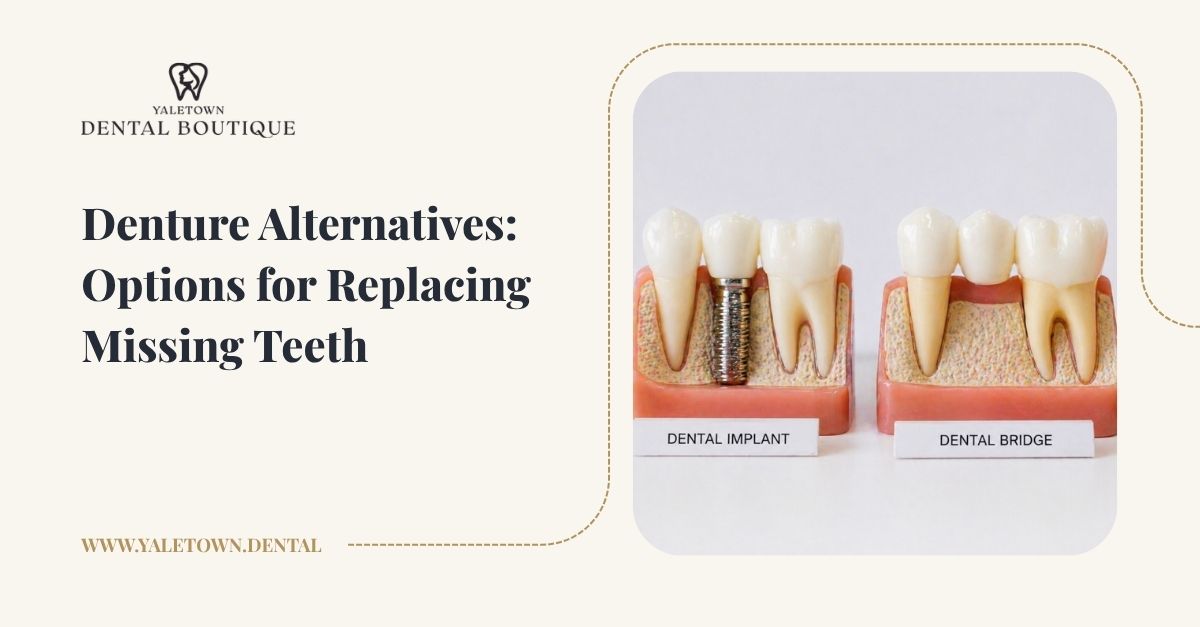
Modern dentistry offers several effective ways to restore missing teeth, each designed to bring back natural function, comfort, and aesthetics. When choosing between a dental implant or bridge, the right option depends on factors such as how many teeth are missing, the condition of your jawbone, and your long-term goals.
| Table: How Implants, Bridges, and Dentures Compare | ||||
| Option | Approximate Lifespan | Maintenance Level | Key Advantages | Estimated Investment |
| Dental Implants | Often Lifelong With Care1 | Routine Brushing, Flossing, and Hygiene Visits | Permanent, Preserves Bone, Looks and Feels Natural | Higher Upfront Cost, Lower Lifetime Maintenance |
| Dental Bridges | About 15 Years2 | Standard Hygiene and Possible Bridge Cleaning Tools | Fixed, Aesthetic, Faster Treatment | Moderate Cost |
| Dentures (Removable) | About 7 Years3 | Daily Cleaning, Possible Relining or Adjustment | Restores Full Smile, Cost-Effective | Lower Initial Cost, May Need Replacement |
| Implant-Supported Dentures | 15–20 Years4 | Regular Cleaning and Periodic Checks | Secure Fit, Improved Comfort and Chewing | Higher Investment, Strong Long-Term Value |
Dental Implants: The Gold Standard
When it comes to tooth replacement, dental implants are widely regarded as the most natural and long-lasting option. They replace not only the visible part of the tooth but also the root, which plays a vital role in maintaining jawbone health.
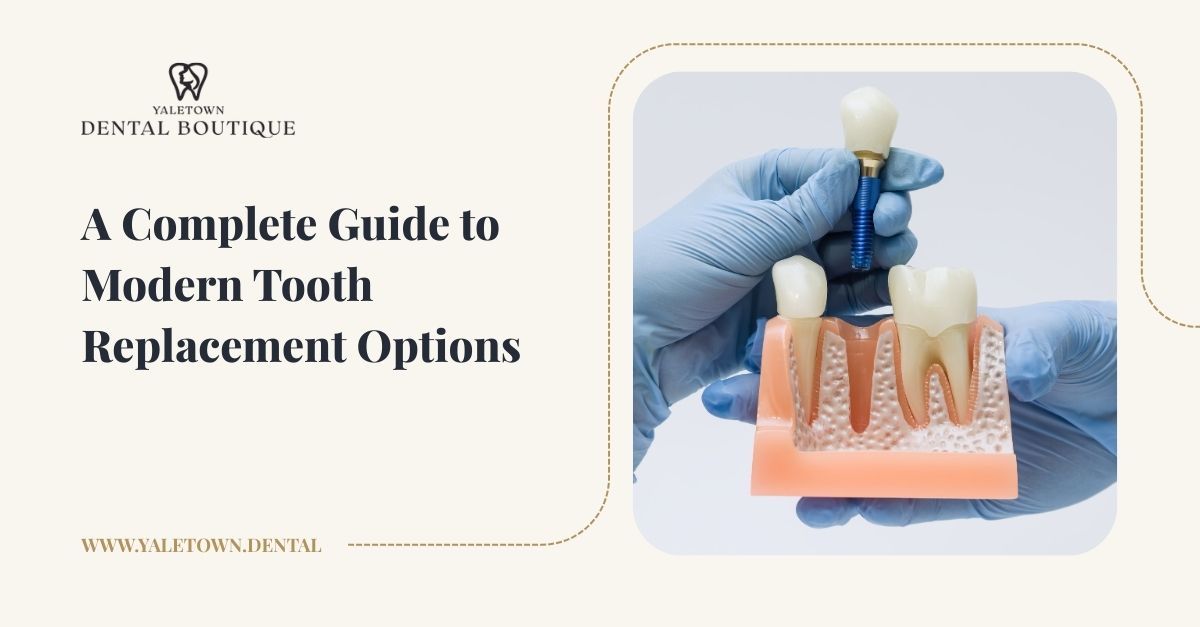
An implant consists of three parts:
- A titanium post that integrates with the bone to act as a stable root.
- An abutment, which connects the implant to the visible crown.
- A custom-made crown designed to match your natural teeth in shape and colour.
Because implants fuse with the jawbone through a process called osseointegration, they provide exceptional stability and strength. This prevents the bone from shrinking and keeps facial contours intact over time.
Benefits of Dental Implants
Here’s why many patients and dentists consider implants the preferred solution:
- Preserve jawbone health by preventing bone loss.
- Look and feel natural, blending seamlessly with existing teeth.
- Support chewing and speech with the same strength as natural roots.
- Last for decades with proper hygiene and maintenance.
- Can replace one tooth or several through implant-supported bridges or dentures.
At Yaletown Dental Boutique, dental implants safety is prioritized through advanced 3D digital imaging and guided placement, ensuring precision, comfort, and long-term stability. Every treatment plan is personalized according to bone density, gum condition, and individual goals.

Dental Bridges: Reliable, Fixed Solutions
For patients who are missing one or more teeth in a row, dental bridges offer a strong, aesthetic way to restore the smile. A bridge literally “bridges” the gap between existing teeth, using crowns on either side to anchor the artificial tooth (or teeth) in place.
How Dental Bridges Work
A bridge typically consists of three or more connected crowns, one or more pontics (artificial teeth) supported by abutment teeth or implants on either side. The restoration is cemented permanently, so it doesn’t move or need removal for cleaning.
Bridges are a great option when the surrounding teeth are healthy and can support the restoration, or when bone levels make implant surgery less ideal.
Advantages of Dental Bridges
Replacing a missing tooth with a bridge can help:
- Restore natural chewing and speech without removable appliances.
- Maintain facial balance by filling gaps and preventing shifting teeth.
- Offer quick, non-surgical results, often completed within a few visits.
- Provide natural aesthetics, especially with porcelain or zirconia materials.
While bridges are highly durable, they do rely on the strength of surrounding teeth, which may require some reshaping.

Dentures and Hybrid Solutions
For those missing several or all of their teeth, dentures remain a dependable and customizable way to restore both function and appearance. Modern designs have come a long way from traditional acrylic plates. Today’s options fit more comfortably, look more natural, and can even be supported by dental implants for added stability.
Types of Dentures
Here’s an overview of the main types available today:
- Partial dentures: Designed to replace several missing teeth, partial dentures clip onto remaining natural teeth or attach to implants for a secure fit.
- Full dentures: Used when all teeth in an arch are missing, these restore your ability to chew, speak, and smile with confidence.
- Implant-supported dentures: A hybrid option that attaches directly to implants, combining the coverage of a denture with the security and stability of a fixed restoration.
Benefits of Modern Dentures
Here’s how today’s denture designs help improve comfort, confidence, and everyday function:
- Improved comfort and fit with advanced materials and digital scanning.
- Natural aesthetics that restore facial support and symmetry.
- Easy cleaning and maintenance, especially for removable styles.
- More stability and confidence with implant-supported options that don’t shift or slip.
Choosing between removable or implant-supported dentures depends on your bone structure, oral health, and personal comfort preferences, all of which can be evaluated during a professional consultation.
Choosing the Right Tooth Replacement Solution
Selecting the right tooth replacement goes beyond aesthetics; it’s crucial for long-term comfort and oral health. Key factors include the number of missing teeth, bone density, gum health, and personal lifestyle.
Here are a few key points your dentist will evaluate before recommending treatment:
- Number and Location of Missing Teeth: Single-tooth loss may be best restored with an implant or bridge, while multiple gaps, or cases requiring complete restoration, can often benefit from a full mouth implant for enhanced stability and natural function.
- Jawbone and Gum Health: Healthy bone tissue is essential for dental implants, but alternatives exist if bone loss has already occurred.
- Desired Permanence: Fixed options like implants and bridges stay in place, while removable dentures offer flexibility and easier adjustments.
- Budget and Timeframe: Each solution varies in cost and treatment time, from quick bridge placements to multi-stage implant restorations.
- Lifestyle and Maintenance: Daily habits, diet, and ability to maintain oral hygiene affect which solution will last longest.
A personalized consultation with your dentist is the best way to understand which option will restore balance, function, and confidence to your smile.

The Yaletown Dental Boutique Approach
At Yaletown Dental Boutique, every tooth replacement plan begins with precision diagnostics and personalized guidance. The goal is not just to restore your smile, but to rebuild comfort, confidence, and long-term oral health.
Using advanced tools such as 3D CBCT imaging, Diagnocat AI X-ray analysis, and iTero scanning with NIRI technology, the team carefully assesses bone quality, gum health, and bite alignment before recommending treatment. This ensures that each restoration, whether an implant, bridge, or denture, fits seamlessly and supports long-term stability.
What Sets Us Apart
Here’s how Yaletown Dental Boutique combines technology and expertise to deliver outstanding restorative results:
✅ Comprehensive digital planning for accuracy and faster recovery.
✅ Customized treatment options based on anatomy, lifestyle, and aesthetic goals.
✅ Natural-looking restorations using high-quality materials for comfort and durability.
✅ Ongoing maintenance and hygiene support to protect your results over time.
✅ Comfort-focused care in a modern, relaxing environment.
Each patient receives a detailed overview of their options, from single-tooth implants to full-mouth restorations, helping them make informed decisions with confidence and clarity.
Conclusion
Replacing missing teeth is more than a cosmetic choice; it’s an investment in your health, comfort, and overall well-being. With modern materials and digital precision, today’s implants, bridges, and dentures can restore natural strength and beauty that lasts for years.
At Yaletown Dental Boutique, our team combines advanced diagnostics with personalized care to help you find the most effective tooth replacement solution for your needs. Whether you’re missing a single tooth or need full-mouth restoration, we’ll guide you through every step, from assessment to long-term maintenance.
Book your personalized consultation in Yaletown today to explore your options and start rebuilding your smile with lasting confidence.
Who is a good candidate for dental implants?
Good candidates are generally in good overall health, have sufficient jawbone density, and maintain good oral hygiene. Factors like heavy tobacco use or uncontrolled medical issues may affect eligibility.
How long does the dental implant process take?
The entire implant process can take several months. After the implant post is placed, the bone must integrate (osseointegration) before the crown is attached. In many cases, it may take up to six months.
What is the most durable tooth replacement option?
Dental implants are considered the most durable option, often lasting decades with proper care. Bridges and dentures offer viable alternatives but generally have shorter lifespans.