At a Glance:
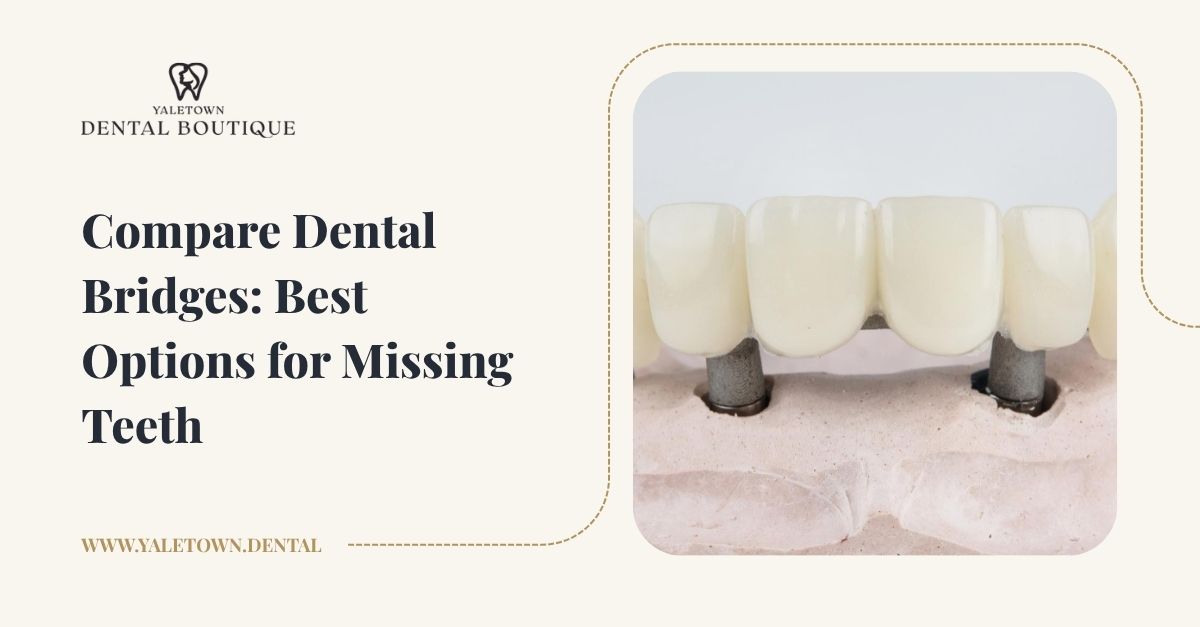
Dental bridges replace missing teeth by anchoring an artificial tooth (pontic) to nearby teeth or implants. The four main types are:
- Traditional Bridges: Crowns on both sides of the gap; strong and widely used.
- Cantilever Bridges (Not Offered at Yaletown Dental Boutique): Anchored on one side only; previously used for front teeth, but not recommended due to stress on the supporting tooth.
- Maryland Bridges: Bonded to the backs of adjacent teeth; conservative but less durable.
- Implant-Supported Bridges: Attached to implants; most stable and longest-lasting.
Your ideal bridge depends on location, number of missing teeth, bone and gum health, budget, and cosmetic goals.
Missing teeth do more than leave a gap; they change how you chew, how your bite works, and how your smile looks. For many patients, a dental bridge provides a stable and natural-looking solution. But not all bridges are the same.
The right type depends on where the tooth is missing, the health of the surrounding teeth, and your long-term goals. Understanding the main options helps you make an informed choice and ensures your treatment feels like a perfect fit.
What is a dental bridge?
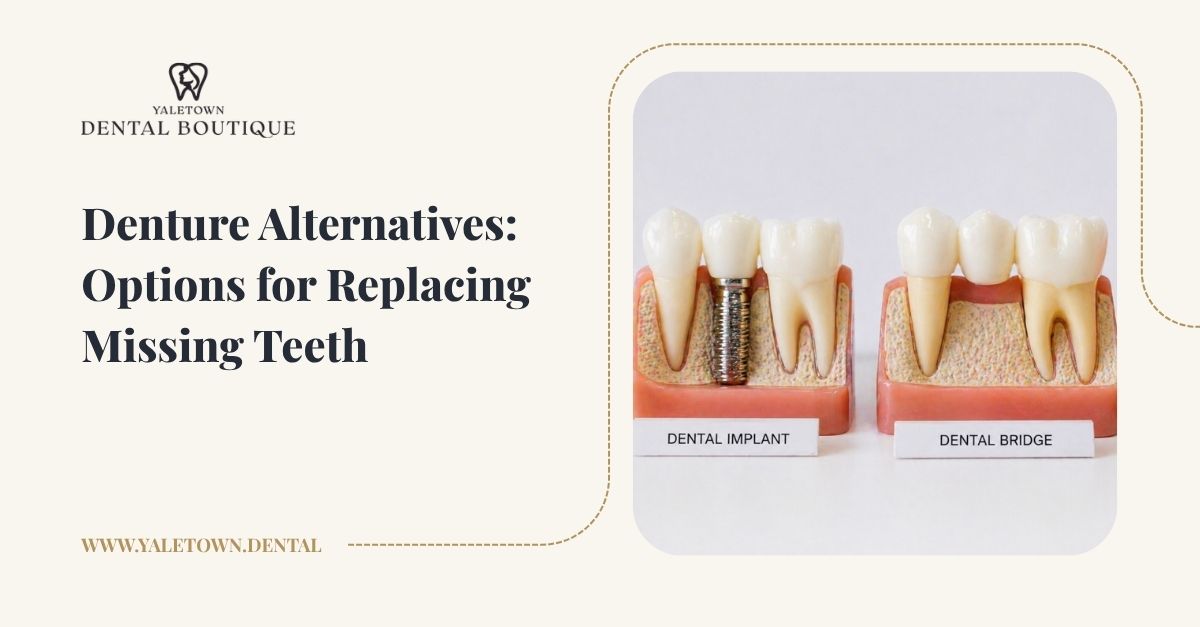
A dental bridge is a fixed solution that fills the gap left by a missing tooth. Supported by nearby teeth or implants, it anchors an artificial tooth (pontic) securely in place. As a core part of restorative dentistry, a bridge restores chewing function, maintains alignment, and brings back the natural appearance of your smile.
How a Bridge Works
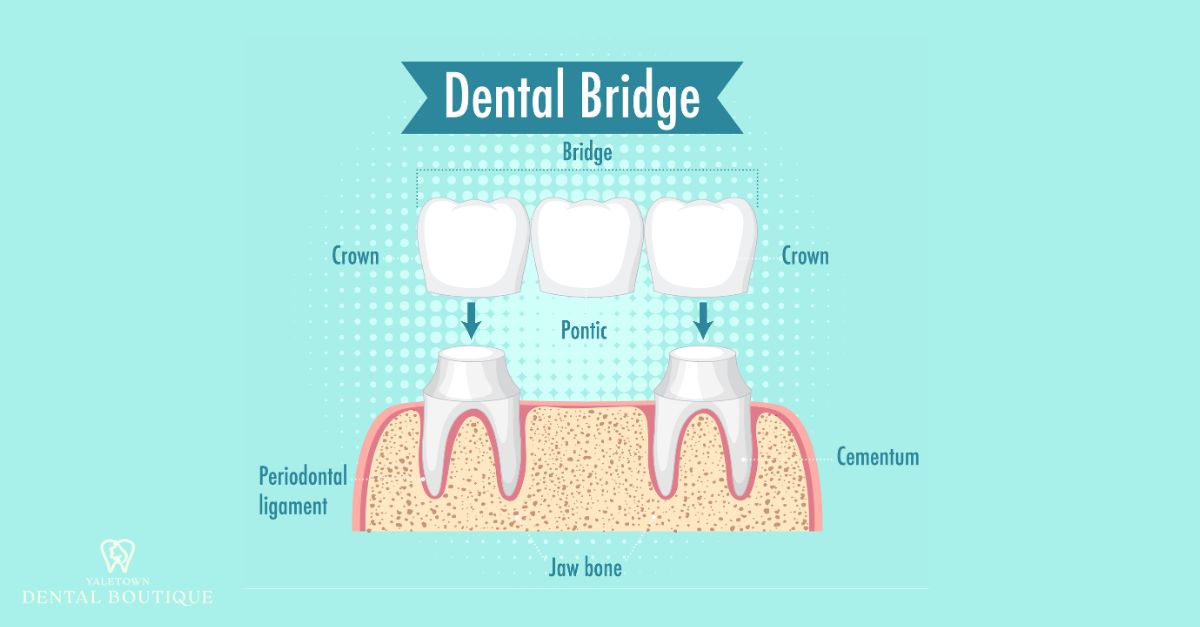
A typical bridge has three parts:
- Abutment Teeth: The natural teeth or implants on either side of the gap that provide support.
- Pontic: The replacement tooth that fills the space.
- Connector: The structure that joins the pontic to the abutments, whether through crowns, wings, or implants.
When Dentists Recommend a Bridge
A bridge is often recommended if you’ve lost one or more teeth but still have healthy teeth beside the gap, or when implants aren’t the ideal solution. As a reliable option for missing tooth replacement, it restores chewing ability, supports clear speech, and prevents surrounding teeth from drifting out of alignment.
Different Types of Dental Bridges
Not all bridges are built the same. Each type is designed for specific situations, depending on how many teeth are missing, where they’re located, and the condition of the supporting teeth.
| Type | Best For | Advantages | Considerations |
| Traditional | Strong Teeth on Both Sides | Reliable, Natural Look, Cost-Effective | Requires Reshaping of Support Teeth |
| Maryland Bonded | Front Tooth Replacement | Minimal Tooth Preparation | Less Durable, Not for Heavy Bites |
| Implant-Supported | Multiple or Weak Adjacent Teeth | Stable, Long-Lasting, Preserves Bone | Higher Cost, Longer Treatment Time |
| Cantilever (Not Offered) | Informational Only – Not Recommended | Previously used when only one support tooth is available | Can Place Excess Stress on a Single Tooth; Not Offered at Yaletown Dental Boutique |
Traditional Dental Bridge
This is the most common style and involves two crowns placed on the healthy teeth beside the gap, with a pontic in between.
- Best for: Patients with strong teeth on both sides of the missing tooth.
- Advantages: Reliable, natural-looking, and cost-effective.
- Considerations: Requires reshaping of the supporting teeth to fit crowns.
Maryland Bonded Bridge (Resin-Bonded)
A conservative option that uses a metal or porcelain framework bonded to the backs of adjacent teeth, rather than full crowns.
- Best for: Replacing a missing front tooth, especially in younger patients.
- Advantages: Minimal tooth preparation.
- Considerations: Less durable than other bridges, not ideal for high-bite areas.
Implant-Supported Bridge
Instead of relying on natural teeth, this bridge attaches to dental implants placed in the jawbone.
- Best for: Multiple missing teeth or when natural teeth aren’t strong enough for support.
- Advantages: Most stable, long-lasting, and preserves bone health.
- Considerations: Higher cost and longer treatment time due to implant surgery.
Cantilever Dental Bridge (Not Offered at Yaletown Dental Boutique)
Cantilever bridges are a design where the pontic (replacement tooth) is anchored by a crown on only one adjacent tooth, rather than on both sides. This approach was once used in specific cases, such as replacing a front tooth when only one neighbouring tooth was available for support.
Why We Don’t Offer Cantilever Bridges at Yaletown Dental Boutique
While cantilever bridges can work in some scenarios, they place extra stress on the single anchor tooth, increasing the risk of damage, loosening, or bite issues over time. For that reason, we focus on other types of bridges—such as traditional, Maryland, or implant-supported options—that provide greater stability and long-term protection for your oral health.
Which dental bridge is right for you?
The best dental bridge isn’t just the one that fills the gap — it’s the one that fits you. That means balancing function, comfort, appearance, and long-term oral health.
Key Factors Your Dentist Considers
Your treatment plan is based on a few core factors:
- Where the Missing Tooth Is: Bridges for front teeth prioritize appearance; back teeth need greater strength and durability.
- How Many Teeth Are Missing: A single tooth may be replaced with a traditional or Maryland bridge, while several teeth may benefit from an implant-supported option.
- Health of Nearby Teeth and Gums: Strong, healthy teeth are needed to support traditional bridges, while implants may be better for weaker areas.
- Timeline and Budget: Some bridges can be placed relatively quickly. Others, like implant-supported bridges, take more time but offer longer-term durability.
- Cosmetic Goals: We select the materials and design that best match your smile, from ultra-natural ceramic to metal-free restorations.
Why Personalization Matters
Every smile is different — and so is every dental bridge. That’s why Yaletown Dental Boutique creates custom treatment plans, often using 3D scans and digital impressions, to ensure your bridge looks natural, fits perfectly, and supports your bite for years to come.
Dental Bridge vs. Dental Implant: What’s the difference?
When replacing a missing tooth, the choice often comes down to a bridge or an implant. Both restore function and appearance, but they do so in very different ways.
| Factor | Dental Bridge | Dental Implant |
| How They Work | Supported By Neighboring Teeth or Implants | Titanium Post In Jawbone Acts As Root For a Crown |
| Treatment Process | 2–3 Visits, Completed In a Few Weeks | Requires Surgery and Healing, Several Months |
| Longevity | Lasts 5–15 Years with Proper Care | Can Last Decades or a Lifetime With Maintenance |
| Cost | Lower Upfront, Often Covered By Insurance | Higher Initial Cost, Long-Term Investment |
| When Preferred | Faster Fix, Surrounding Teeth Already Need Crowns | Best for Long-Term Durability And Bone Preservation |
How They Work
Here’s how each option is supported:
- Dental Bridge: Relies on neighbouring teeth (or implants) for support, with a pontic suspended in between.
- Dental Implant: A titanium post is surgically placed in the jawbone, acting as a root to support a crown or bridge.
Treatment Process
The steps and timeline differ between the two:
- Bridge: Usually completed in 2–3 visits within a few weeks.
- Implant: Requires surgery and healing time, often several months before the final crown or bridge is placed.
Longevity and Durability
Each solution has a different lifespan:
- Bridge: Typically lasts 5–15 years, depending on type and care. 1
- Implant: Can last decades or even a lifetime with proper maintenance.
Cost and Coverage
Upfront and long-term costs vary:
- Bridge: Generally less expensive upfront, often with broader insurance coverage.
- Implant: Higher initial cost but a longer-term solution that may reduce replacement expenses over time.
When Each Is Preferred
Situations often determine the better fit:
- Bridge: Best when surrounding teeth need crowns anyway, or when faster treatment is desired.
- Implant: Ideal when long-term durability and bone preservation are priorities.
A bridge offers a quicker, less invasive fix, while an implant is a more permanent, root-level replacement. The right choice depends on your oral health, goals, and timeline.
How long do dental bridges last?
A dental bridge isn’t permanent, but with proper care, it can serve you well for many years. Lifespan depends on the type of bridge, the health of supporting teeth or implants, and your daily habits.
Average Lifespan by Type
Each bridge design has its own durability profile:
- Traditional Bridges: Tooth-supported fixed bridges (also called fixed partial dentures) have shown survival rates around 89% at 10 years in clinical studies. With proper oral hygiene and case selection, many last between 5 to 15 years or more depending on wear and maintenance.2
- Maryland Bridges: Designed for front-tooth replacement with minimal prep, these bridges can last well over a decade in some cases. A long-term study showed survival rates above 95% for up to 21 years — but actual results depend on bite force, hygiene, and case selection.3
- Implant-Supported Bridges: These bridge types lead in durability — studies report survival rates over 96% at 5 years and 93.9% at 10 years for metal‑ceramic implant‑supported prostheses. With consistent care and favorable conditions, they often outperform traditional bridges long term.4
Factors That Influence Longevity
Several conditions affect how long your bridge will function:
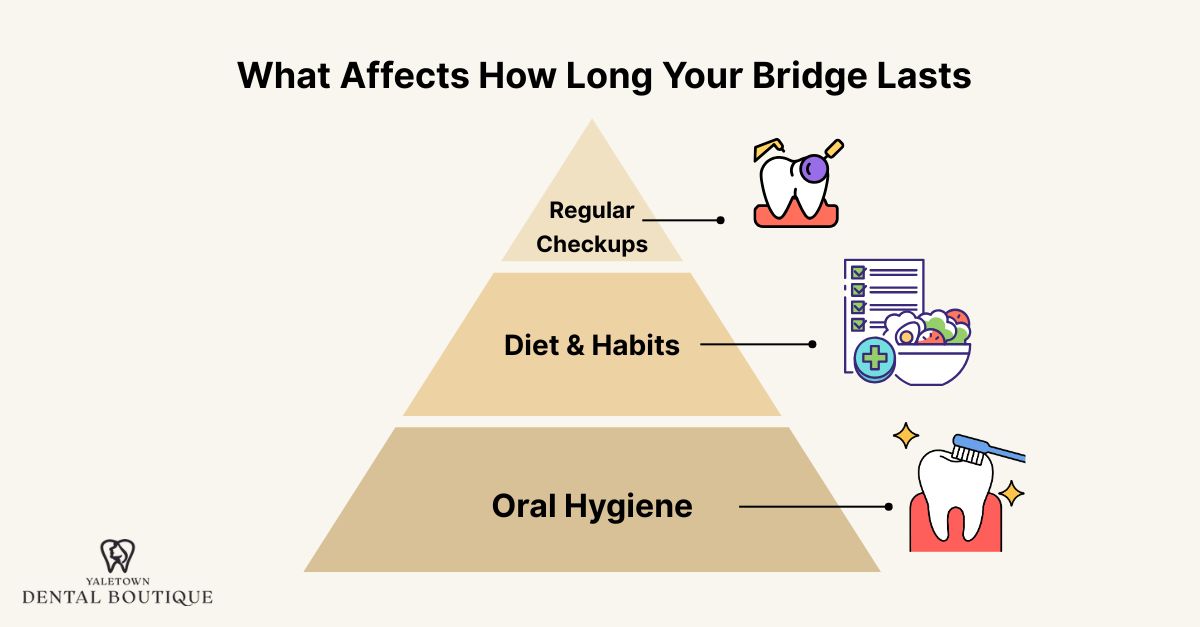
- Oral Hygiene: Brushing, flossing, and cleaning around the bridge prevent decay on abutment teeth.
- Diet and Habits: Avoiding excessive force from chewing ice, hard candy, or grinding protects the restoration.
- Regular Checkups: Early detection of wear or looseness allows for timely adjustments.
Extending the Life of Your Bridge
You can help your bridge last longer by adopting supportive habits:
- Use floss threaders or water flossers to clean under the pontic.
- Wear a nightguard if you grind your teeth.
- Keep up with professional cleanings and exams.
Cost of Dental Bridges in Vancouver
The cost of a dental bridge varies; there’s no universal price tag. It depends on the type of bridge, the number of missing teeth, and the complexity of your treatment.
At Yaletown Dental Boutique, bridges are planned individually to reflect both your functional needs and cosmetic goals.
Key Factors That Influence Cost
Several elements determine the overall investment:
- Type of Bridge: Implant-supported bridges are more complex and typically costlier than traditional or Maryland options.
- Number of Missing Teeth: Replacing one tooth is simpler than spanning several.
- Materials Used: High-quality ceramics and porcelain-fused options may add to the cost but deliver superior aesthetics.
- Supporting Treatment Needs: Preparatory procedures, such as extractions, gum treatment, or implants, can impact the final fee.
- Insurance and Financing: Many plans cover part of the cost of bridges; financing options make treatment more manageable.
Why Costs Vary
Every case is different. A bridge that restores one front tooth with minimal prep is very different from a multi-unit implant-supported bridge designed to replace an entire section of teeth. Your treatment plan is tailored to your situation, not a standard template.
Step-by-Step: Getting a Dental Bridge
Getting a dental bridge is a straightforward process, but it unfolds over several visits to ensure precision and comfort.

Consultation and Planning
It begins with a full assessment of your teeth, gums, and bite. Digital imaging or CBCT scanning may be used to map the area and choose the most suitable bridge type.
Tooth Preparation or Implant Placement
The steps vary depending on the type of bridge being placed:
- Traditional or Cantilever Bridges: The supporting teeth are shaped to make room for crowns.
- Maryland Bridges: Minimal preparation is required, as the framework bonds to the back of adjacent teeth.
- Implant-Supported Bridges: Implants are surgically placed into the jawbone, followed by a healing period before attaching the bridge.
Temporary Bridge
A temporary bridge is often placed to protect the prepared teeth and maintain their appearance while the final restoration is being crafted.
Final Fitting and Adjustments
The custom-made bridge is fitted, checked for comfort and bite alignment, and then permanently secured in place. Minor adjustments ensure it looks natural and functions seamlessly.
In just a few appointments, you regain the look, feel, and function of natural teeth.
Are dental bridges safe and effective?
Dental bridges have been used for decades with consistently high success rates. When designed and fitted correctly, they restore function and appearance with minimal risk.
Safety Profile
Modern bridges are made from biocompatible materials, such as porcelain, ceramic, or metal alloys.
These materials are safe, well-tolerated, and approved by organizations such as the CDA and ADA.
Effectiveness in Restoring Function
Bridges are more than cosmetic; they restore chewing ability, support clear speech, and prevent neighbouring teeth from drifting into empty spaces. Patients often find they adapt quickly, with the bridge feeling natural in daily use.
Potential Risks
Like any restoration, bridges require care. Decay around supporting teeth, gum disease, or excessive bite pressure can compromise their stability. Regular checkups and strong oral hygiene minimize these risks.
Our Restorative Dentistry Approach at Yaletown Dental Boutique
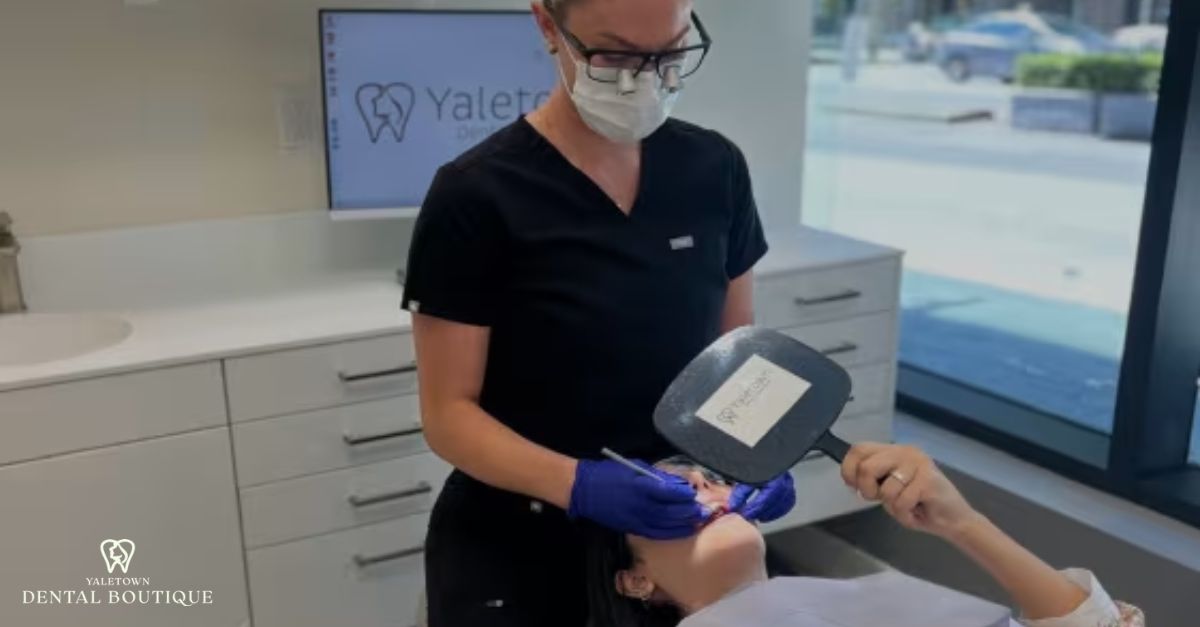
At Yaletown Dental Boutique, restoring your smile is never one-size-fits-all. Every bridge is designed to match your unique anatomy, bite, and lifestyle.
Personalized Planning
We start with a detailed exam of your teeth, gums, and jaw structure to determine the best solution for your needs — whether it’s a traditional, Maryland, or implant-supported bridge.
Advanced Imaging and Technology
Digital impressions and CBCT scans help us achieve exceptional precision, ensuring your bridge fits seamlessly and looks completely natural.
Designed for Comfort, Function, and Beauty
Your restoration should feel just as good as it looks. We use durable, aesthetic materials and customize every bridge to support natural function and restore your confidence — without compromising long-term oral health.
Conclusion: A Bridge Back to Your Smile
Missing teeth can affect your appearance, chewing, and speech — but you don’t have to live with the discomfort. At Yaletown Dental Boutique, we offer a range of safe, aesthetic, and long-lasting dental bridges tailored to your goals, oral health, and smile design.
From initial consultation to final fitting, we combine advanced imaging with expert care to craft restorations that blend beautifully with your natural teeth. Whether you’re replacing one tooth or several, we’ll help you find a solution that restores your smile — and your confidence.
Book your personalized consultation today and explore dental bridge options that are built to last.
How many teeth can a bridge replace?
A dental bridge can replace a single tooth or several in a row, depending on the design and available support. Implant-supported bridges are best for larger spans.
Do bridges feel like natural teeth?
Yes. Once fitted, bridges are designed to blend in with your bite and appearance. Most patients adapt quickly and forget they’re even wearing one.
Can a bridge be repaired if damaged?
In many cases, yes. Small chips or looseness can often be corrected, but a severely damaged bridge may need replacement.
Are dental bridges covered by insurance?
Many plans cover part of the cost of bridges, though coverage varies by type and provider. Financing options are also available to make treatment manageable.
Do I need special care for a bridge?
Bridges don’t require special products, but cleaning under the pontic with floss threaders or water flossers is essential to prevent decay and gum issues.