
At a Glance:
Expect swelling, mild bleeding, and soreness in the first two days, with symptoms easing by the end of week one.
By week two, most daily functions feel normal again, though osseointegration, the fusion of bone and implant, continues quietly over the next few months. Final crown placement is usually possible between three and six months.
Smooth recovery comes down to consistent care: soft foods early on, gentle hygiene, and avoiding smoking or heavy strain. Follow-ups with your dentist ensure long-term stability and success.
Dental implants restore more than your smile—they set the foundation for lifelong oral health. But healing doesn’t happen overnight. Understanding what’s normal helps you stay on track and avoid surprises along the way.
If you’ve scheduled implant surgery, one of your biggest questions is likely: What will recovery actually feel like?
The truth is, healing is gradual and slightly different for everyone—but it follows a predictable rhythm. By knowing what to expect at each stage, you’ll feel confident about your progress and recognize when it’s time to rest or check in with your dentist.
What happens right after dental implant surgery?
The first 24–48 hours after dental implant surgery are about one thing: protecting the site while your body begins to heal. You can expect some swelling, light bleeding, and mild discomfort; that’s all part of the normal process.
Here’s what typically happens in those first crucial hours:
- Mild Bleeding: Small amounts of blood-tinged saliva are common. Your dentist will place gauze over the site, bite down gently to keep pressure steady, and help with clotting.
- Swelling & Bruising: These usually peak within the first 48 hours. Applying ice packs in 15–20 minute intervals can minimize swelling.
- Pain & Pressure: Most patients describe this as manageable, especially with prescribed or over-the-counter pain relievers.
- Diet Adjustments: Stick to a soft or liquid diet for now, think yoghurt, smoothies, or soups cooled to room temperature. Avoid hot foods, alcohol, and straws, which can disrupt clotting.
- Rest Is Key: Limit physical activity and give your body the downtime it needs to kick-start healing.
Day-by-Day Implant Recovery Timeline
Below is a clear, research-anchored timeline so you know what’s normal and when to call us.
| Stage | Physical Symptom | Functionality | Care Focus |
| Day 1–2 | Swelling, Minimal Bleeding | Rest & Limited Function | Cold Packs, Gauze, Soft Diet |
| Day 3–7 | Improving Comfort | Gentle Chewing Begins | Oral Hygiene Routines |
| Week 2 | Stitches Resolved | Normal Activities Return | Maintain Hygiene |
| Weeks 3–4 | Gum Maturation | Full Soft-Tissue Healing | Monitor & Avoid Pressure |
| Months 2–3 | Osseointegration | No External Symptoms | Wait & Maintain Cleanliness |
| 3–6 Months | Final Impressions | Ready for Crown | Clinical & Radiographic Review |
Day 1–2: Settle In
The first two days after your dental implant surgery are focused entirely on protecting the area and allowing your body to begin healing. During this time, it’s completely normal to feel pressure around the surgical site, notice mild bleeding or oozing, and experience the start of swelling. These symptoms usually peak within the first 48 hours.
Most patients find the discomfort manageable with cold compresses and prescribed or over‑the‑counter pain medication. Rest is key — keep your head elevated, avoid any strenuous activity, and stick to a soft, cool diet such as smoothies, yogurt, or soup at room temperature.
Avoid hot foods, alcohol, and using straws, as they can disrupt the clotting process. If your procedure was performed with a minimally invasive or flapless technique, you may notice less swelling and a quicker return to comfort.
Day 3–7: Symptoms Wind Down
By the third day, most patients begin to notice a clear improvement in comfort. Pain, swelling, and general soreness start to ease, and simple tasks like speaking or chewing feel more manageable.
If your implant is in the front region of your mouth (intercanine area), chewing may still feel awkward for several days, so continue with softer foods until it improves.
This is also when your oral hygiene routine becomes more important. You can begin gently brushing around the implant site and, if prescribed, start using a saltwater rinse or chlorhexidine mouthwash.
By the end of the week, most patients report steady progress and reduced tenderness, though full healing continues beneath the surface.
Week 2: Back to Baseline Activities
By the start of week two, most visible symptoms have resolved. Swelling and bruising are usually minimal or gone, and stitches may dissolve on their own or be removed at your follow‑up visit.
Everyday routines (speaking, eating, and sleeping) typically return to near‑normal at this point. While your implant is still stabilizing beneath the gums, many patients say they already feel “back to normal” in their daily lives.
Continue to maintain gentle hygiene and follow dietary recommendations to support smooth soft‑tissue recovery.
Weeks 3–4: Tissue Maturation
At this stage, the gum tissue stabilizes and matures around your implant. Most patients experience little to no soreness by the third or fourth week.
Clinical studies show that the majority of symptoms resolve fully by this point.
Whether you received one implant or two, recovery speed tends to be similar — the number of implants placed in a single visit does not significantly affect short‑term healing.
Even if you’re feeling completely comfortable, continue to avoid direct pressure on the implant site and follow your dentist’s cleaning and maintenance advice to protect the new tissue.
Months 2–3: Quiet Phase (Osseointegration)
During this period, healing continues beneath the surface. The implant begins to fuse with the surrounding bone, a process called osseointegration.
While you may feel completely normal at this stage, this “quiet phase” is crucial for the implant’s long‑term success. Your dentist will monitor progress through clinical exams or X‑rays to ensure the bone is bonding properly.
There are usually no external symptoms during osseointegration, but keeping up with good oral hygiene and regular checkups remains important.
3–6 Months: Restoration Ready
By this stage, your implant has fully integrated with the jawbone and is ready for the final step — your crown or bridge placement.
Most patients reach this point between three and six months after surgery. Your dentist will confirm readiness using clinical evaluation and radiographic imaging to ensure the implant is stable and strong.
Once your permanent restoration is placed, you’ll return to full functionality — enjoying the look, feel, and bite strength of a natural tooth.
Essential Care Tips for a Smooth Implant Recovery
Healing after implant surgery isn’t complicated, but it does require consistency. In restorative dentistry, the long-term success of an implant depends on the daily habits you build.
By following a few essential practices, you’ll protect your investment, minimize discomfort, and support lasting stability.
Eat to Heal
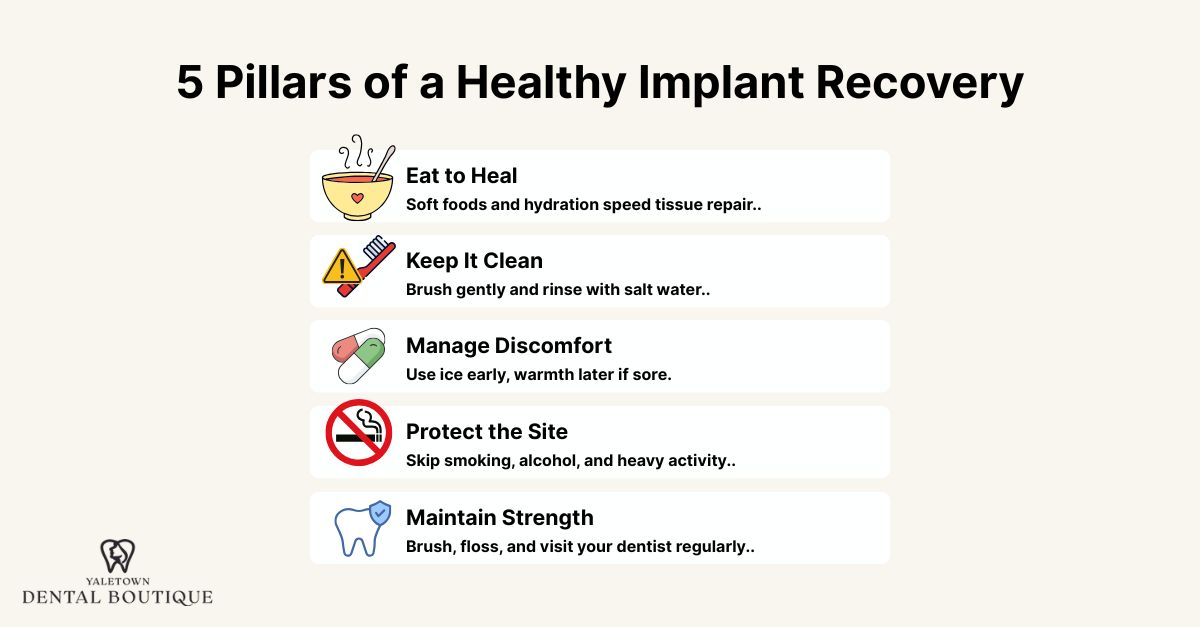
Stick with soft foods for the first several days, such as yogurt, soups, eggs, and tofu. As your comfort improves, reintroduce firmer textures, but avoid biting directly on the implant until your dentist confirms it’s safe. Staying hydrated also helps tissues repair more efficiently.
Keep the Area Clean
A clean mouth heals faster. Use a soft toothbrush and be gentle near the surgical site. Rinsing with salt water after meals reduces bacteria and keeps the area comfortable. Once cleared, add flossing or special interdental brushes to maintain long-term implant health.
Manage Swelling and Soreness
Discomfort peaks within the first two days. Cold compresses help control swelling, while prescribed or over-the-counter pain relief keeps you comfortable. Switch to warm compresses after 48 hours if soreness lingers.
Protect Your Healing Implant
Skip smoking, alcohol, and intense exercise for at least the first week, as these all slow tissue repair. Prioritize rest and good sleep, since your body needs energy for recovery.
Build Long-Term Stability
Even when you feel fully healed, your implant is still bonding with the bone beneath. Keep up with dental checkups and professional cleanings to safeguard your results. Treat your implant with the same care as your natural teeth; it’s the foundation for decades of confident chewing and smiling.
When to Call Your Dentist During Recovery
Most post-surgery symptoms ease with time, but certain signs shouldn’t be ignored. Knowing when to reach out can save your implant and your comfort.
- Severe Pain Beyond Day 3: Mild soreness is expected, but if the pain suddenly worsens instead of improving, it may signal infection or complications.
- Persistent or Increasing Swelling: Swelling usually peaks within 48–72 hours, then declines. If it keeps growing, it needs professional attention.
- Signs of Infection: Fever, pus, or a persistent bad taste in your mouth are red flags that require immediate care.
- Unstable Implant Feeling: A properly placed implant should not feel loose. If it moves, call your dentist right away.
- Excessive Bleeding: Minor spotting is normal early on, but steady bleeding that won’t stop needs urgent evaluation.
Why Healing Times Vary Between Patients
Not everyone’s implant recovery looks the same. The timeline can stretch or shorten depending on your health, habits, and the complexity of your case.
- Bone Quality and Density: Strong, dense bone integrates with implants faster, while weaker bone may require more time.
- Type of Implant Procedure: Immediate-load implants (where a temporary tooth is placed right away) carry different healing demands compared to traditional staged implants.
- Overall Health: Conditions like diabetes, autoimmune disorders, or smoking can slow healing and increase complication risks.
- Oral Hygiene Habits: Daily brushing, flossing, and professional checkups all impact how well your implant fuses with bone.
- Lifestyle Factors: Nutrition, sleep quality, and avoiding alcohol or smoking directly influence tissue repair.
The key is consistency. Even if your healing runs longer than average, following aftercare instructions closely often leads to a successful and stable outcome.
Why Choose Yaletown Dental for Implant Recovery Support
Choosing where to get your implant dentistry done matters just as much as the surgery itself. The right clinic not only places implants, but also supports you through recovery with precision, reassurance, and long-term care. That’s the role we take seriously at Yaletown Dental.
Precision at the Start
A smooth recovery begins with planning. We use CBCT imaging to create a 3D map of your jaw, ensuring implants are placed with pinpoint accuracy.
This minimizes surgical trauma and reduces the risk of complications.
Minimally Invasive Techniques
Our dentists use tissue-preserving surgical methods. By limiting trauma, we help you experience less swelling, faster healing, and a quicker return to daily life.
Personalized Follow-Up Care
Recovery doesn’t end when the implant is placed. Structured follow-up visits allow us to monitor your healing and tailor aftercare instructions to your unique needs, ensuring potential issues are managed before they escalate.
Long-Term Support
For patients seeking options like full mouth implants in Yaletown, we emphasize lifelong success. Preventive care, regular cleanings, and maintenance strategies keep your implants and natural teeth healthy for decades.
Confidence Through Every Stage
With advanced technology, skilled techniques, and patient-first follow-up, we make your recovery predictable and stress-free, giving you confidence at every stage of the process.
Conclusion
Recovering from dental implant surgery is a journey; one that unfolds in stages, from the first 24 hours of rest and swelling control to the months of bone integration that make your implant secure. Each step matters, and knowing what to expect helps you stay confident and focused on healing.
At Yaletown Dental, we combine advanced technology, gentle techniques, and attentive follow-up care to make your recovery as smooth as possible. Our role isn’t just to place implants, it’s to guide you through healing and ensure your new tooth lasts for decades.
If you’re considering implants or are already scheduled for surgery, give yourself the advantage of expert support. Book a consultation today and let us help you plan for a strong recovery and a confident smile.
Is swelling normal after dental implant surgery?
Yes. Swelling typically peaks around day 2–3 and then subsides. Ice packs and rest help speed recovery.
When can I eat normally again?
Soft foods are recommended for the first week. Gradually, you can return to your regular diet once your gums heal and your dentist confirms stability.
Can I go back to work the day after surgery?
Some patients return the next day, but it depends on the complexity of your surgery and your comfort level.
Do dental implants hurt during recovery?
Mild discomfort is normal for the first few days. Still, it’s usually manageable with prescribed or over-the-counter pain relief. Most patients are surprised by how tolerable it feels.