At a Glance:
Side tooth cavities (between teeth) are common and often go unnoticed because they develop in areas you can’t easily see or feel. They usually don’t cause pain early, which is why many people are surprised when they’re found.
Brushing alone doesn’t fully clean between teeth, so these areas need extra attention. Early detection through proper evaluation makes a big difference, allowing simpler care and helping prevent more advanced problems.
Side tooth cavities (also called cavities between teeth) are very common. They often develop quietly, without noticeable pain or early symptoms, making them easy to overlook during daily routines.
Many people brush regularly and still develop these cavities, because brushing mainly cleans visible surfaces and does not fully reach where teeth touch. As a result, changes can begin in areas that are harder to see or feel, and side cavities are often discovered later than expected, sometimes during routine exams rather than from discomfort.
What to Do Right Away

Side tooth cavities can progress quietly without pain. Acting early is more effective than waiting for symptoms to appear, especially when changes are not easy to see.
Immediate Guidance
- Focus on what you can do now to reduce risk and stay aware of changes.
- Do not wait for pain before taking action if something feels different
- Avoid packing or forcing food between teeth, which can increase pressure in tight spaces
- Improve flossing immediately and make it a consistent part of your daily routine
- Pay attention to changes such as sensitivity or food repeatedly getting stuck
- Schedule a dental exam with imaging, as cavities between teeth cannot be reliably detected without it
Professional Evaluation (Essential)
These cavities are often hidden and cannot be confirmed through visual checks alone.
- Bitewing X-rays help detect decay developing between teeth that cannot be seen directly
- Visual and tactile assessment helps evaluate how the tooth surfaces respond
- Determination of decay depth helps distinguish early changes from more advanced ones
- Evaluation of adjacent tooth contact areas identifies where debris may be retained
- A routine dental exam helps bring these findings together for a more accurate assessment
When Side Cavities Become Serious
Side cavities often begin without noticeable symptoms, but they can become more significant as they progress. While not all situations are urgent like dental emergencies, certain changes suggest the area is no longer stable and should be assessed. Regular dental check-ups help identify these patterns early, before they become more involved.
Food Consistently Traps Between Teeth
If food repeatedly gets stuck in the same spot, it may indicate a change in how the teeth contact each other. This can reflect a developing space or surface change, making it important to have the area evaluated rather than relying on cleaning alone.
Floss Shreds or Catches in One Area
Floss that tears or catches in a specific location can signal an irregular surface between teeth. This change may suggest that the area is no longer smooth, and closer assessment is appropriate to understand what is affecting the contact point.
Sensitivity to Sweets or Cold Develops

New sensitivity, especially to sweet foods or cold drinks, can indicate that the tooth is reacting differently than before. This type of change may reflect deeper involvement and should be evaluated rather than monitored over time.
Persistent Bad Taste or Odor
An ongoing unusual taste or localized odor may point to an area where debris or changes are present between teeth. When this persists despite regular cleaning, it is a sign that the area should be examined more closely.
Pain Begins or Increases
When discomfort starts or becomes more noticeable, it often means the cavity has progressed beyond early stages. Pain is typically a late-stage sign, meaning the cavity has usually already progressed beyond the early, reversible stage.
Why Side Cavities Happen
Side cavities are common because of how teeth sit next to each other. The contact points between teeth create areas that are harder to clean and monitor. Over time, several small factors can combine in these spaces, rather than a single cause.
Plaque Between Teeth
Plaque tends to collect between teeth where a toothbrush cannot easily reach. Even with regular brushing, these areas can hold a thin film of bacteria that remains undisturbed, allowing changes to develop gradually over time.
Inconsistent Interdental Cleaning
Even people who brush consistently may not clean between teeth effectively every day. Small variations in technique or routine can leave certain areas less cleaned, allowing buildup to persist in places that are not visible.
Tight Tooth Contact Points
In some cases, teeth are closely spaced, creating tight contact points that trap small food particles. These areas can be difficult to clear fully, providing a place where bacteria can remain and interact with the tooth surface.
Enamel Exposure to Acids
Over time, acids from foods and drinks can affect the outer layer of the tooth. This gradual exposure may make certain areas more vulnerable, especially where cleaning is already limited.
Frequent Sugar Exposure

Frequent snacking or sugar intake increases how often teeth are exposed to these acids. It is not just the amount, but how often this happens throughout the day that influences how these areas respond.
Reduced Saliva Protection
Saliva plays an important role in helping protect teeth by washing away debris and neutralizing acids. When saliva flow is reduced, these protective effects are less available, allowing changes to develop more easily.
Why They’re Hard to Detect
Side cavities are often missed in the early stages because of where they form and how they develop.
These areas are naturally harder to see and assess, even with good daily habits, and this is not a reflection of poor hygiene.
Not Visible During Brushing
Cavities between teeth develop in spaces that are not directly visible while brushing. Most brushing focuses on outer and chewing surfaces, leaving these contact points out of view. Even with careful attention, it is difficult to visually monitor these areas in a mirror, which allows early changes to remain unnoticed.
Often Painless in Early Stages
In the beginning, these cavities usually do not cause discomfort. The outer layer of the tooth can change without triggering pain or sensitivity, so there is no clear signal that something is happening. Without symptoms to draw attention, these changes can progress quietly over time.
Hidden from Direct View
The tight contact between teeth blocks a clear line of sight, making these areas difficult to examine directly. Even during a visual check, the angle and spacing prevent a full view of the surface. This limitation means that early-stage changes can be present without being easily detected.
Require Imaging for Confirmation
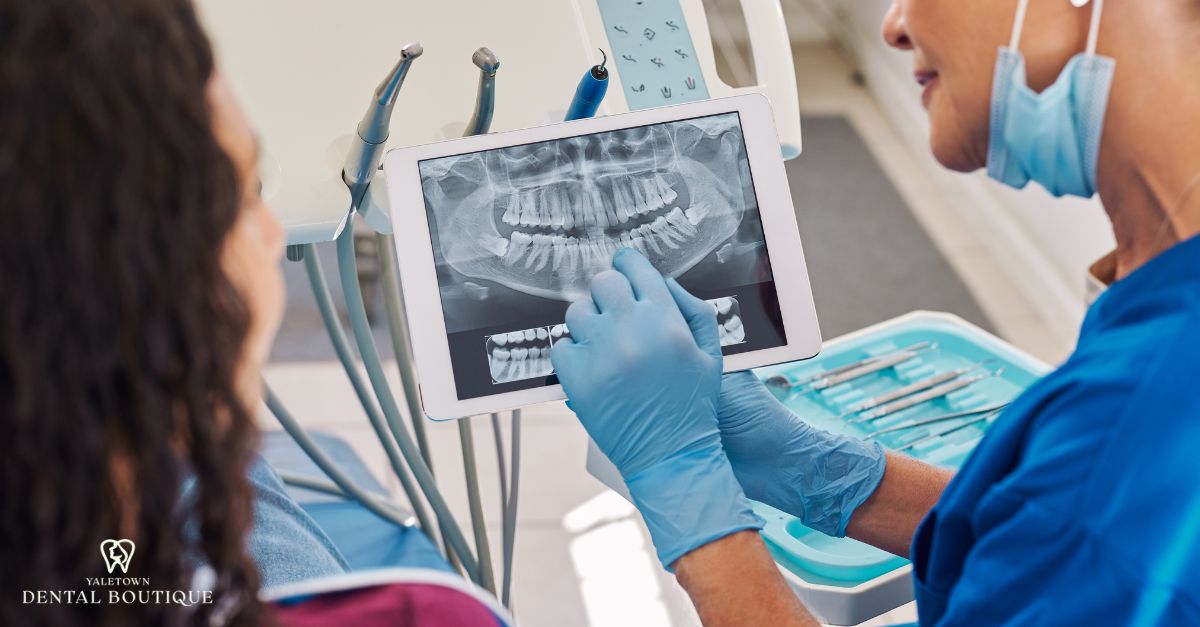
Because these areas are not visible, imaging is often needed to understand what is happening between teeth. Bitewing X-rays are the most common method for detecting these hidden changes. In certain situations, a CBCT scan may be used as an advanced imaging option, though it is not typically required for routine detection.
Progress Faster Once Dentin Is Reached
Once a cavity reaches the inner layer of the tooth, changes can occur more quickly. This stage may still not be obvious at first, but progression tends to accelerate compared to earlier phases. As a result, the opportunity to catch the issue early becomes more limited.
Early Warning Signs
Side tooth cavities often show subtle signs before any pain develops. These changes can be easy to miss during daily routines, especially when they seem minor. Noticing small, repeated differences can help bring attention to areas that may need a closer look.
- Floss catching or tearing in the same spot repeatedly
- Mild pressure sensitivity when biting or chewing in one area
- A dark shadow or slight discoloration between adjacent teeth
- Localized gum irritation between specific teeth
- Food trapping consistently in the same location
What Side Tooth Cavities Really Are
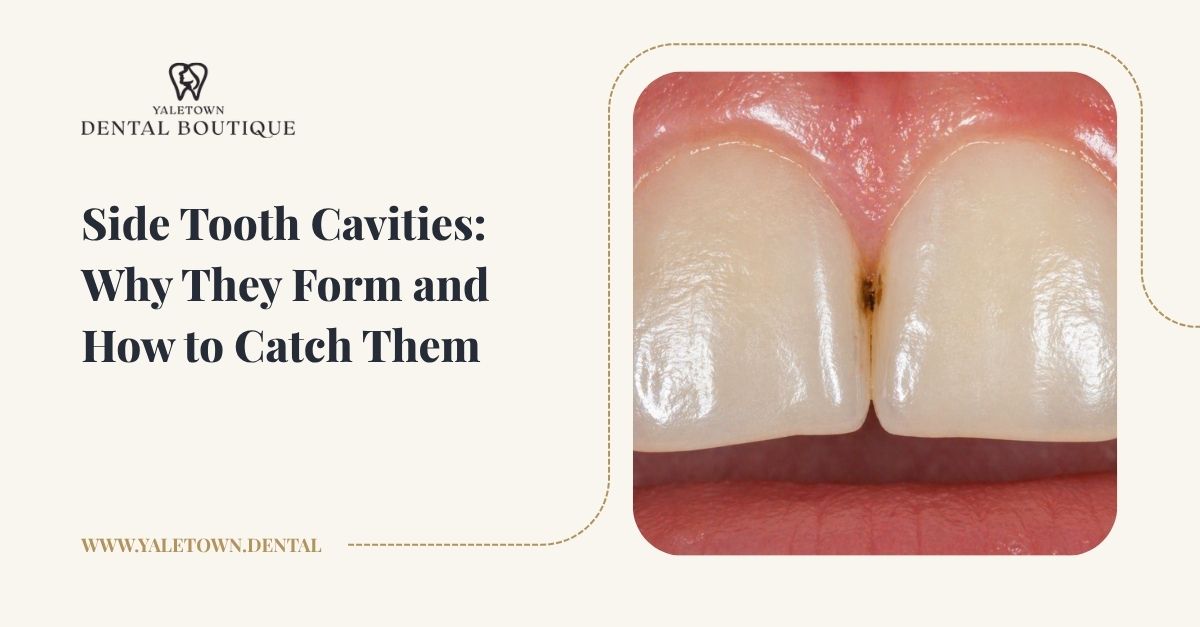
Side tooth cavities, also called interproximal cavities, develop in the space between two adjacent teeth. They begin with early mineral loss in the outer enamel, often in areas that are not easily seen. At this stage, the surface may still appear intact.
Unlike cavities on visible surfaces, these lesions tend to spread sideways between teeth before moving deeper. Because of this pattern, a single area of change can involve both neighboring teeth at the same time, even before it becomes noticeable.
In the early stage, these changes may be reversible if the enamel is supported and remains intact. As the process continues and reaches deeper layers, the tooth structure becomes affected, and the condition is no longer reversible, requiring restorative care to protect the tooth.
How Side Cavities Are Treated

Treatment for side tooth cavities depends on how far the decay has progressed, not simply where it is located. The depth of the cavity determines whether it can be managed conservatively or requires restorative care. When identified early, care can remain simple and conservative. As the depth increases, the approach becomes more involved, which is why early detection plays an important role.
Early-Stage Decay
At this stage, the outer enamel is affected but the structure is still intact. The focus is on supporting the tooth’s natural repair process through remineralization strategies and small adjustments in daily habits, including diet and oral hygiene.
The area is typically monitored over time to ensure it remains stable, sometimes with follow-up imaging. Because there is no structural breakdown yet, drilling is often not required.
Moderate Decay
When decay progresses beyond the outer layer, the tooth can no longer repair itself fully. In this stage, conservative composite fillings are commonly used to restore the affected area. The goal is to remove only the damaged portion while preserving as much surrounding enamel as possible. Although the damage is still limited, it requires intervention to prevent further progression.
Advanced Decay
In more advanced stages, the decay extends deeper into the tooth structure. This may require larger restorations to rebuild and protect the tooth.
If the inner portion of the tooth is affected, additional care such as a crown or root canal may be considered. These situations are more involved, but they are managed based on the extent of the change, not just the location of the cavity.
How Side Cavities Are Diagnosed and Managed at Yaletown Dental Boutique

At Yaletown Dental Boutique, side tooth cavities are approached with a prevention-focused and conservative mindset. Evaluation begins with a comprehensive exam supported by digital imaging and an overall assessment of decay risk. This helps identify changes that are not visible during routine checks and provides a clearer picture of what is happening between teeth.
The diagnostic process focuses on understanding both the depth and activity of any detected decay. Each tooth is assessed individually, including how it relates to neighboring surfaces. Rather than relying on assumptions, decisions are based on clinical findings to determine whether the area is stable, early-stage, or more developed.
Management is guided by preserving as much natural tooth structure as possible. Minimal intervention is prioritized when appropriate, while precision restorations are used when needed to protect the tooth. Long-term prevention includes improving interdental care, reviewing dietary patterns, and monitoring changes over time.
Conclusion
Side tooth cavities are common and often go unnoticed in the early stages. Because they develop between teeth, they may not cause pain right away. A lack of symptoms does not mean nothing is happening, and early evaluation can make care simpler and more conservative.
If you have any concerns or subtle changes, having the area checked is a straightforward and proactive step. Book an appointment with Yaletown Dental Boutique to assess side tooth cavities early and help prevent the need for more complex treatment later.
Can I have a cavity between my teeth even if I brush every day?
Yes, it is possible. Brushing cleans visible surfaces well, but it does not fully reach between teeth. Cavities can still develop in these areas even with consistent brushing.
Why don’t side cavities hurt at first?
Early decay affects the outer layer of the tooth, which does not usually cause pain. Discomfort often appears later, when the cavity reaches deeper layers of the tooth.
How are cavities between teeth detected?
They are often found using bitewing X-rays along with a clinical exam. These methods help identify changes between teeth that cannot be seen during a visual check alone.
Are side cavities worse than regular cavities?
Not necessarily, but they are often detected later. Because they are harder to see and may not cause early symptoms, they can progress further before being noticed.
Can cavities between teeth be reversed?
In early stages, when the enamel is still intact, changes may be reversible with proper care. Once the structure is affected, the cavity cannot reverse and requires intervention.
Do I always need a filling for a side cavity?
Not always. Early-stage changes may be managed without a filling. However, once the cavity progresses beyond the surface layer, a filling is typically needed to restore the tooth.
How can I prevent cavities between teeth in the future?
Prevention involves cleaning between teeth regularly, maintaining a balanced diet, and having routine dental checks. These steps help reduce buildup and allow early detection of any changes.