At a Glance:
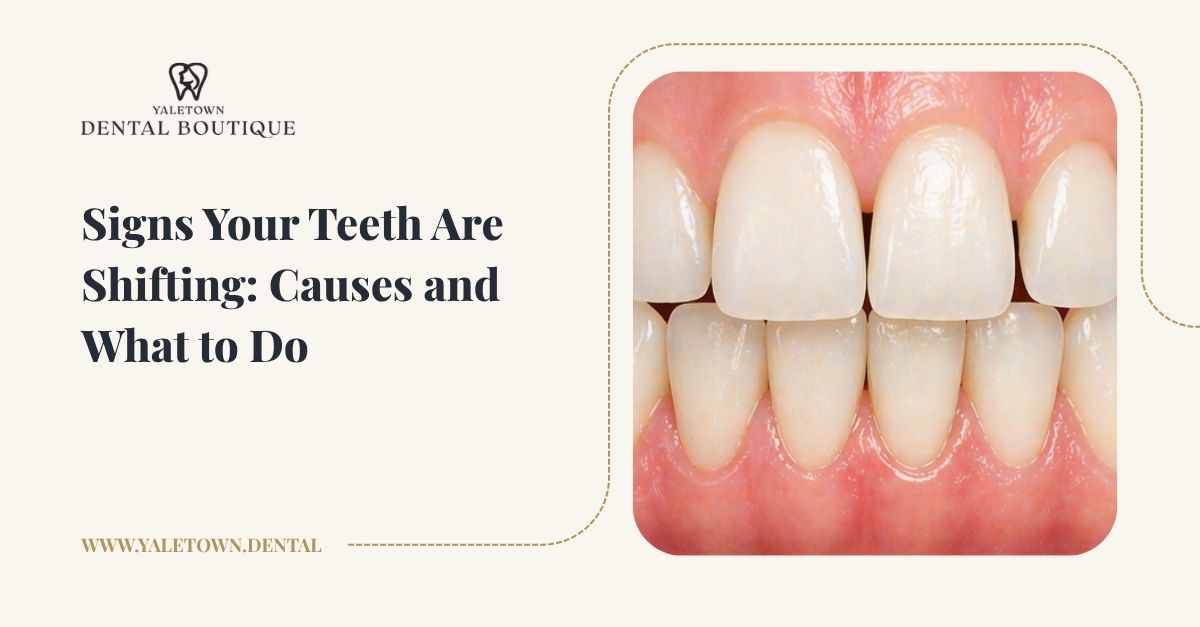
Teeth shifting in adults is not random or just part of aging. It usually reflects an imbalance in bite forces, support, or habits, and it can happen gradually without pain.
Small changes (like spacing, crowding, or a bite that feels different) are often early signs. Acting early can help stabilize tooth position and prevent more complex alignment or support issues over time.
Many adults begin to notice small changes in how their teeth sit or come together. A slight shift in position, new spacing, or a bite that feels different can seem minor at first and easy to dismiss.
However, tooth shifting is not considered a normal or harmless process. It usually reflects a change in how the teeth are supported or how forces are being applied in the mouth, rather than a simple effect of aging or appearance. This means tooth shifting should be understood as a functional issue, not just a cosmetic concern.
These changes often happen gradually and without pain, which is why they can go unnoticed or be ignored for long periods. Because there is no immediate discomfort, it may not feel urgent to address.
Over time, though, even small shifts can influence how the teeth function together. Recognizing these early changes can make a difference in how easily they can be managed later. Because these changes are progressive, early action plays an important role in preventing further movement and protecting long-term stability.
What to Do Right Away

When you first notice changes in tooth position, early steps can help slow or stop further movement before it becomes more difficult to manage. The focus is on reducing pressure on the teeth and preventing small changes from progressing.
Immediate Protective Actions
These steps help reduce unnecessary stress on the teeth and support stability.
- Limit heavy or repetitive chewing, especially on one side, to reduce uneven pressure
- Stop using retainers or appliances if they no longer fit properly or feel tight
- Pay attention to clenching or grinding, particularly during stress or at night
- Maintain consistent oral hygiene to help reduce irritation around the gums
- Arrange a professional evaluation to identify the cause, as ongoing movement cannot be fully assessed or managed without it
What to Avoid
Certain habits can make shifting worse, even if they seem harmless.
- Do not ignore gradual changes just because there is no pain
- Do not force retainers or appliances that feel misaligned or uncomfortable
- Do not assume the movement is a normal part of aging
- Do not delay evaluation if changes continue over time
When Tooth Shifting Needs Professional Care

Not all tooth shifting requires immediate attention, especially if changes are minor and stable. However, certain patterns suggest that the movement is ongoing or affecting function, and these situations should be evaluated in a timely manner.
Progressive or Accelerating Movement
If you notice that teeth are continuing to move over time or that the changes seem to be happening faster, it suggests that the underlying issue is still active. Gradual movement that does not stabilize on its own is less likely to resolve without assessment, making it important to have it reviewed before further changes occur.
Bite Feeling Uneven or Unstable
A bite that suddenly feels different, uneven, or less comfortable can indicate that tooth positions are shifting enough to affect how the upper and lower teeth meet. This can place uneven pressure on certain teeth, and early evaluation can help prevent further imbalance.
Teeth Overlapping or Separating
New crowding, overlapping teeth, or gaps that were not present before are signs that alignment is changing. Even small spacing changes can alter how forces are distributed in the mouth, so it is helpful to assess these changes before they become more noticeable.
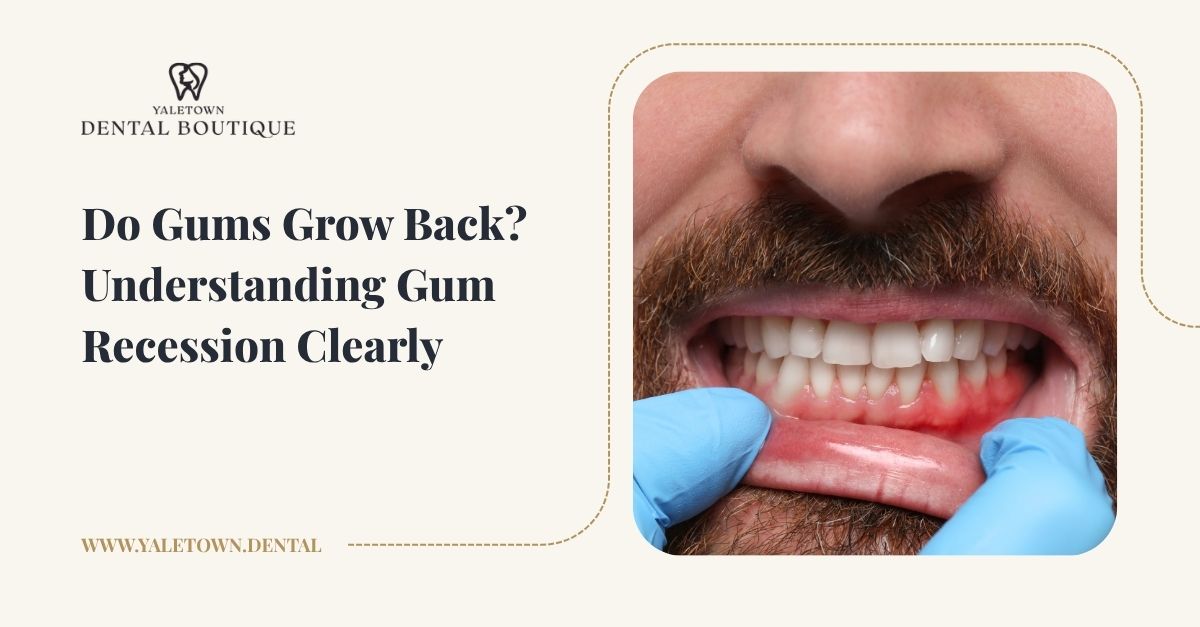
Gum Recession Appearing
If the gumline appears to be moving or teeth look slightly longer, it may reflect changes in the surrounding support. These visual differences can develop gradually and are often easier to manage when identified early.
Any Sign of Tooth Mobility
Teeth should feel stable in their position. If you notice even slight movement when touching or biting, it suggests that support may be affected. This type of change should be evaluated rather than monitored over time.
History of Gum Disease or Orthodontic Treatment
If you have had previous gum concerns or orthodontic treatment, new shifting may be more significant. These factors can influence how stable tooth positions remain, and changes in this context are worth reviewing sooner rather than later.
Why Teeth Shift
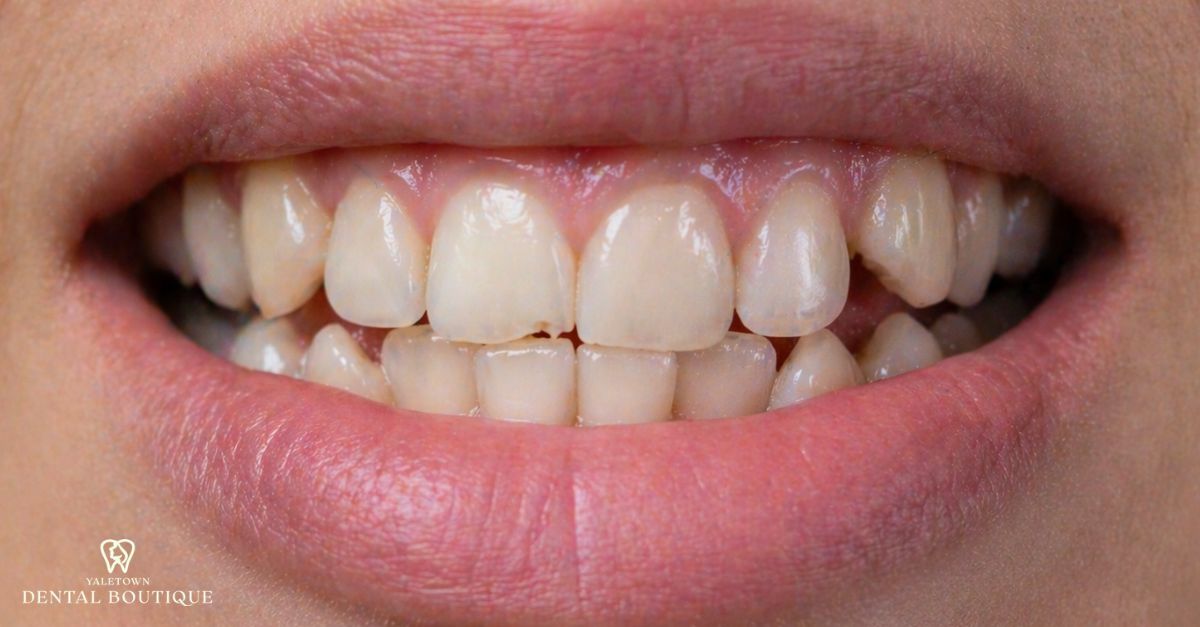
Teeth do not shift randomly. Movement usually reflects an imbalance between the forces acting on the teeth and the support holding them in place. When pressure increases or support allows more flexibility, teeth can gradually change position. Recognizing these influences helps explain why small changes can continue over time if not addressed.
Periodontal Inflammation and Bone Loss
The gums and underlying bone provide the foundation that helps guide tooth position. When inflammation affects this area, the way the tooth is supported can change, allowing it to respond differently to everyday forces.
As support becomes less stable, normal chewing pressure may begin to influence position over time, leading to gradual movement rather than immediate or obvious changes.
Uneven Bite Forces or Missing Teeth
Teeth are designed to share pressure evenly when biting. If one or more teeth are missing, or if the bite is uneven, certain teeth may take on more force than they are meant to handle. This imbalance can gradually push teeth out of their original position, especially when forces are concentrated in specific areas over time.
Bruxism and Chronic Clenching
Clenching or grinding places repeated, often unnoticed pressure on the teeth, especially during sleep or periods of stress. Over time, this constant force can influence how teeth respond to everyday function rather than remaining in a stable position.
As this pressure continues, teeth may gradually adapt to uneven forces and begin to shift slightly. In some cases, contributing factors such as muscle overactivity are also considered, which is why approaches like Neuromodulator Therapy for jaw clenching may be discussed within a broader management context.
Loss of Orthodontic Retention
After orthodontic treatment, retainers help maintain tooth position. If retainers are not used consistently, or if they no longer fit properly, teeth may begin to move back toward their previous alignment. This shift happens gradually, influenced by natural forces in the mouth that are no longer being controlled.
Tongue Pressure or Functional Habits
Everyday habits such as tongue positioning, swallowing patterns, or resting the tongue against certain teeth can apply light but consistent pressure. Over time, even small forces can influence tooth position, especially when repeated frequently throughout the day and night.
Age-Related Changes in Bone Density
As the body changes with age, bone density can also shift. While this does not directly move teeth, it can allow them to respond more easily to everyday forces. With less resistance from the surrounding structure, gradual positional changes may occur over time.
Signs Your Teeth Are Shifting (Early Changes to Watch)
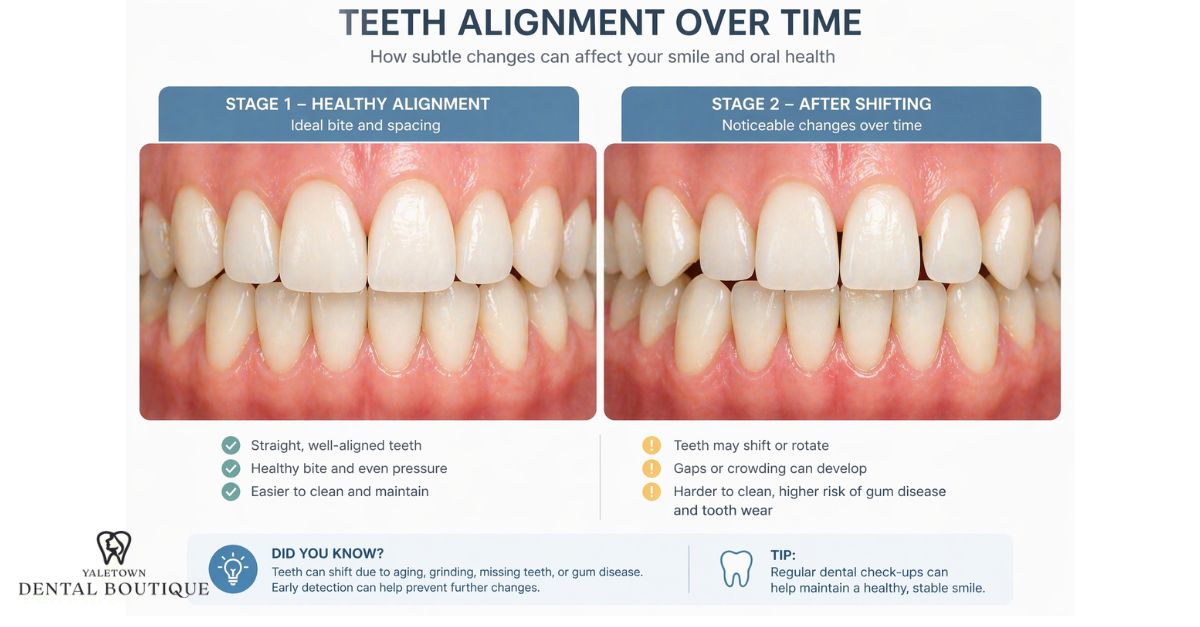
Early signs of tooth shifting are often subtle and painless, which makes them easy to overlook or dismiss. Paying attention to small, consistent changes can help you recognize patterns before movement becomes more noticeable.
- New gaps or spaces appearing between teeth that previously felt close together
- Crowding or overlapping developing in areas that used to feel aligned
- Bite feeling “off” or different when chewing or closing your mouth
- Retainers or appliances no longer fitting the way they used to
- Food getting trapped in areas where it was not an issue before
- Mild jaw fatigue or discomfort, especially after chewing or at the end of the day
What Tooth Shifting Actually Is
Tooth shifting is not a random or natural part of aging. It is a response to forces acting on the teeth over time. These forces can come from how the teeth meet when biting, how the surrounding structures support them, and how muscles in the mouth apply pressure during everyday habits.
When these factors are balanced, teeth tend to stay in a stable position. But when pressure increases or support allows more movement, teeth can gradually change position. This process can happen slowly and often without pain or noticeable looseness, which is why it may not feel concerning at first.
As movement continues, it can become harder to reverse, especially if the supporting structures begin to adapt to the new position. At that point, changes are less about temporary pressure and more about how the teeth are settling into a different alignment.
If the supporting bone becomes compromised, these changes can become significantly more difficult to reverse and may require more involved treatment.
Unlike a loose tooth, shifting can occur even when teeth feel stable, because it is driven by gradual changes in force and support rather than immediate loss of stability. This is why early changes are often easy to overlook.
Why Professional Care Matters
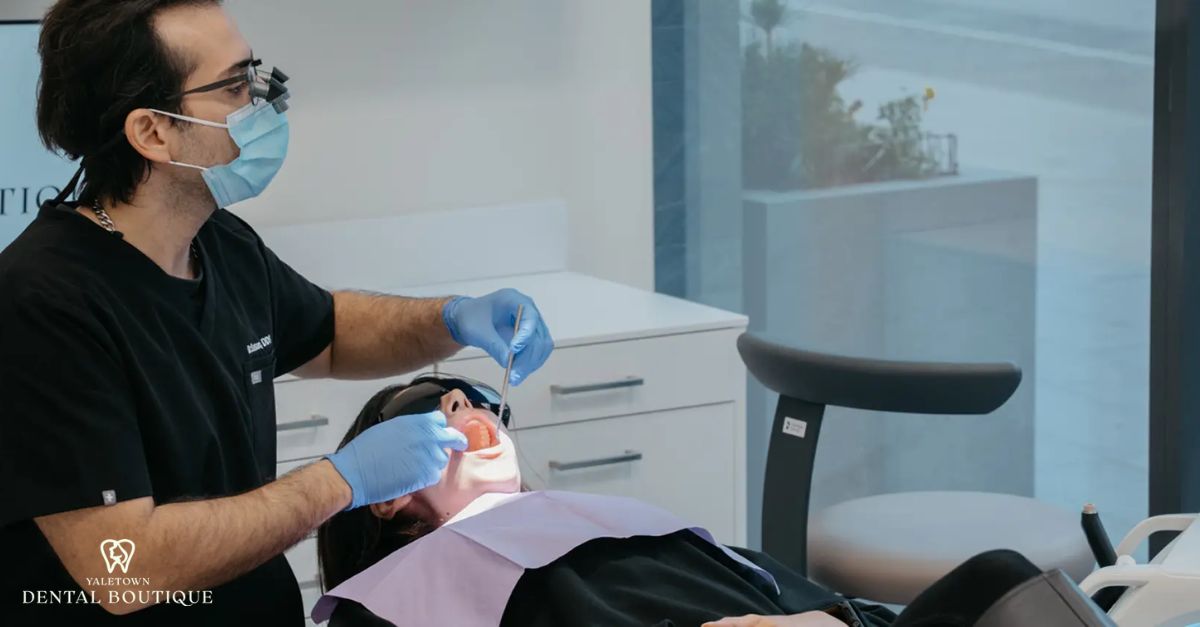
Noticing small changes in teeth alignment at home can be helpful, but it does not show the full picture. Tooth shifting often involves how forces are distributed and how the supporting structures are responding beneath the surface.
These factors are not visible during everyday observation, which makes it difficult to understand what is actually driving the movement without a closer evaluation.
Because these changes develop gradually, they may continue even when they seem minor. Early assessment helps identify patterns before they become more established. If movement progresses over time, correcting it may require more structured approaches, and options such as clear aligners may be considered as part of long-term planning rather than early prevention.
The Yaletown Dental Boutique Approach
At Yaletown Dental Boutique, tooth shifting is approached with a focus on early intervention and careful assessment.
Attention is given to how the teeth are positioned, how they come together when biting, and how the surrounding support structures are maintaining stability, helping build a clear and reliable picture of the changes taking place.
The diagnostic process looks closely at the pattern of movement to determine what is driving it.
This includes distinguishing between orthodontic relapse and changes related to support, as well as identifying whether the issue is primarily functional or structural. The goal is to understand the underlying factors with clarity, so that next steps are guided by findings rather than assumptions.
From there, the focus remains on stabilizing the current position and reducing the forces contributing to movement.
This may involve managing habits such as clenching, improving how pressure is distributed, and supporting consistent retention over time. Within this process, understanding how to straighten your teeth safely and comfortably becomes part of a broader approach to maintaining alignment while protecting long-term stability.
Conclusion
Tooth shifting is not a random change and is usually a sign that something is influencing how the teeth are positioned. Because it often develops gradually and without discomfort, it can be easy to overlook, even as changes continue.
Addressing these changes early can make a meaningful difference. When movement is identified sooner, it is often easier to understand and manage before it affects bite function or long-term support. Waiting may allow patterns to become more established, making correction more involved over time.
Early evaluation is often what determines whether shifting can be stabilized or continues to progress.
If you have noticed changes in how your teeth sit or come together, booking an appointment at Yaletown Dental Boutique can provide clarity on what is happening and what steps may help maintain stability going forward.
Is it normal for teeth to shift as an adult?
Teeth may change position over time, but this is not considered a normal or harmless process. It usually reflects underlying forces or changes in support rather than simple aging.
Why do my teeth feel like they are moving?
This feeling often relates to changes in pressure, bite contact, or spacing. Even small shifts can feel noticeable, especially when how the teeth meet starts to change.
Can teeth shift without being loose?
Yes, teeth can shift gradually without feeling loose. Movement is often driven by ongoing pressure or changes in support, even when the teeth still feel stable.
Can tooth shifting be reversed?
Some early changes may be manageable if addressed promptly. Whether shifting can be reversed depends on how much movement has occurred and what is influencing the position.
How quickly can teeth shift?
Tooth shifting usually happens gradually, but the speed can vary depending on the forces involved. In some cases, noticeable changes can develop over a relatively short period.
Do I need to wear a retainer forever?
Retainers are often used long-term to help maintain alignment. Without consistent use, teeth may gradually move, especially if underlying forces affecting position are still present.
What happens if I ignore tooth shifting?
Ignoring tooth shifting can allow changes to continue, which may affect bite balance and alignment over time. Early evaluation helps limit progression and maintain more stable positioning.