At a Glance:
Dentures are not the only option for replacing missing teeth. Depending on your clinical situation, fixed or semi-fixed alternatives may be possible, each with different effects on comfort, function, and long-term stability.
The right choice depends on factors like bone support, bite, and overall oral health, not just how many teeth are missing. A proper evaluation helps determine what is suitable without assuming one solution fits all.
When people lose one or more teeth, it’s common to assume that dentures are the default solution. This is often where conversations about denture alternatives begin, as it has been the traditional approach for many years. In certain situations, it is still an appropriate and practical option.
However, dentures are not the only way to replace missing teeth. Modern dentistry includes a range of alternatives that can address different needs, depending on the situation. These options vary in how they function, how they feel, and how they interact with the rest of the mouth.
The most suitable choice is not determined by tooth loss alone. Factors such as bone support, bite function, and overall oral health all play a role. Understanding these differences can help clarify which approach may be most appropriate.
Do you really need dentures?
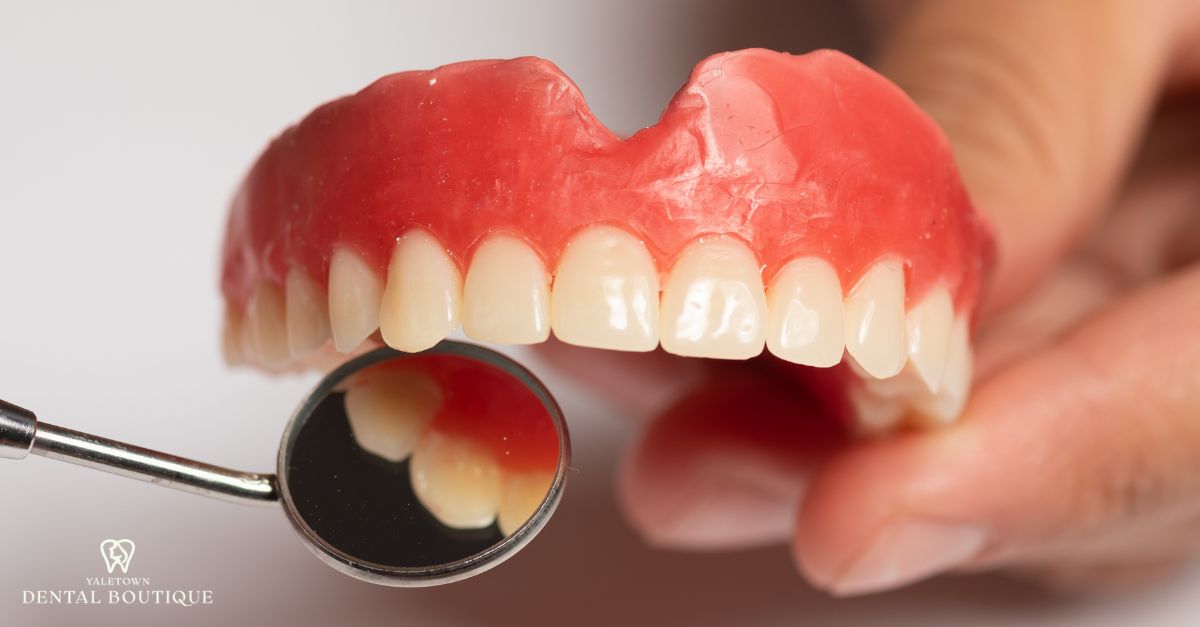
Dentures are not always required, even when several teeth are missing. Many patients are candidates for fixed or semi-fixed alternatives, depending on bone support, bite function, and overall oral conditions. While they remain a valid option in many cases, other solutions may also be considered depending on the situation, which can affect how replacement teeth function and feel.
The right choice depends on a combination of factors, including the number and location of missing teeth, available bone support, how the bite functions, and individual preferences. These elements are typically assessed through dental exams & diagnosis to understand what is suitable for each case.
When Dentures Make Sense
Dentures remain a valid and appropriate solution in many situations. They are often recommended when clinical conditions limit other options, rather than as a default preference. In these cases, dentures can provide a practical way to restore function and appearance.
They are typically considered when there is extensive tooth loss or significant bone loss that limits fixed solutions. Certain medical conditions may restrict surgical procedures, and financial factors can also influence the decision. Dentures are often chosen by necessity, not superiority.
For a clearer understanding of what may be suitable in your case, an evaluation at Yaletown Dental Boutique can provide guidance through restorative dentistry in Yaletown based on your clinical needs.
Denture Alternatives: What Your Options Are for Replacing Missing Teeth
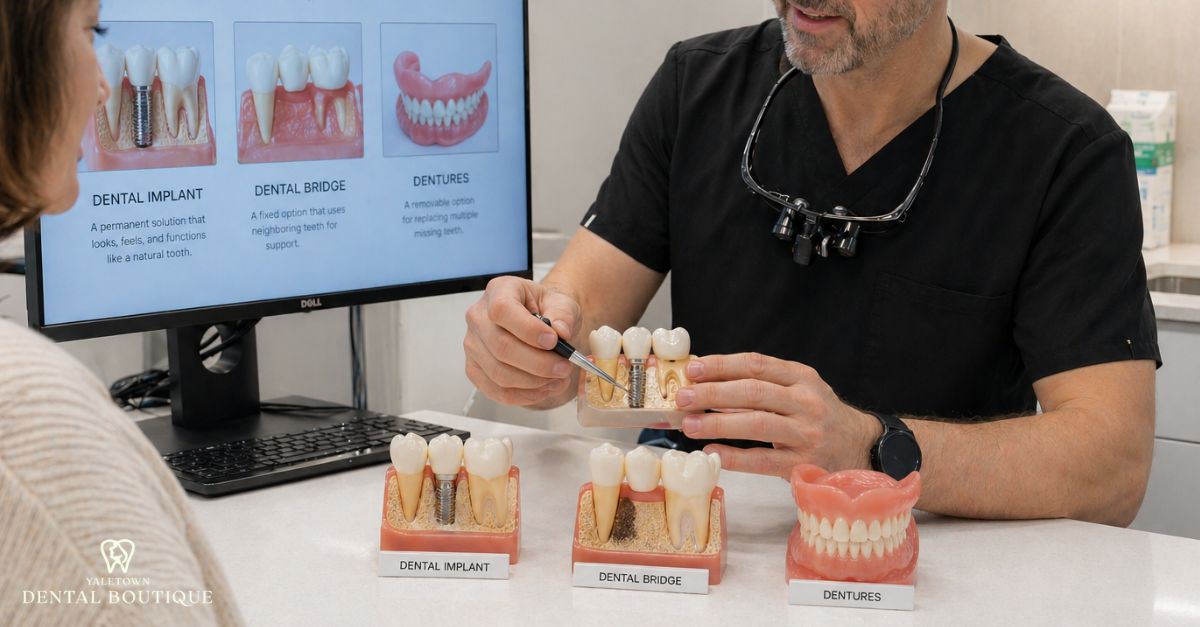
Dentures are not the only option for replacing missing teeth. Modern dentistry offers several tooth replacement options, depending on factors such as the number of missing teeth and how the surrounding structures are functioning.
Dental Implants
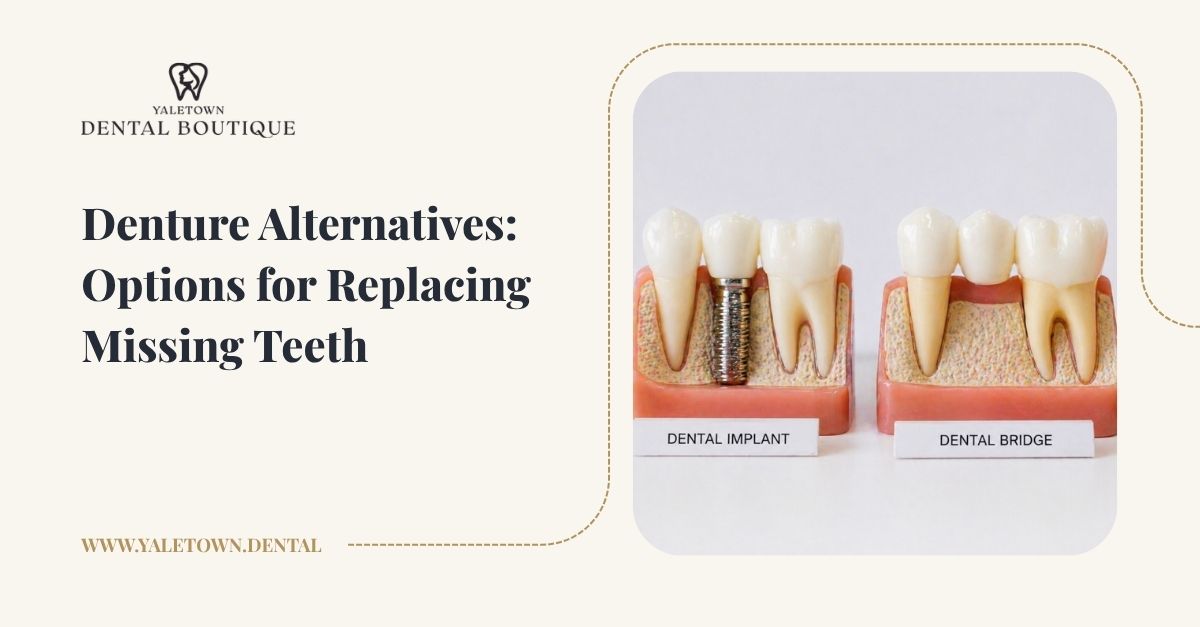
Dental implants replace the root of a missing tooth by anchoring into the jawbone. They provide a fixed solution that can function similarly to natural teeth once restored.
Implants can be used for a single tooth or multiple teeth, depending on the situation. Because they integrate with the bone, they can help maintain bone structure at the site of the missing tooth.
Dental Bridges
Dental bridges are fixed restorations that use adjacent teeth for support. They are designed to span the space where a tooth is missing, restoring continuity in the bite. Bridges are often completed in a shorter timeframe compared to implants. However, they do not engage the bone at the missing site, so bone changes in that area may still occur over time.
Implant-Supported Dentures
Implant-supported dentures combine removable dentures with added stability from implants. The implants help anchor the denture, reducing movement during speaking and chewing. While still removable, this type of solution generally provides greater stability than traditional dentures and can improve functional consistency during daily use.
Partial Fixed Solutions
Partial fixed solutions are used when some natural teeth remain and only certain areas need replacement. These may include implant-supported bridges or combined approaches that integrate existing teeth with implants. They are designed to restore function while distributing forces across both natural teeth and implant-supported areas.
How Denture Alternatives Compare
Tooth replacement options differ in how they function, not just how they look. One of the most important distinctions is whether the solution is fixed in place or removable, as this affects stability during daily activities.
Other factors also influence how each option performs over time. One key difference is how each option affects the jawbone, as removable dentures do not prevent bone loss over time, while implant-based solutions can help maintain it. Other factors include comfort and speech, maintenance requirements, and long-term durability. No single option fits every situation, and suitability depends on individual clinical conditions.
These factors influence everyday experience in practical ways. Stability supports consistent chewing and confidence, while bone preservation affects long-term facial structure. Comfort and speech shape daily function, and maintenance needs influence how manageable the solution is over time.
Comparison at a Glance
The table below provides a simplified side-by-side overview of how different tooth replacement options compare across key factors.
| Option | Permanence | Bone Preservation | Comfort & Speech | Maintenance | Longevity |
| Dental Implants | Fixed | Maintains Bone at Site | Stable, Similar to Natural Teeth | Daily Hygiene + Routine Exams | Long-Term |
| Dental Bridges | Fixed | Does Not Preserve Bone | Generally Stable | Daily Hygiene + Regular Monitoring | Moderate |
| Implant-Supported Dentures | Semi-Fixed | Helps Reduce Bone Loss | More Stable Than Removable | Removal + Cleaning + Maintenance | Moderate-Long |
| Traditional Dentures | Removable | Does Not Preserve Bone | May Shift, Affects Speech | Daily Removal + Cleaning | Variable |
What Denture Alternatives Really Offer
Fixed and implant-based solutions are designed to do more than replace missing teeth. They change how the mouth functions and how the supporting structures are maintained over time.
Because fixed options engage the jawbone, they can help reduce bone loss in areas where teeth are missing. This plays an important role in maintaining facial structure and long-term stability.
Greater stability also improves how force is distributed during chewing, which can make eating feel more consistent and controlled compared to removable options.
Speech and comfort are often more predictable with fixed solutions, as they do not rely on movement or positioning during use.
For many people, these differences also affect confidence. A solution that feels stable and integrated into daily function can reduce the awareness of replacement teeth during speaking, eating, and social interaction.
Choosing the Right Option
The right tooth replacement option depends on several clinical factors working together. Decisions are based on individual conditions rather than a single rule, and what is suitable for one person may not apply to another.
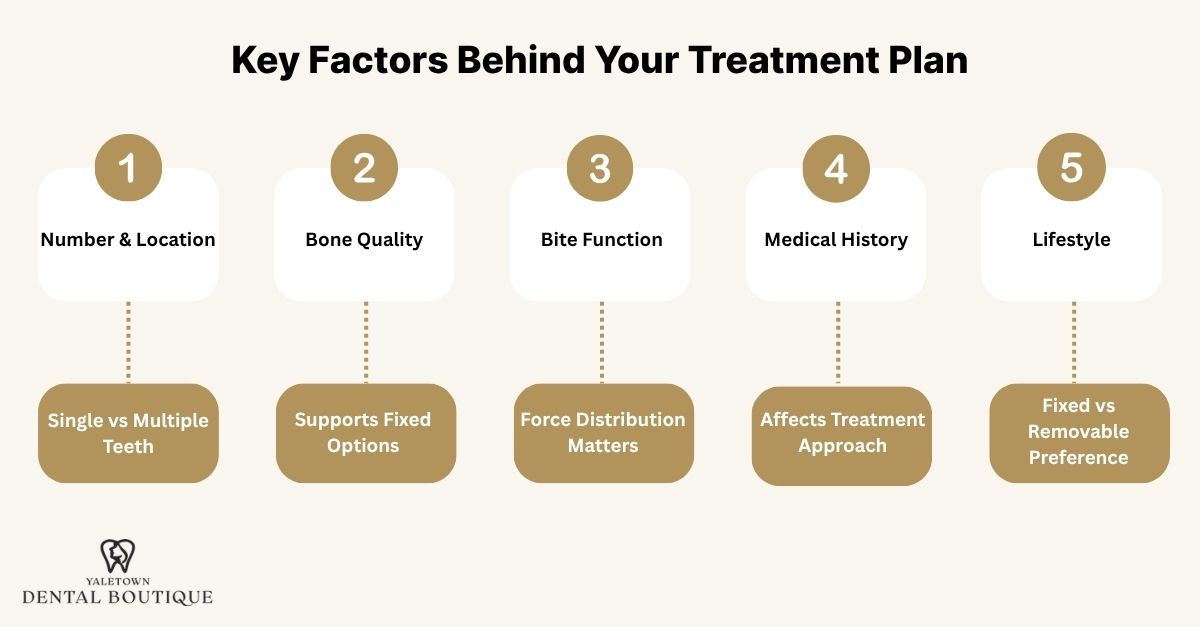
Number and Location of Missing Teeth
The number of missing teeth plays a key role in determining available approaches. Replacing a single tooth differs from restoring multiple areas or a full arch. Location also matters, as teeth in different parts of the mouth contribute differently to chewing, balance, and support.
Bone Quality and Quantity
The jawbone provides the foundation for certain types of tooth replacement. In cases where bone is sufficient, more options may be considered. When bone is reduced, some approaches may be limited or require additional planning to ensure stability.
Bite and Jaw Function
How the upper and lower teeth come together affects how forces are distributed during chewing. Bite alignment and jaw movement influence long-term function and stability. These factors are considered to ensure that any replacement works in balance with the rest of the mouth.
Medical History
Overall health can influence which options are appropriate. Certain medical conditions or medications may affect healing or limit the suitability of specific procedures. These considerations are part of a broader assessment rather than a single deciding factor.
Lifestyle and Expectations
Daily habits and expectations also play a role in choosing an option. Preferences for fixed or removable solutions, comfort during speaking and eating, and willingness to maintain the restoration all influence the final decision in a practical way.
The Yaletown Dental Boutique Approach

At Yaletown Dental Boutique, tooth replacement decisions begin with a diagnostic-first, choice-driven approach. Care starts with a thorough evaluation of both function and anatomy, supported by imaging and bite analysis. The goal is to understand how the teeth, jaw, and supporting structures interact, so recommendations are based on clinical findings rather than assumptions.
From there, options are considered in the context of the full picture, not just the missing area. This includes assessing whether dentures or alternative approaches are more appropriate, based on how each tooth and surrounding structure contributes to overall function.
This process is guided through restorative dentistry in Yaletown, where decisions are matched to individual conditions rather than generalized solutions.
Care is then directed toward the least invasive approach that supports long-term stability. When intervention is needed, it is carried out with precision to restore function while preserving existing structures. Ongoing maintenance focuses on monitoring changes, supporting daily function, and reducing the likelihood of future complications.
An evaluation at Yaletown Dental Boutique can help clarify which direction aligns with your specific clinical situation.
Conclusion
Dentures are not the only option for replacing missing teeth. Depending on clinical conditions, a range of alternatives may be available, including fixed and semi-fixed approaches. What is suitable varies from person to person, and the right direction is based on how the teeth, bone, and bite function together—not just the number of missing teeth.
Before assuming dentures are the only solution, it can be helpful to have a clear evaluation of your specific situation. This allows different possibilities to be considered without unnecessary limitations.
You can schedule an appointment with Yaletown Dental Boutique to assess your options and determine whether fixed alternatives may be appropriate for your needs.
Do I always need dentures if I’m missing teeth?
No, dentures are not always required. They are one option among several. Depending on your situation, other approaches may be considered based on how many teeth are missing and overall oral conditions.
Are dental implants better than dentures?
Neither option is universally better. They function differently, with fixed and removable differences. The right choice depends on factors like bone support, bite function, and personal preferences, rather than a single standard.
Can I replace missing teeth without something removable?
In some cases, yes. Fixed solutions may be possible depending on clinical conditions. These options stay in place and function differently from removable ones, but suitability varies from person to person.
What is the difference between a bridge and an implant?
A bridge is supported by neighboring teeth, while an implant is supported by the jawbone. Both replace missing teeth but differ in how they are anchored and how they interact with surrounding structures.
Are fixed options always possible?
Not always. Fixed solutions depend on factors such as bone availability, tooth support, and overall oral health. In some situations, removable options may be more appropriate based on these limitations.
How do I know which option is right for me?
The right option is determined through a clinical evaluation. Factors like missing teeth, bone condition, bite function, and preferences are considered together to identify what is most suitable.
Do denture alternatives last longer than dentures?
Longevity varies by option and individual conditions. Some solutions are designed for longer-term use, while others may require adjustments over time. Maintenance and oral health also play a role in how long they last.