
At a Glance:
Dental emergencies like toothaches, broken teeth, or swelling can escalate quickly without the right steps. Rinse gently, apply ice, avoid aspirin on gums, and preserve knocked-out teeth in milk or saline. Seek urgent dental care for pain, trauma, or signs of infection. Yaletown Dental Boutique offers same-day emergency appointments in Vancouver with a calm, expert approach to relieve discomfort and protect your oral health.
A cracked tooth, sudden swelling, or sharp pain can turn your day upside down—and when it happens, knowing how to respond can make all the difference.
Dental emergencies are stressful, but acting quickly (and correctly) helps reduce pain, prevent further damage, and in some cases, save a tooth.
At Yaletown Dental Boutique, we understand how urgent these moments can feel. That’s why we offer same-day emergency dental care in downtown Vancouver, with a caring team ready to support you from the first phone call to follow-up.
What is a dental emergency?
A dental emergency is any urgent oral health issue that needs immediate attention—either to relieve severe pain, stop bleeding, or prevent lasting damage.
While not every tooth problem is an emergency, some symptoms require prompt care to avoid complications like infection or permanent tooth loss.
Common signs you may need emergency dental care include:
- Severe, throbbing tooth pain that doesn’t go away
- A tooth that’s been knocked out or pushed loose
- Broken or cracked teeth with pain or sharp edges
- Swelling in the gums, face, or jaw—especially with fever
- Bleeding in the mouth that won’t stop
- Signs of infection (abscess, pus, bad taste or smell)
- A broken filling, crown, or restoration that exposes the nerve
- Facial trauma, including jaw injuries or cuts in the mouth
For milder issues—like a chipped tooth with no pain or a lost filling without sensitivity—you may be able to wait a day or two. But don’t ignore it. Call your dental clinic for advice.
If you’re unsure whether it’s an emergency, call your dentist. At Yaletown Dental Boutique, we offer urgent dental care and same-day visits in Vancouver. If you’re in pain, we’ll help you get relief—fast.
First Steps to Take Before You See a Dentist
In a dental emergency, your actions in the first few minutes can help reduce pain, prevent complications, and even save a tooth.
Here’s how to handle the most common situations until you can get to the clinic:
Toothache
➤ Rinse your mouth gently with warm water.
➤ Floss carefully to remove anything stuck between teeth.
➤ Apply a cold compress to the outside of your cheek if there’s swelling.
➤ Take over-the-counter pain relief (acetaminophen or ibuprofen).
➤ Avoid placing aspirin directly on your gums—it can burn soft tissue.
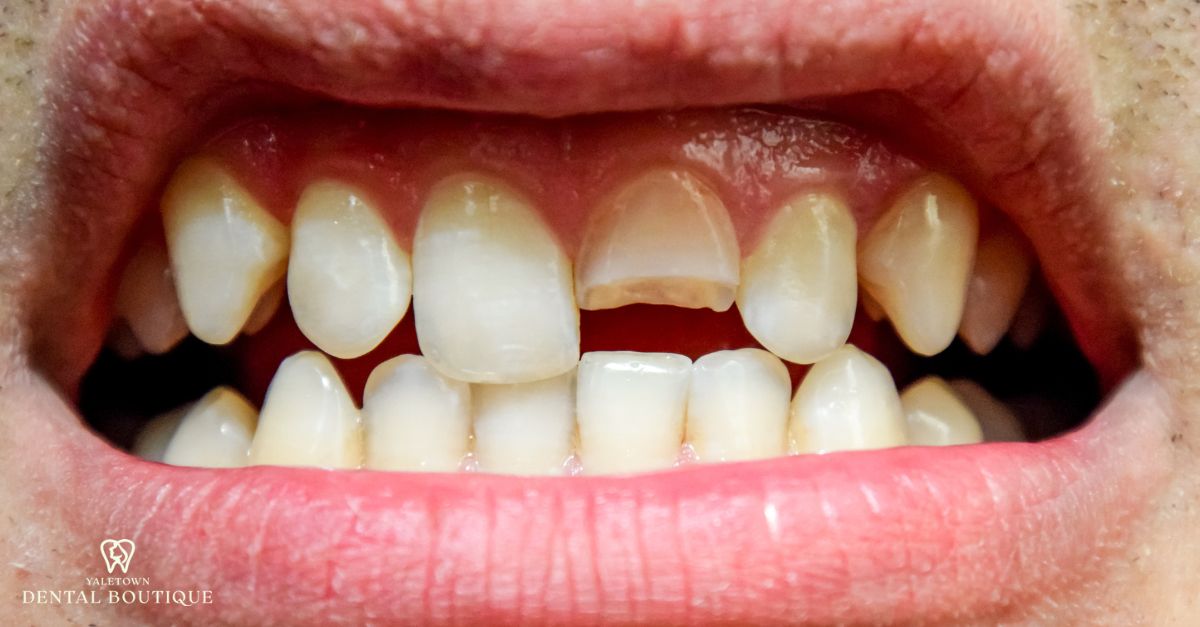
Cracked or Broken Tooth
➤ Rinse your mouth and any tooth fragments with warm water.
➤ Apply gauze to control bleeding if needed.
➤ Use a cold compress for swelling.
➤ Bring any broken pieces with you to your dental visit.
Knocked-Out Tooth
➤ Handle the tooth by the crown only (never touch the root).
➤ Gently rinse with water if dirty—don’t scrub.
➤ If possible, reinsert into the socket and bite down gently on gauze.
➤ If that’s not an option, store in milk or saline solution.
➤ See a dentist within 30–60 minutes for the best chance of saving it.
Partially Dislodged Tooth
➤ Don’t try to push the tooth back in place.
➤ Apply a cold compress for pain or swelling.
➤ Take OTC pain medication if needed.
➤ Call your dentist promptly.
Dental Abscess
➤ Look for signs like a swollen bump or pimple on the gums.
➤ Rinse gently with warm salt water several times a day.
➤ Don’t pop or press on the swelling.
➤ See a dentist as soon as possible—abscesses can become serious quickly.
Lost Filling or Crown
➤ Cover the exposed area with sugar-free gum or dental cement if available.
➤ Never use glue.
➤ For a crown, you can try gently placing it back with toothpaste or denture adhesive until your appointment.
Soft Tissue Injuries (Lips, Gums, Tongue, Cheeks)
➤ Rinse with salt water to clean the area.
➤ Apply gentle pressure with gauze or a damp tea bag to stop bleeding.
➤ Use a cold compress to reduce swelling.
➤ If bleeding persists after 15–20 minutes, go to the ER.
At Yaletown Dental Boutique, we treat all types of dental emergencies—from cracked teeth to abscesses—with advanced care in a calm, boutique setting. If you’re in pain or unsure what to do, call us right away—we’ll walk you through the next steps and fit you in quickly.
Finding an Emergency Dentist in Vancouver
When a dental emergency strikes, knowing where to go can ease stress and improve your outcome. Quick access to care matters—and so does the kind of care you receive.
Whether it’s a knocked-out tooth, sudden swelling, or unrelenting pain, you need a dental team that acts fast, keeps you calm, and delivers expert results.
Here are what to look for in an emergency dentist:
- Same-day or urgent care appointments
- After-hours guidance or triage support
- Experience treating a full range of dental emergencies
- Modern imaging and technology for fast diagnosis
- A welcoming environment that eases anxiety
At Yaletown Dental Boutique, we’re proud to be one of Vancouver’s trusted providers for emergency dental care. Our central location in Yaletown means you can reach us quickly—and our team is trained to handle dental emergencies with skill, empathy, and urgency.
From the moment you call, we focus on getting you out of pain and into care.
Don’t wait or try to tough it out. If something doesn’t feel right, contact us—we’ll guide you through the next step and make sure you’re seen as quickly as possible.
What to Expect at Your Emergency Appointment
When you’re in pain or facing an unexpected dental issue, the last thing you need is confusion about what happens next.
At Yaletown Dental Boutique, we make emergency visits as smooth and stress-free as possible. From the moment you walk in, our team focuses on relieving discomfort and getting your smile back on track—quickly, clearly, and comfortably.
Here’s what your visit will typically include:
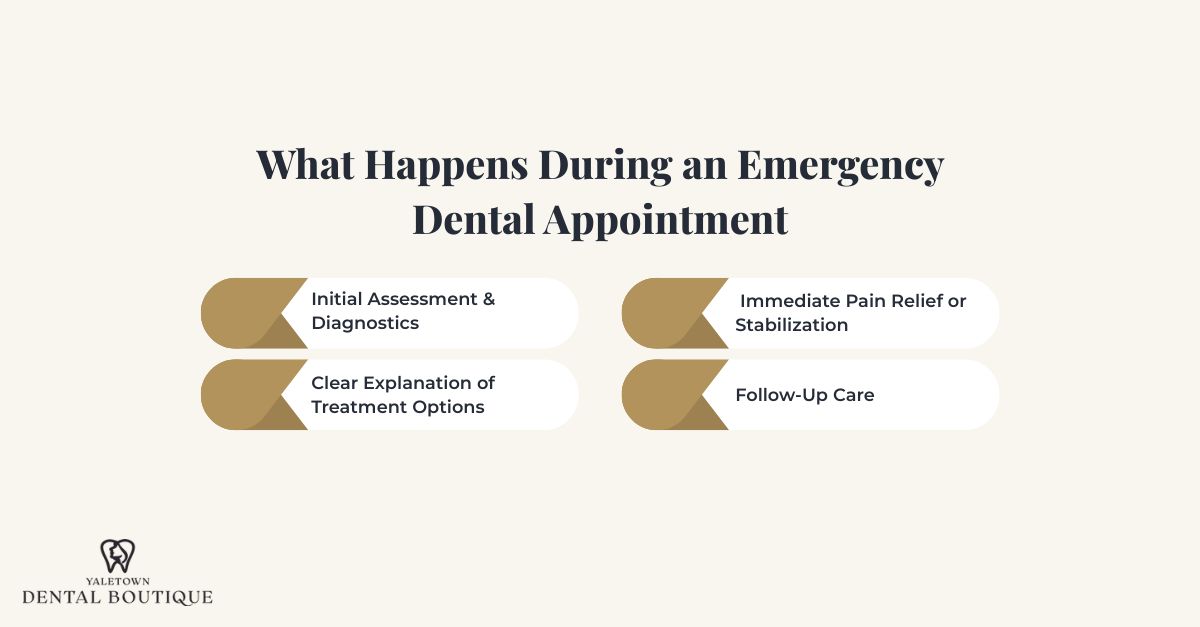
1. Initial Assessment & Diagnostics
We’ll start by listening to your symptoms and concerns.
Your dentist will examine the affected area, and digital X-rays or photos may be required to get a clear look at what’s going on beneath the surface—whether it’s a hidden cavity, cracked tooth, or abscess.
2. Immediate Relief or Stabilization
Your comfort comes first.
We’ll take immediate steps to reduce pain, stop bleeding, or protect exposed areas. This might include numbing the site, draining an infection, smoothing a sharp edge, or placing a temporary covering until further treatment can be completed.
3. Clear Explanation of Your Options
Once we understand the issue, we’ll walk you through your treatment choices.
We explain what’s urgent, what can wait, and what’s involved in each option—with no pressure and all the time you need to ask questions.
4. Follow-Up Care & Next Steps
If your issue needs further treatment (like a crown, root canal, or implant), we’ll schedule a follow-up.
We’ll also give you personalized care tips for healing at home—and we’re always here if anything changes or you need reassurance.
Conclusion
Dental emergencies often come out of nowhere—but how you respond can make a big difference. Acting quickly, staying calm, and reaching out for professional care are the most important steps.
At Yaletown Dental Boutique, we know how stressful urgent dental issues can be. That’s why we make emergency visits simple, supportive, and efficient. From the first phone call to follow-up care, our team is focused on easing your pain, protecting your health, and helping you feel cared for at every step.
We offer:
✅ Same-day and priority appointments
✅ A calm, boutique-style setting in the heart of Yaletown
✅ Advanced technology for fast, gentle treatment
✅ A patient-first approach—clear, honest, and pressure-free
If something doesn’t feel right, trust your instincts.
Call 604-900-8005 or book online today. We’re ready to help.
What qualifies as a dental emergency?
A dental emergency involves sudden pain, bleeding, swelling, or trauma that needs prompt attention to avoid further damage or infection.
What’s the most common type of dental abscess?
A periapical abscess—an infection at the root of a tooth—is one of the most frequent and urgent types of dental abscesses.
Is a gum boil considered a dental emergency?
Yes. A gum boil often signals infection and should be examined quickly to prevent it from spreading.
Should I go to the ER for dental issues?
Go to the ER if you’re experiencing heavy bleeding, facial trauma, or swelling that affects breathing or swallowing. For most other urgent concerns, a dental clinic is the better first step.