
At a Glance:
Gum graft surgery repairs receding gums by covering exposed roots with healthy tissue. It’s recommended to protect against sensitivity, decay, and further gum loss, while also improving aesthetics. Recovery usually takes 1–2 weeks, with swelling easing in a few days.
Soft foods, careful hygiene, and avoiding smoking or straws help healing. At Yaletown Dental Boutique, grafting is done with modern techniques and patient comfort in mind, ensuring safe and lasting results.
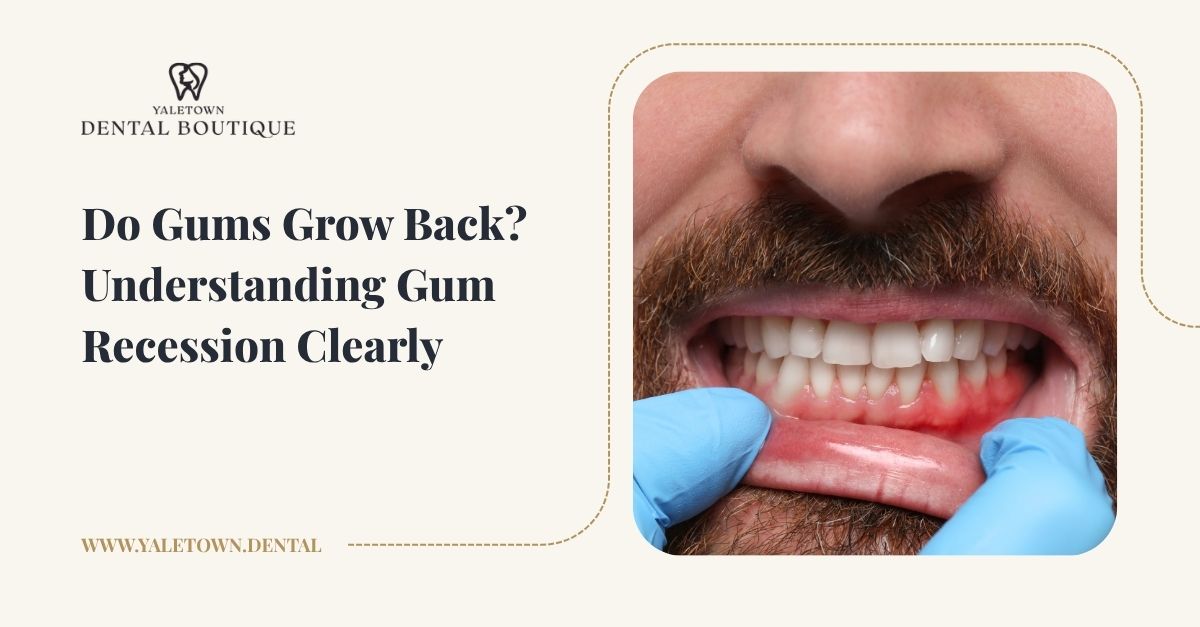
Receding gums don’t just change how your smile looks; they expose tooth roots to sensitivity, decay, and long-term damage. For many patients, gum graft surgery is the solution that restores both health and aesthetics.
At Yaletown Dental Boutique, a modern dental clinic located at the heart of Yaletown in Downtown Vancouver, gum grafting is offered as part of our Periodontics (Gum Health) services — with a focus on precision, safety, and patient comfort.
If you’ve noticed your gums pulling back or your teeth looking longer than before, understanding what grafting involves and how recovery works can give you clarity and confidence before stepping into treatment.
What is gum graft surgery?
Gum graft surgery is a periodontal procedure designed to repair areas where your gums have receded and tooth roots are exposed.
When gums pull back, they leave roots vulnerable not just to sensitivity, but also to decay and further gum or bone loss. A graft adds healthy tissue back to the affected site, protecting teeth and restoring a balanced gum line.
The process involves taking a small piece of tissue—usually from your palate, nearby gum, or a biocompatible donor source—and carefully attaching it to the recessed area. Over time, the graft integrates with your natural gum tissue, strengthening support and improving appearance.
Why might you need gum grafting?
Gum grafting is recommended when gum tissue pulls away from the teeth, exposing the roots and leaving them vulnerable. This isn’t just a cosmetic issue; it can directly affect comfort and long-term dental health.
You may need a gum graft if you’re experiencing:
- Gum recession from aggressive brushing, malocclusion, trauma, genetics, or gum disease.
- Exposed roots that cause tooth sensitivity to hot, cold, or sweet foods.
- Increased risk of decay where protective gum tissue has worn away.
- Aesthetic concerns, especially if uneven gums, affect your smile.
- Progressive gum or bone loss can threaten tooth stability if left untreated.
A graft not only restores coverage but also helps prevent further damage, keeping both your smile and your oral health intact.
If gum recession is caused by trauma or injury, our team also handles dental emergencies in Yaletown to provide immediate care.
Types of Gum Graft Surgery
At Yaletown Dental Boutique, we offer two clinically proven types of gum grafts as part of our periodontal care services: connective tissue grafts and free gingival grafts. Your dentist will choose the best technique based on your gum health and treatment goals.
Types Of Gum Graft Surgery Compared | ||
|---|---|---|
| Type | How It’s Done | Best For |
| Connective Tissue Graft | Tissue From Under Palate Placed Over Root | Root Coverage |
| Free Gingival Graft | Thin Tissue Layer Taken From Palate | Adding Gum Thickness |
| Pedicle Graft (Not Offered at Our Clinic) | Nearby Gum Tissue Pulled Over Root | Faster Healing With Local Tissue |
Connective Tissue Graft
The most common method. A small flap is opened in the roof of your mouth, or donor tissue is used, to obtain connective tissue that is then placed over the exposed root. It’s widely used for root coverage.
Free Gingival Graft
A thin layer of tissue—either taken directly from the roof of your mouth or sourced from approved donor tissue—is attached to the gum area. This option is often chosen when gums are naturally thin and need added thickness.
Pedicle Graft (Not Offered at Yaletown Dental Boutique)
This technique uses nearby gum tissue, repositioned over the exposed root, and is typically suited for patients with plenty of surrounding gum volume.
While effective in certain cases, pedicle grafts are not currently performed at Yaletown Dental Boutique. Instead, our periodontic care focuses on connective tissue and free gingival grafts, which are clinically proven and suited to most gum recession cases.
What to Expect During the Procedure
Gum grafting is a routine outpatient procedure performed under local anesthesia. Most treatments take about 60 to 90 minutes, depending on the number of teeth involved and the type of graft used. Here’s what typically happens during your visit:
- Local anesthesia is applied to numb the treatment area and ensure a pain-free experience.
- Oral sedation may be offered if you’re feeling anxious. Taken as a pill in advance, it helps you stay calm without IVs or gas.
- The graft site is prepared by gently cleaning the area and exposing the affected root.
- Tissue is harvested—typically from the roof of your mouth (palate) or, in some cases, provided as sterile donor tissue from an approved source.
- The graft is placed over the recessed area and secured with sutures to promote integration with surrounding tissue.
- Optional regenerative materials like healing membranes may be applied to support better healing.
- Post-op instructions are reviewed, and any follow-up appointments are scheduled before you leave.
Throughout the procedure, your comfort is our priority. We take time to explain each step and ensure you feel supported from start to finish.
Post-Surgery Recovery Tips
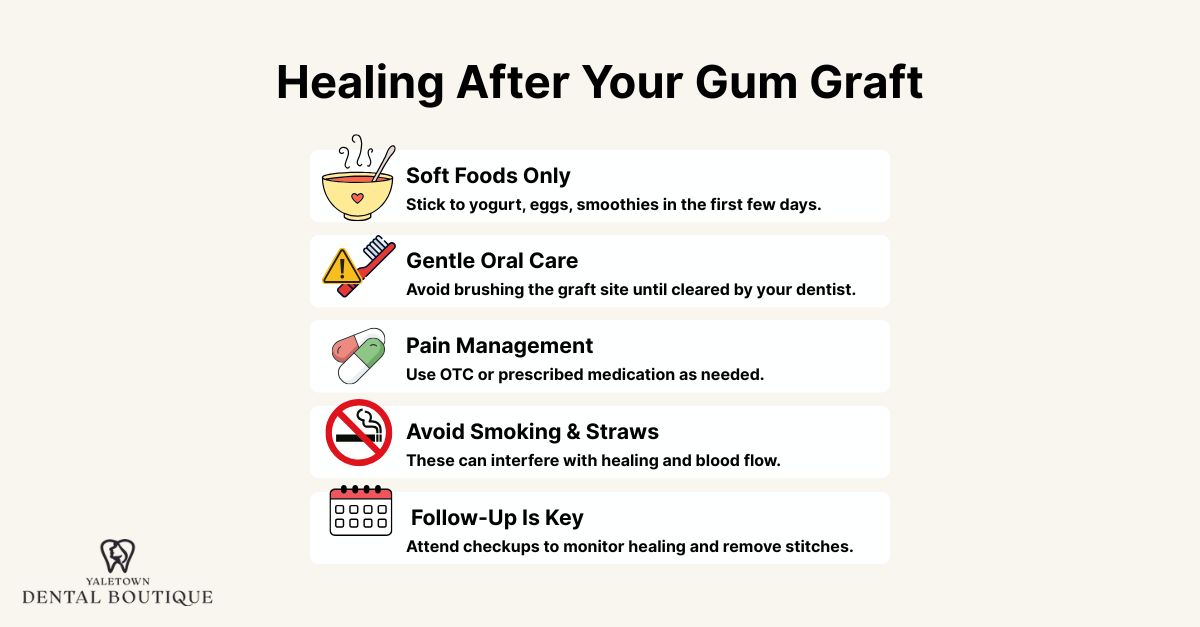
Healing after a gum graft isn’t complicated, but it does require care and patience.
Successful recovery after a gum graft relies on a few key pillars: nourishing your body with the right foods, caring for your mouth gently, and avoiding habits that can disrupt healing.
The first few days are when you’ll notice the most tenderness and swelling, which gradually improve as your gums adapt to the graft. Most patients feel well enough to resume light activities within a day or two, but full healing takes one to two weeks.
To support recovery, stick to soft foods like yogurt, eggs, and smoothies for the first few days.
Avoid hot, spicy, or crunchy foods that could irritate the graft. Brushing should be paused directly on the graft site until your dentist clears you, though you’ll still need to keep the rest of your mouth clean. Pain is usually mild and can be managed with over-the-counter medication or prescriptions if needed.
One of the most important rules is to avoid smoking, using straws, or putting pressure on the graft area, as these habits can interfere with blood flow and healing. Follow-up visits are key; your dentist will check that the graft is integrating properly and remove stitches if necessary.
Is gum graft surgery safe?
Gum graft surgery is considered a very safe and predictable procedure when performed by an experienced dentist or periodontist.
The techniques used today are minimally invasive, and most patients recover smoothly without complications. Still, like any surgical treatment, there are potential risks, though they are rare. These include minor bleeding, infection, or delayed healing, especially if post-operative instructions aren’t followed.
At Yaletown Dental Boutique, we reduce these risks through strict sterilization protocols, advanced surgical techniques, and careful monitoring before and after your procedure. Patients are given detailed aftercare instructions, and our team follows up to ensure recovery is on track.
You should call your dentist promptly if you notice unusual swelling, persistent bleeding, severe pain, pus, or fever. These signs are uncommon but may indicate an infection or another issue that needs attention.
Why Choose Yaletown Dental Boutique for Gum Grafting
Choosing where to have gum graft surgery matters just as much as the procedure itself. The outcome depends not only on surgical technique, but also on the experience, technology, and support behind it.
At Yaletown Dental Boutique, located in the heart of Downtown Vancouver, gum grafting is delivered with precision, safety, and patient comfort at the forefront. Our team is highly trained in periodontal surgery and uses advanced tools—including digital imaging—to plan and perform grafts with accuracy.
Every treatment plan is personalized, whether you’re addressing health concerns, root sensitivity, or cosmetic goals. We serve patients from across Vancouver, Yaletown, and False Creek, combining surgical expertise with a warm, supportive environment.
For those with anxiety, oral sedation is available upon request and arranged in advance. This gentle option, combined with local anesthesia, allows most patients to feel relaxed without the need for IVs or gas.
From pre-op guidance to follow-up care, we focus not just on your procedure—but on your peace of mind. Our goal is to deliver a smooth experience and long-term gum health you can count on.
Healthy gums are essential for dental implants and restoration options, as they provide strong tissue support for long-term stability.”
Conclusion: Protect Your Smile with Expert Gum Care in Vancouver
Gum graft surgery is more than a cosmetic fix — it’s a clinically proven way to protect your teeth, restore comfort, and support long-term oral health. Whether your gums have receded from brushing habits, genetics, or periodontal disease, grafting can help prevent further damage while improving how your smile looks and feels.
At Yaletown Dental Boutique, we combine surgical precision with a patient-first philosophy to make treatment as smooth and comfortable as possible. From your initial consultation to post-op recovery, our Vancouver-based team ensures you know what to expect at every step — so you never feel left in the dark.
Whether you need to treat root sensitivity, restore gum health, or prevent future recession, our periodontics team is here to help.
Book your periodontal evaluation in downtown Vancouver today and take the first step toward healthier, stronger gums and renewed smile confidence.
Our team at Yaletown Dental Boutique in Vancouver is always available to answer questions and support you during healing.
Does gum graft surgery hurt?
No — the procedure itself isn’t painful because local anesthesia is used to fully numb the area. If you feel nervous, oral sedation can also be arranged in advance to help you stay calm throughout the visit. After surgery, mild soreness is common, but it’s usually manageable with over-the-counter or prescribed pain medication.
Can gums recede again after surgery?
Yes, if risk factors such as malocclusion, aggressive brushing, smoking, or untreated gum disease continue. With good oral hygiene and regular checkups, results are long-lasting.
Will I be able to eat normally after gum graft surgery?
For the first week, you’ll need to stick to soft foods and avoid chewing on the surgical site. Your dentist will give you specific dietary instructions.
Is gum graft surgery available near me in Vancouver?
Yes. At Yaletown Dental Boutique in Downtown Vancouver, we offer expert gum grafting with personalized care and a gentle, comfort-first approach.