
At a Glance:
What you eat after implant surgery directly affects healing.
Best Foods: Soft proteins (eggs, yoghurt), smoothies, mashed avocado, oatmeal, bone broth, water, and herbal teas.
Worst Foods: Crunchy (chips, popcorn), sticky (caramel, gum), acidic (citrus, tomatoes), spicy foods, alcohol, and carbonated drinks.
Meal Plan: Liquids first 2 days → soft solids days 3–5 → gentle variety days 6–7 → gradual return to normal in week 2.
Mistakes to Avoid: Eating solids too soon, drinking through straws, skipping protein, and chewing carelessly.
What you eat after implant surgery in Yaletown can make or break your recovery. The wrong choice irritates the surgical site or delays healing, while the right foods actively support bone integration and tissue repair. Too often, patients think diet is just about comfort when in reality, it’s part of the treatment plan. If you want your implant to heal strongly and last, you need a diet that fuels recovery, not one that fights against it.
Why Diet Matters After Implant Surgery
Healing after implant surgery goes deeper than the gums. The implant is fusing with your jawbone through osseointegration, the process that provides long-term strength and stability. What you eat during recovery can either support this healing or slow it down—an important reminder that nutrition plays a key role in successful outcomes within restorative dentistry.
Nutrient-rich, soft foods provide protein, vitamins, and minerals that accelerate tissue repair and bone growth. On the other hand, crunchy, spicy, or acidic foods can irritate the surgical site, disrupt clot formation, or even compromise the implant. In short, your diet is not just about comfort; it’s a tool for healing.
Best Foods for Healing After Implants
The best diet after implant surgery is soft, nourishing, and easy to chew. You want foods that fuel healing without stressing the surgical site.
| Food Type | Healing Benefit |
| Soft Proteins | Repair Tissue, Strengthen Bone |
| Vitamin-Rich Foods | Boost Immunity, Reduce Inflammation |
| Mineral Boosters | Support Osseointegration |
| Hydration | Maintain Circulation, Lower Risk |
Soft Proteins
Scrambled eggs, Greek yoghurt, and tofu give your body the amino acids it needs to repair tissues and strengthen the bone around the implant.
Vitamin-Rich Foods
Smoothies made with leafy greens, berries, or mashed avocado deliver vitamins C and E, both of which are critical for wound healing and reducing inflammation.
Mineral Boosters
Oatmeal topped with soft fruits or warm bone broth provides calcium, magnesium, and zinc, all of which support bone growth and recovery.
Hydration
Water and caffeine-free herbal teas keep tissues hydrated and help flush bacteria, lowering infection risk. Skip straws to avoid suction pressure.
Additional Healing-Friendly FoodsBeyond the basics, other soft, nutrient-dense foods can make recovery easier and more comfortable:
- Cottage Cheese: A soft, high-protein food that’s easy to eat and supports tissue repair.
- Mashed Sweet Potatoes: Packed with beta-carotene and fibre, gentle on the gums.
- Applesauce: Provides vitamins without the chewing stress of raw fruit.
- Hummus: A smooth blend of protein and healthy fats, easy to pair with soft pita bread.
- Steamed Fish: Flaky, tender, and rich in omega-3s, which support healing and reduce inflammation.
Foods to Avoid After Implant Surgery
Certain foods can interfere with recovery after oral surgery by irritating the surgical site, slowing healing, or even dislodging the protective blood clot around the implant. Avoiding these risks helps ensure a smoother and safer healing process. To read more about implant safety read our article about Are Dental Implants Safe? Expert Answers in Vancouver.
Crunchy Foods
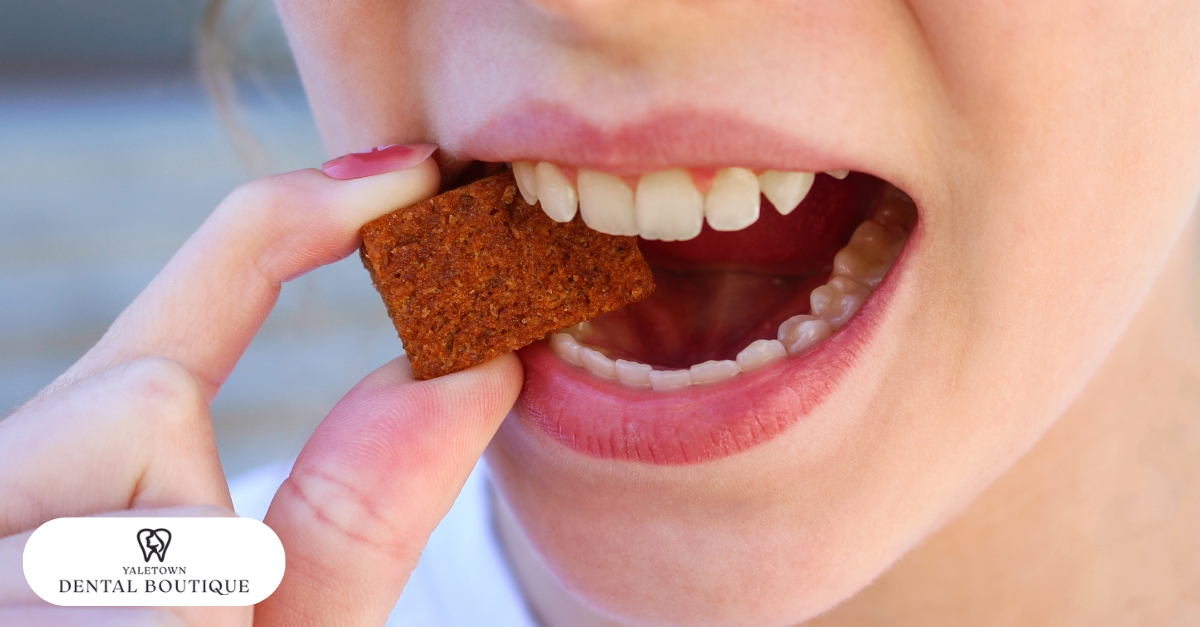
Chips, popcorn, and nuts create sharp fragments that can press against or lodge in the healing area, increasing the risk of infection.
Sticky or Chewy Foods
Caramel, gummy candy, or chewing gum puts unnecessary pressure on the implant and may pull at the healing tissues.
Acidic Foods
Citrus fruits and tomato-based dishes can sting and inflame the surgical site, making it more difficult for tissue to heal.
Hot and Spicy Foods
Chilli, curries, and overly hot soups can inflame gums and slow down early healing.
Alcohol and Carbonated Drinks
Alcohol interferes with healing and pain medications, while carbonation irritates tissues and can compromise clot stability.
Sample 7-Day Implant Healing Meal Plan
Healing after implant surgery isn’t just about avoiding the wrong foods — it’s about gradually reintroducing nutrition in a way your body can tolerate. Here’s how to pace yourself safely during the first week.
Days 1–2: Liquids Only
Smooth soups, protein shakes, and blended smoothies keep you nourished without chewing. Avoid hot or spicy flavours that may irritate the area.
Days 3–5: Soft Solids
Move to foods like scrambled eggs, mashed potatoes, oatmeal, and yoghurt. These give you protein and energy without stressing the implant site.
Days 6–7: Gentle Variety
Add soft pasta, steamed vegetables, and tender fish. Chew slowly and only on the opposite side of the implant to protect healing.
Week 2+: Careful Transition
Introduce more textures gradually. Stick with easy-to-chew foods until your dentist confirms full comfort and stability.
➤ Tip: Think “baby food consistency” during the first week. Smooth, soft, and nourishing is the rule.
Common Mistakes in Post-Surgery Eating
Even with the best intentions, patients sometimes slow down their own healing by eating the wrong way. Avoiding these mistakes keeps your implant secure and recovery smooth.
Eating Solids Too Soon
Chewing hard or crunchy foods in the first days can disturb the clot or put pressure on the implant before it’s stable.
Using Straws
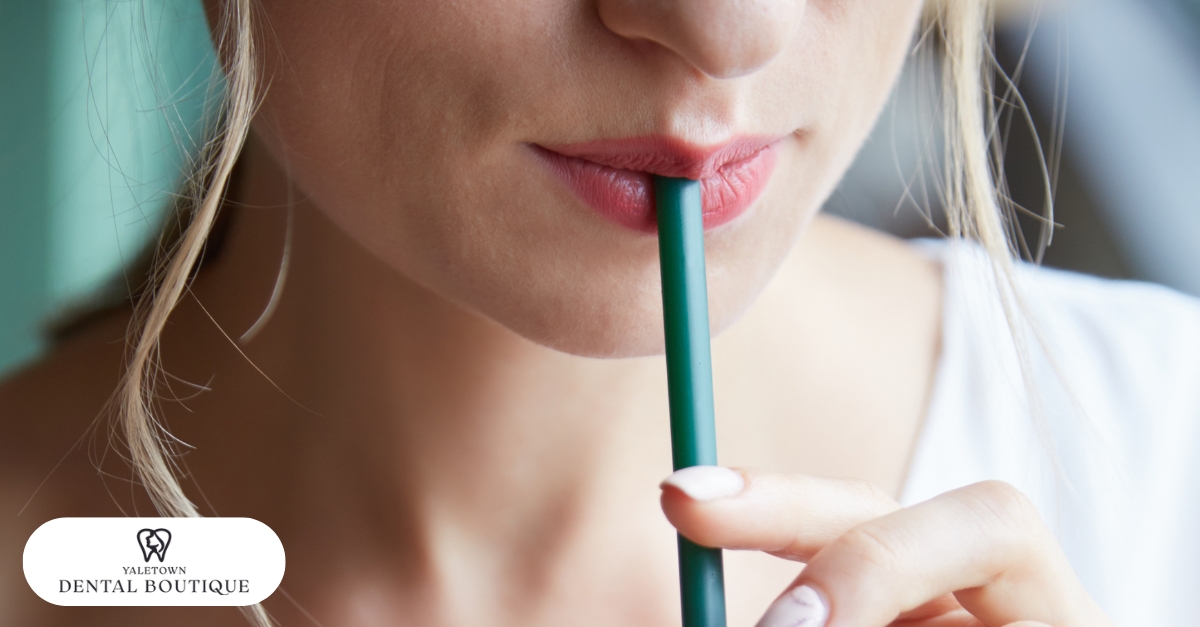
Suction from straws may loosen the clot at the surgical site, leading to complications similar to dry socket.
Skipping Protein and Nutrients
Protein, vitamins, and minerals are essential for tissue repair and regeneration. Relying only on soft carbs like bread or pasta slows recovery.
Eating Without Mindfulness
Chewing too quickly or on the implant side can irritate healing tissue. Slow, careful eating protects the site and reduces discomfort.
Snacking All Day
Constant grazing keeps the surgical site exposed to food debris, increasing the risk of infection. Structured meals followed by rinsing or gentle cleaning are safer.
Returning to Alcohol Too Soon
Alcohol can interfere with prescribed medications, reduce clot stability, and slow bone healing. It should be avoided until your dentist gives clearance.
Implant Surgery Is Just the Start—We Support Every Step
Successful implant care doesn’t stop at surgery—recovery guidance is just as critical. At Yaletown Dental Boutique, we support you through every stage, from tailored dietary advice to follow-up visits that track healing and address questions about supplements, hydration, or safe food choices.
Whether it’s a routine case or a more delicate front tooth implant, our advanced imaging and patient-first approach ensure both precision and comfort. We don’t just place implants—we help you protect them for long-term success and a confident smile.
Conclusion
Healing after implant surgery isn’t just about the procedure itself; it’s about how you support your body in the days and weeks that follow. The right foods can speed up recovery, protect the surgical site, and help your implant integrate securely. The wrong ones can set you back, causing irritation or even complications.
At Yaletown Dental Boutique, your care doesn’t end with surgery. We guide you through every phase of healing—including personalized nutrition advice and recovery check-ins—to help your implant succeed.
When can I start eating solids again?
Most patients can begin soft solids by day three. Chewy or crunchy foods should wait until your dentist confirms the site is stable.
Is coffee safe after dental implant surgery?
Mild, lukewarm coffee is fine after the first couple of days. Avoid very hot coffee early on, as heat can irritate the gums.,
What should I drink instead of soda?
Choose water or caffeine-free herbal tea. Carbonated drinks irritate tissues and can slow down healing.
Can I take supplements during recovery?
Yes, but only with your dentist’s approval. Certain supplements, especially those affecting blood clotting, may need to be paused temporarily.