At a Glance:
Pain under a dental crown is relatively common, but it is not something to ignore. It often reflects a change beneath the crown, such as pressure imbalance or internal tooth response, rather than an issue with the crown itself. Some sensitivity may be temporary, but patterns like bite pain, lingering temperature sensitivity, or spontaneous discomfort suggest the tooth is not responding normally. Early evaluation helps clarify the cause and can prevent the situation from becoming more complex. Delaying evaluation can allow the underlying issue to progress, increasing the risk of infection or more complex treatment.
Discomfort under a dental crown is something many people notice at some point, especially when biting, eating, or drinking. In some cases, it may feel mild or occasional, making it easy to assume it will settle on its own.
However, pain beneath a crown should not be ignored. Even subtle sensitivity can reflect a change within the tooth or how it is functioning, rather than simple surface irritation. A crowned tooth still has underlying structures that can respond to pressure, temperature, and other forces.
At the same time, not all discomfort means the crown has failed. Some sensations can be temporary, while others may point to a deeper issue that needs attention. Understanding the type of pain and how it behaves is key to knowing what it may represent.
Types of Pain Under a Crown (What Different Sensations May Mean)
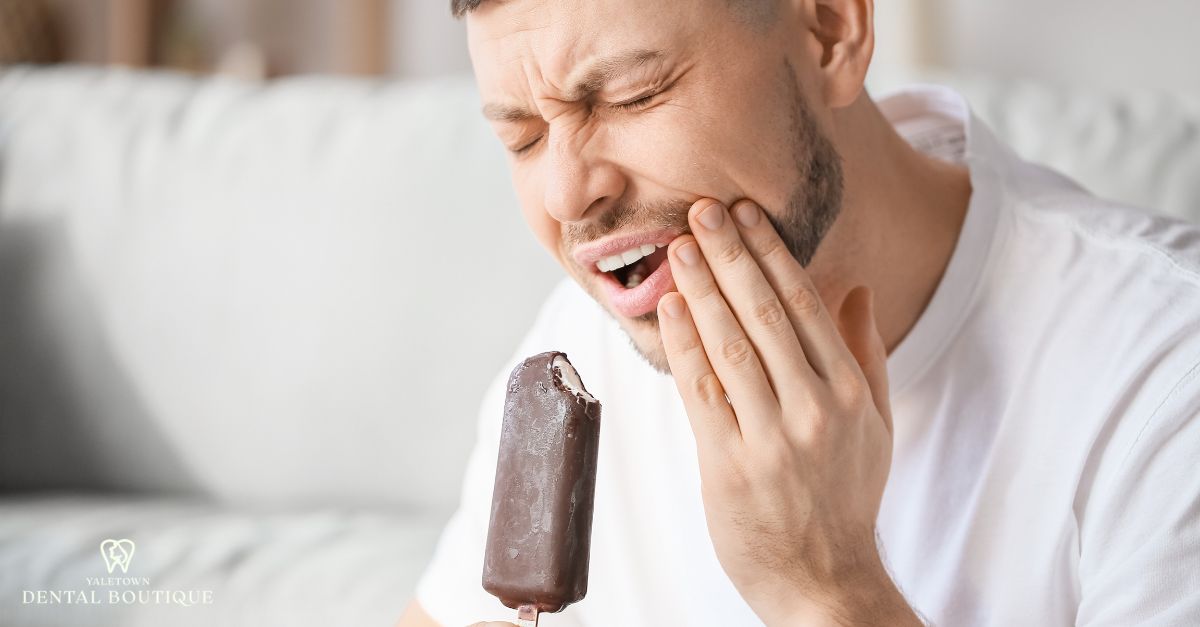
Different types of discomfort can point to different underlying causes.
- Bite Pain: Pain when biting or releasing pressure often suggests force imbalance, crown fit issues, or structural stress within the tooth.
- Temperature Sensitivity: Sensitivity to hot or cold may reflect irritation of the tooth’s nerve, especially if the sensation lingers instead of fading quickly.
- Spontaneous or Throbbing Pain: Pain that starts on its own or feels rhythmic may indicate deeper internal inflammation or infection rather than a surface-level issue.
Recognizing these patterns can help clarify whether the discomfort is temporary or more likely to require prompt evaluation.
What to Do Right Away
When you notice pain under a crown, early steps can help reduce stress on the tooth and prevent symptoms from worsening. The focus should be on protecting the area while ensuring the situation is properly assessed.
Immediate Protective Actions
Focus on reducing stress on the crowned tooth while maintaining stability and avoiding additional irritation.
- Avoid chewing on the affected side to limit pressure and reduce further sensitivity during normal eating
- Avoid very hot or cold foods and drinks, as temperature extremes can trigger or worsen discomfort
- Do not ignore pain when biting or releasing pressure, as this can signal changes in how the tooth is responding
- Maintain careful and consistent oral hygiene, using gentle brushing and flossing around the crown area
- Monitor any changes in pain type or intensity, including whether it becomes more frequent or noticeable
Professional Evaluation (Essential)
A proper assessment helps identify what is happening beneath the crown and why the discomfort is occurring.
- Bite pressure assessment to check for uneven contact that may be placing excess force on the crowned tooth
- Inspection of crown margins and overall fit to identify areas where irritation or pressure may be present
- Pulp vitality testing to evaluate how the inner part of the tooth is responding
- Imaging, often included as part of dental exams & diagnosis, to look for infection, leakage, or structural concerns not visible externally
When Pain Under a Crown Needs Urgent Care

Not all discomfort under a crown requires immediate attention. However, certain patterns suggest that the tooth is not responding normally and should be evaluated without delay to prevent the issue from progressing.
Pain That Worsens Instead of Improving
If discomfort steadily increases rather than settling, it usually indicates an active underlying process rather than temporary irritation. Progressive pain suggests ongoing internal or structural stress that is unlikely to stabilize without assessment.
Pain When Biting or Releasing Pressure
Sharp pain when biting down or upon release often points to abnormal force distribution or internal sensitivity to pressure. This pattern typically reflects a mechanical issue that does not resolve on its own and requires evaluation.
Lingering Sensitivity to Hot or Cold
Sensitivity that lingers for several seconds after temperature exposure, rather than fading quickly, suggests that the tooth’s internal response is prolonged. This type of thermal reaction is different from brief sensitivity and should not be overlooked.
Spontaneous Throbbing Pain
Pain that arises without a clear trigger and feels rhythmic or pulsing often indicates internal irritation rather than surface sensitivity. This type of discomfort tends to persist or intensify and rarely resolves without further assessment.
Swelling, Gum Tenderness, or Bad Taste
Localized swelling, tenderness, or a persistent unusual taste may reflect changes in the surrounding tissues. These signs can indicate that the area around the tooth is reacting and should be evaluated rather than observed.
Pain Returning Months or Years After Crown Placement
If a previously stable crowned tooth begins to hurt again after a long period, it suggests a new change within the tooth or surrounding area. Late-onset pain is not typical and warrants timely evaluation.
Why Crowned Teeth Can Hurt
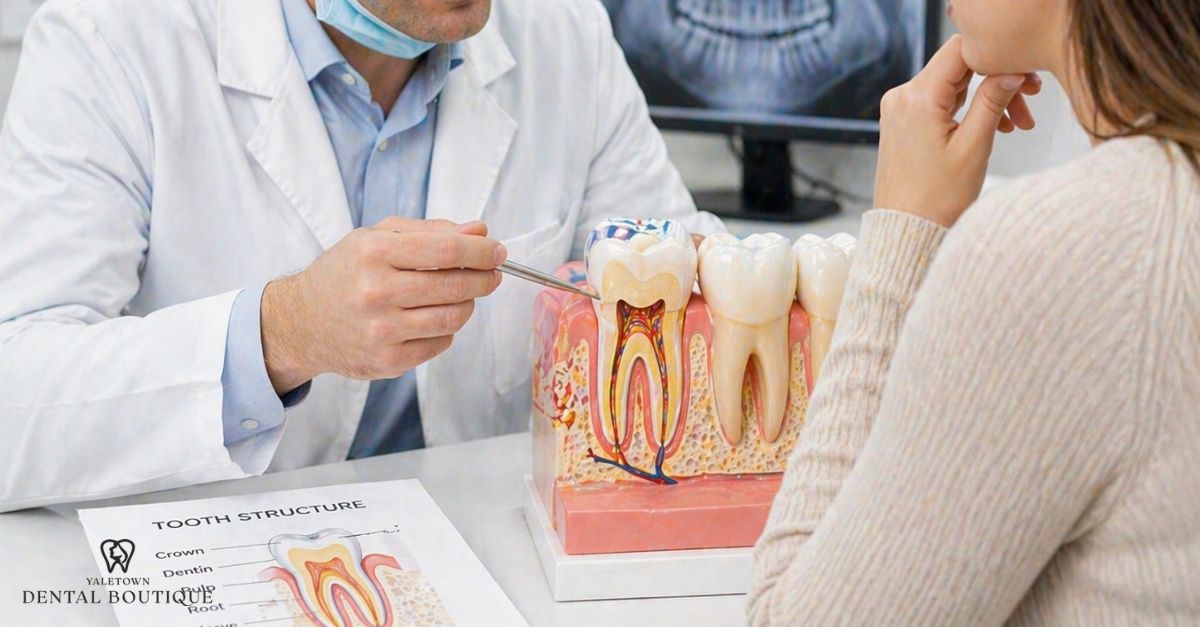
Pain under a crown is not random. It usually reflects a biological or mechanical change occurring beneath the restoration. Even though the crown covers the tooth, the underlying structures remain active and can respond to pressure, bacteria, or internal changes. Recognizing these responses early can help prevent further progression.
Inflammation of the Tooth Nerve (Pulpitis)
The inner part of the tooth contains a nerve that can become irritated due to previous treatment or ongoing stress. When this tissue is inflamed, it reacts more strongly to pressure or temperature.
Because the crown sits on top of the tooth, it does not prevent these internal reactions. As inflammation develops, the nerve becomes more sensitive, which can lead to discomfort that feels deeper and more persistent over time.
Bite Misalignment and Excessive Pressure
If a crown sits slightly higher than surrounding teeth or the bite has shifted, it can receive more force than intended. This uneven pressure places repeated stress on the tooth during normal function.
Over time, the supporting structures respond to this excess force, leading to discomfort when biting or releasing pressure. Even small differences in how teeth meet can create noticeable changes in how the crowned tooth feels.
Microleakage and Bacterial Penetration
A crown is designed to seal the tooth, but small gaps can sometimes allow bacteria to enter over time. This process, known as microleakage, exposes the underlying tooth structure to irritation. As bacteria penetrate beneath the crown, they can affect the inner layers of the tooth, leading to sensitivity or discomfort. Because this occurs beneath the surface, it may not be visible but can still influence how the tooth responds.
Undiagnosed Cracks or Fractures
A tooth may develop small cracks that are not visible when the crown is placed. These cracks can extend within the tooth structure and react to pressure during normal use. When force is applied, the crack may slightly open, affecting how the tooth absorbs stress. This movement can trigger discomfort, especially during biting, as the internal structure responds to repeated mechanical strain.
Recurrent Decay Beneath the Crown
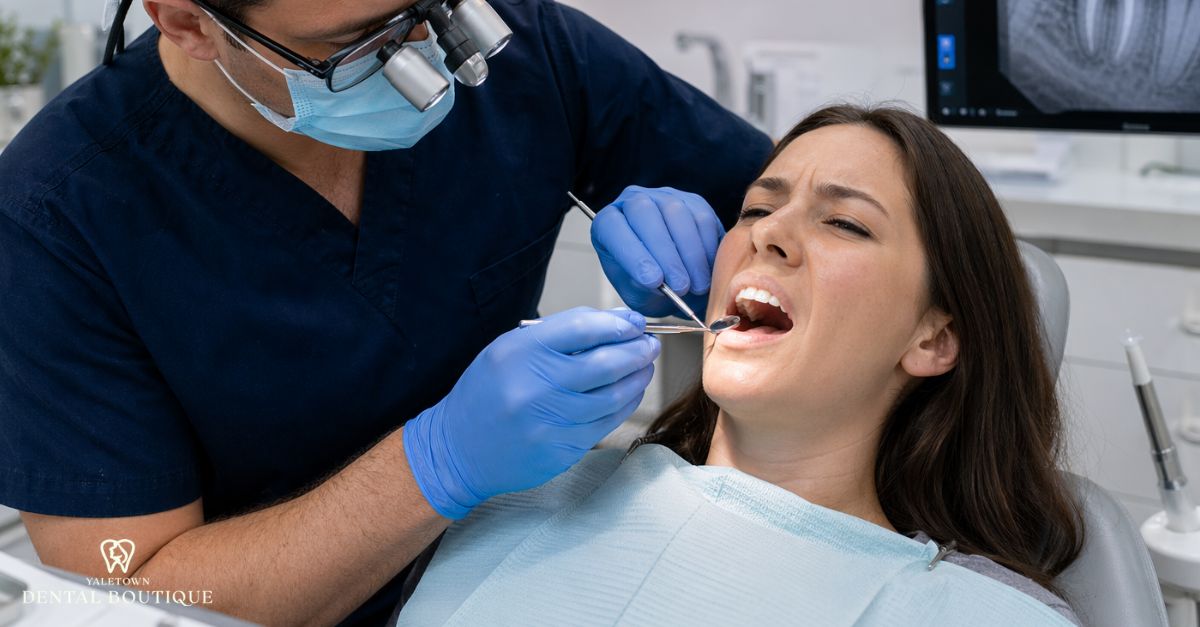
Even after a crown is placed, the tooth underneath can still be affected by decay if bacteria reach exposed areas. Over time, this can weaken the remaining tooth structure and change how it responds to normal forces. As decay progresses beneath the crown, it can lead to internal irritation, which may present as discomfort or sensitivity despite the crown appearing intact externally.
Infection at the Root Tip
In some cases, irritation or bacterial involvement can extend beyond the tooth into the area around the root tip. This can lead to changes in the surrounding tissue that create pressure or discomfort within the tooth.
When this type of infection develops, the internal tissue may no longer respond normally, and procedures such as root canal treatment may be considered as part of managing the condition.
Early Warning Signs
Early signs of discomfort under a crown are often subtle but easy to overlook. These sensations may appear before anything looks wrong. Noticing small, repeated changes can help you recognize when something is different from your normal.
- Sharp pain when chewing or applying pressure to the crowned tooth
- Pressure sensitivity without any visible change in the crown or surrounding tooth
- Lingering sensitivity after hot or cold foods or drinks
- Mild soreness or tenderness in the gums around the crown
- Feeling that the crown sits too high or contacts unevenly when biting
What Crown Pain Actually Indicates
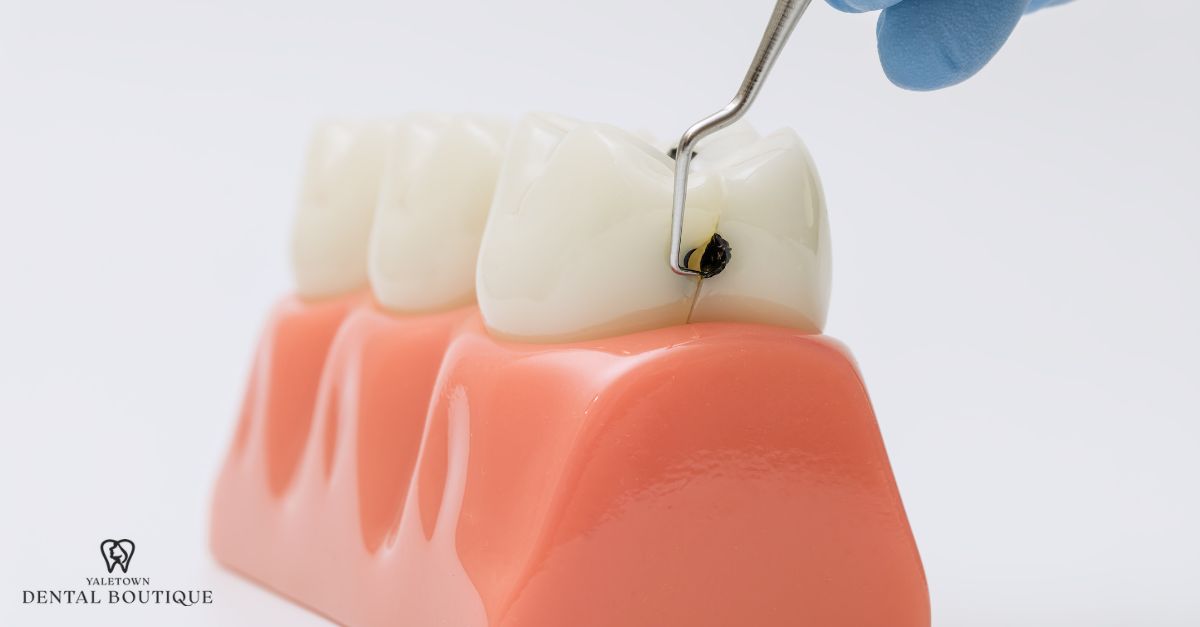
A dental crown covers and protects the outer structure of a tooth, but it does not remove what is inside. In many cases, the tooth beneath still has a living nerve that can respond to pressure, temperature, or internal changes. This means that discomfort can still develop even when the crown itself appears intact.
Pain under a crown is not caused by the material of the crown. Instead, it reflects how the underlying tooth or surrounding structures are reacting. It is a signal that something has changed, either in how the tooth is functioning or how it is responding internally.
In some situations, early irritation may settle if the underlying issue is minor. However, when changes continue without attention, the response within the tooth can become more established, making management more involved over time and increasing the likelihood that more complex care may be required. This means that pain under a crown should be understood as a diagnostic signal of biological or mechanical change, rather than a temporary surface issue.
Why Professional Care Matters
Noticing discomfort at home can help you recognize that something has changed, but it does not explain why it is happening. Pain under a crown often involves internal or structural factors that are not visible from the outside, making it difficult to identify the true source based on symptoms alone.
Because these changes are not easily seen, relying on observation or assumptions can lead to uncertainty. Waiting or guessing may allow the condition to continue without being addressed, and what feels minor at first can gradually become more established if the underlying issue remains active.
For this reason, a proper evaluation is needed to understand what is happening within the tooth and how it is responding. At Yaletown Dental Boutique, this type of assessment is part of our general dentistry services in Yaletown, where findings are used to guide next steps based on the condition of the tooth rather than assumptions.
With clearer insight early on, it becomes easier to manage the situation before it develops into something more complex, helping preserve both the tooth and the restoration over time.
Yaletown Dental Boutique’s Restorative Care Process
At Yaletown Dental Boutique, pain under a crown is approached with a diagnostic-first mindset. The focus is on understanding what has changed by evaluating how the bite functions, how the crown fits at its margins, and how symptoms present over time.
The assessment process is designed to identify the source of discomfort with clarity. This includes distinguishing whether the issue is related to bite pressure, internal tooth response, or changes around the root. Crown integrity is also considered, ensuring that conclusions are based on clinical findings rather than assumptions.
From there, care is guided by what is observed. Bite forces may be stabilized if needed, while the tooth’s internal response is monitored or addressed when appropriate. Root canal treatment is only considered when clearly indicated, with an effort to preserve the existing crown whenever possible. Ongoing care focuses on managing forces, monitoring changes, and supporting long-term stability.
Conclusion
Pain under a dental crown is a signal that something beneath the surface has changed. While not all discomfort indicates a serious issue, it is not something that should be ignored or left to resolve on its own.
Early evaluation helps clarify what is happening and can prevent progression into more complex concerns, such as deeper irritation, structural problems, or changes that affect the long-term stability of the tooth.
If you are experiencing ongoing or unusual discomfort, booking an appointment at Yaletown Dental Boutique helps identify the cause early and protect the tooth before the condition becomes more complex.
Is it normal to feel pain under a dental crown?
Mild sensitivity can occur shortly after placement, especially with temperature or pressure. However, ongoing or new pain is not typical and may reflect a change beneath the crown that should be evaluated.
How long should sensitivity last after a crown?
Sensitivity usually improves within a few days to a couple of weeks. If it persists, worsens, or changes in pattern, it may indicate that the tooth is not settling as expected.
Why does my crown hurt when I bite down?
Pain when biting often relates to how pressure is distributed on the tooth. Even slight changes in contact can cause discomfort, especially if the tooth is responding differently to force.
Can a crown get infected underneath?
The crown itself does not get infected, but the tooth beneath it can. Changes under the crown, including bacterial involvement, can affect the tooth and lead to discomfort over time.
Does crown pain mean I need a root canal?
Not always. Some types of pain are temporary or related to pressure changes. However, certain patterns may indicate deeper involvement, which needs evaluation to determine the appropriate next step.
Can pain under a crown go away on its own?
Some mild sensitivity may settle if it is temporary. However, persistent or changing pain is less likely to resolve without identifying and addressing what is causing it.
What happens if I ignore crown pain?
Ignoring ongoing discomfort may allow the underlying issue to progress. Over time, this can lead to more involved problems affecting the tooth and surrounding structures.