At a Glance:
Jaw clicking is often caused by changes in how the jaw joint and disc move together. In many cases, it is harmless, especially without pain, but persistent or changing symptoms may need evaluation.
Most situations are managed with conservative care, focusing on reducing strain and improving joint function. Early assessment helps prevent progression and supports long-term jaw health.
Jaw clicking or popping can feel unusual, especially when it happens during eating, speaking, or yawning. Many people notice the sound suddenly and wonder if something is wrong. In most cases, this type of joint noise is relatively common and does not always indicate a serious problem.
That said, jaw clicking should not be completely ignored, particularly if it becomes frequent or starts to change over time. Sounds that occur regularly, feel uncomfortable, or are linked with other symptoms may point to changes in how the jaw is functioning. Paying attention early can help prevent further strain on the joint.
Understanding why the jaw clicks is an important first step. Rather than focusing only on the sound itself, it is more useful to look at how the jaw moves and what might be affecting its normal function.
Is jaw clicking always a problem?
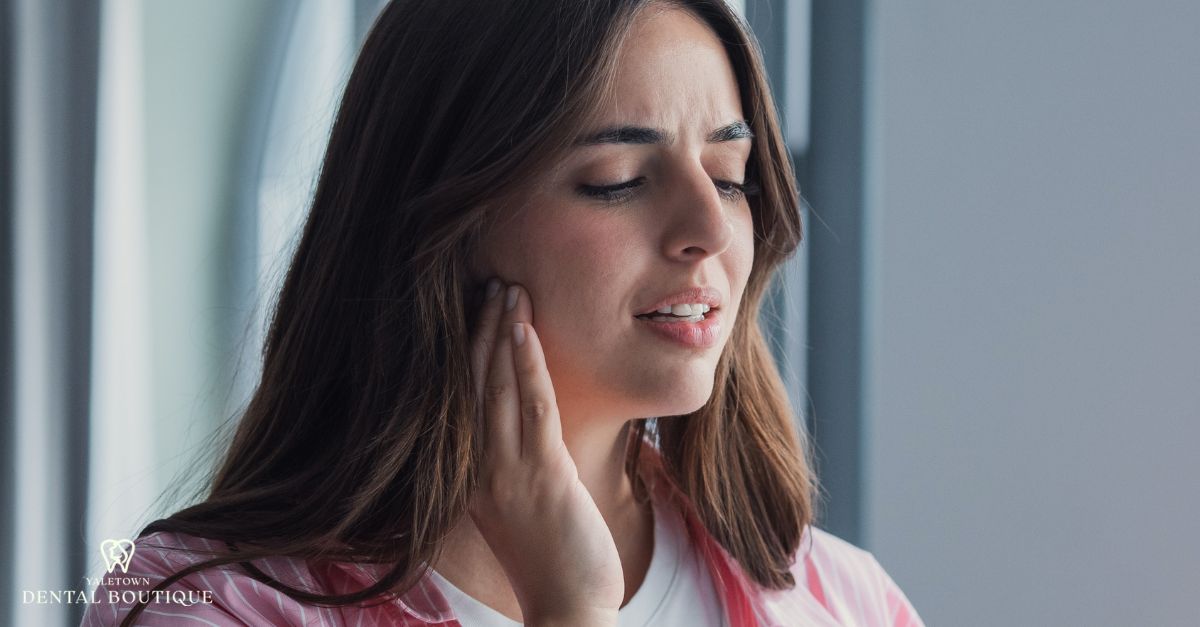
Not always. Jaw clicking can be grouped into two broad categories based on how it behaves over time.
Occasional, Painless Clicking
Some people notice a clicking sound only occasionally, without discomfort or changes in movement. In these cases, the joint may still be functioning in an adaptive way, and the sound does not necessarily indicate damage.
Persistent or Changing Clicking
Clicking that happens frequently, becomes louder, or occurs alongside symptoms like pain, stiffness, or locking may reflect changes in how the joint is functioning. This type of pattern is more likely to benefit from professional evaluation.
Understanding this difference helps shift the focus away from the sound itself and toward overall joint function.

Why does my jaw click?
Jaw clicking is usually related to how the jaw joint, known as the temporomandibular joint (TMJ), moves during opening and closing. This joint connects the lower jaw to the skull and includes a small cushioning disc that helps guide smooth movement. Under normal conditions, the disc and the joint move together in a coordinated way.
When this coordination changes, the disc may shift slightly out of its usual position. As the jaw opens, the disc can move back into place, creating a clicking or popping sound. This is often referred to as disc displacement with reduction, meaning the disc is temporarily out of position but returns during movement.
The sound itself is not caused by bones colliding, but rather by this brief repositioning within the joint. In many cases, this type of clicking can occur without pain or limitation, especially in early stages.
However, repeated or noticeable clicking may indicate that the joint is not moving as smoothly as it should. Understanding this mechanical change helps explain why the sound occurs and why it may change over time.
Common Causes of Jaw Clicking
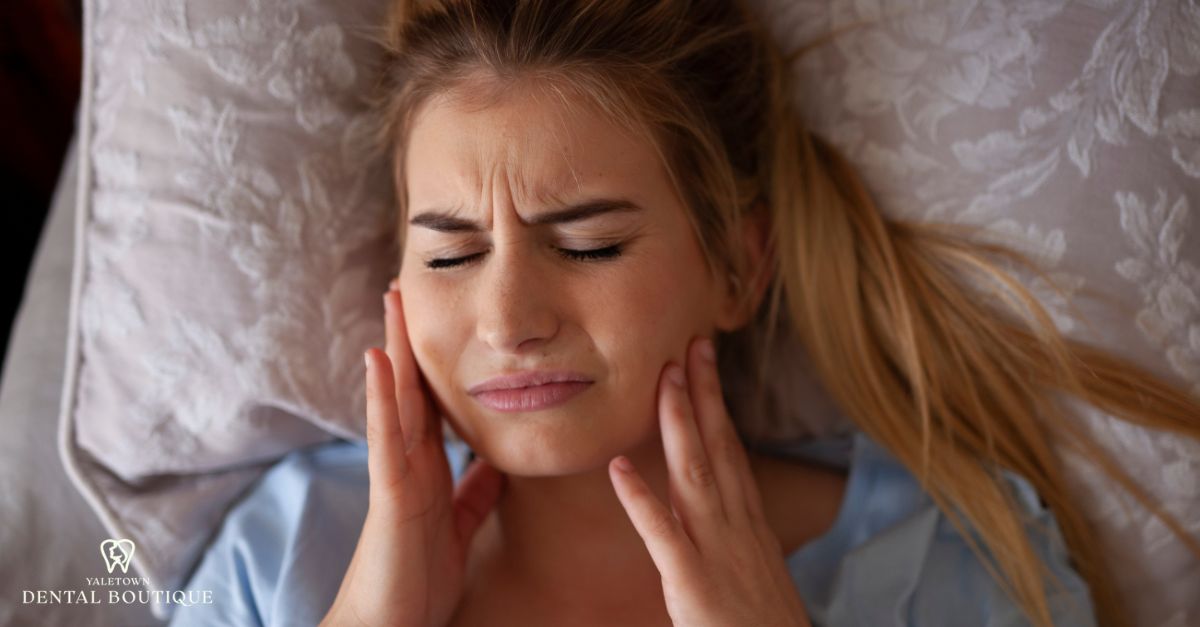
Jaw clicking can develop for different reasons, and it is often helpful to understand these causes in a structured way. Most cases relate to changes in joint mechanics, muscle activity, or how the teeth come together during movement.
TMJ Disc Displacement with Reduction
In this situation, the small disc inside the joint shifts slightly out of place, often sitting ahead of its normal position. As the jaw opens, the lower jaw moves forward and the disc is pulled back into alignment, creating a clicking sound at that moment. This repeated slipping and repositioning reflects a change in how the joint components coordinate during movement.
Teeth Grinding and Clenching (Bruxism)
Frequent clenching or grinding places repeated pressure on the jaw joint, especially during sleep. This ongoing load can strain the ligaments that help stabilize the disc, making it more likely to move out of position. As coordination between the disc and joint becomes less stable, clicking can occur during normal opening and closing movements.
Stress-Related Muscle Tension
Tension in the jaw muscles can develop during periods of stress, even without awareness. Tight or overactive muscles can slightly alter the path the jaw follows when it moves. This change in movement can affect how the disc and joint align, leading to inconsistent coordination and occasional clicking sounds.
Bite Misalignment (Occlusal Instability)
When the upper and lower teeth do not come together evenly, the jaw may adjust its movement to find a more comfortable position. This compensation can shift how forces are distributed across the joint. Over time, this altered tracking can affect disc positioning and contribute to clicking during repeated movements.
Degenerative Joint Changes
With age or long-term wear, the joint surfaces and supporting structures can gradually change. These changes may reduce how smoothly the disc and joint move together. As coordination becomes less consistent, irregular movement within the joint can produce clicking or other sounds during function.
When to Worry About Jaw Clicking
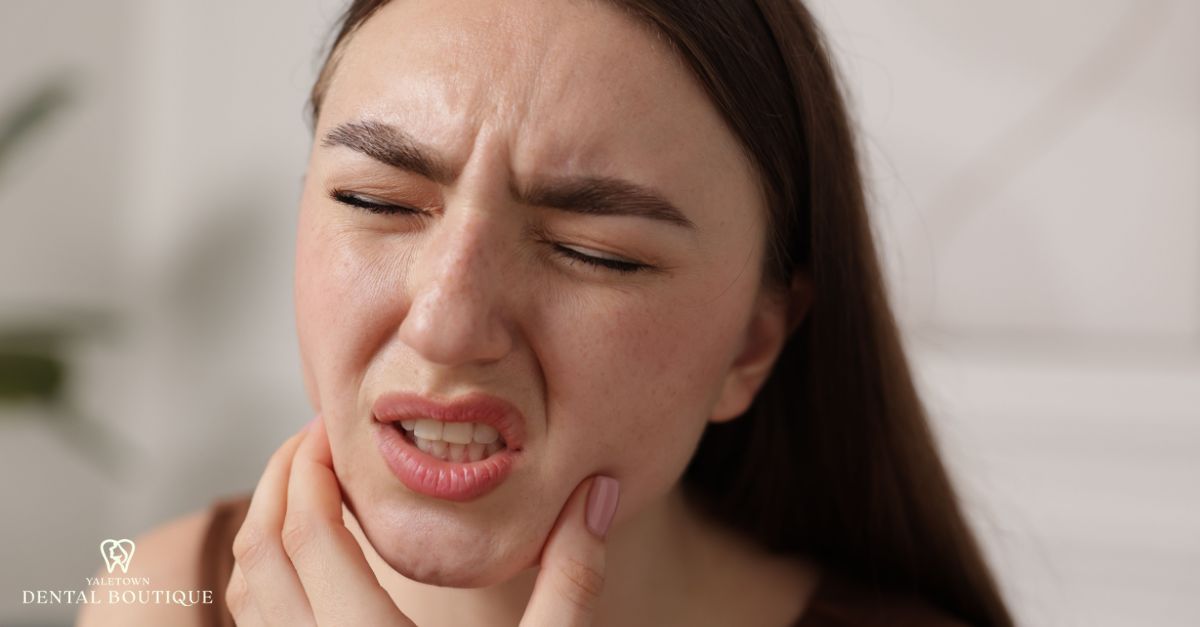
Jaw clicking on its own is not always a concern, especially when it is occasional and painless. It becomes more relevant when it is paired with other symptoms or begins to affect how the jaw moves. Noticing patterns in function and comfort can help determine when further evaluation may be appropriate.
Jaw Pain (Face, Temples, Ear, or Neck)
Pain in these areas may suggest that the joint or surrounding muscles are under strain rather than functioning smoothly. When clicking occurs with discomfort, it can indicate increased load on the joint or irritation in nearby tissues.
Jaw Locking or Catching
If the jaw feels stuck or temporarily unable to open or close fully, this can point to changes in disc movement. Locking suggests the joint is not coordinating properly, which may affect normal function.
Limited or Uneven Mouth Opening
Difficulty opening the mouth fully, or noticing the jaw shifting to one side, may reflect imbalance between the joints. This can indicate that one side is not moving in coordination with the other.
Changes in Frequency or Worsening Symptoms
Clicking that becomes more frequent, louder, or begins to feel different over time may reflect changes in joint mechanics. Progression like this can suggest that the underlying issue is becoming more pronounced.
Associated Symptoms (Headaches, Stiffness, Discomfort While Chewing)
Symptoms such as headaches, jaw stiffness, or discomfort while chewing can reflect ongoing muscle tension or joint strain. When these occur together with clicking, they may indicate that both joint function and muscle balance are affected.
How Jaw Clicking Is Treated
Jaw clicking is usually managed using a conservative, step-based approach. Not all cases require active treatment, especially when there is no pain or functional limitation. The focus is on reducing strain, improving joint coordination, and supporting long-term stability.
At-Home and Behavioural Management
Early management often involves simple adjustments to reduce stress on the joint. This may include avoiding wide or forceful jaw movements, choosing softer foods temporarily, and applying gentle heat to relax muscles. Becoming aware of habits such as clenching or holding tension in the jaw can also help reduce unnecessary strain and support more balanced movement over time.
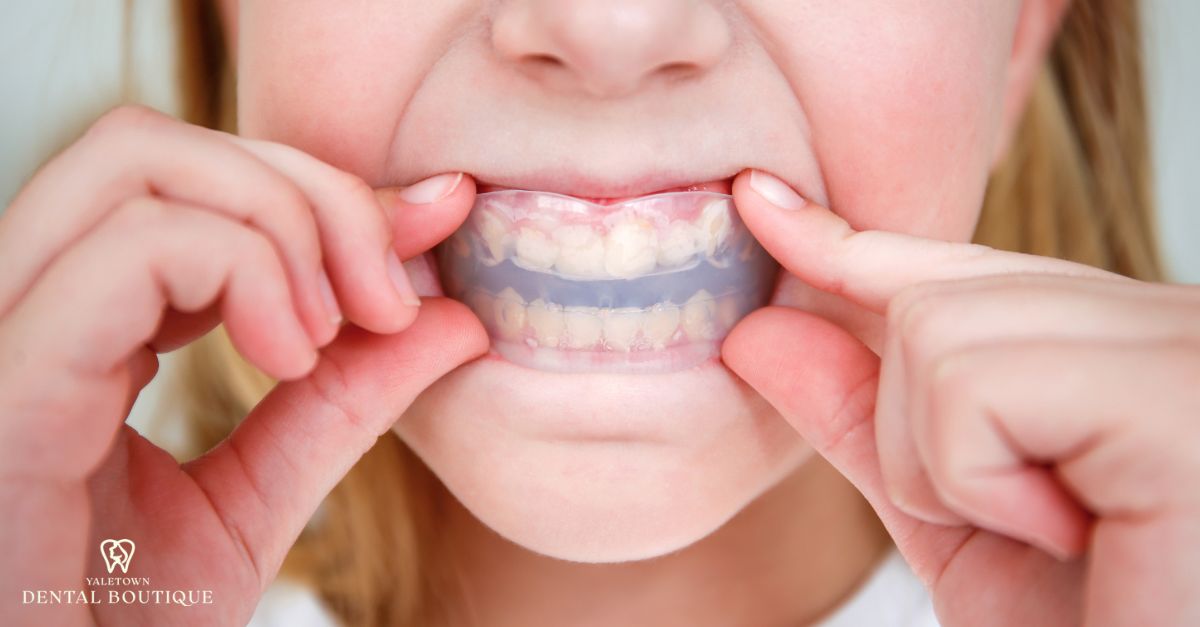
Custom Occlusal Appliances (Night Guards or Splints)
Custom appliances are designed to fit over the teeth and help reduce pressure on the jaw joint.
Options such as custom night guards can limit the effects of clenching or grinding and support more stable positioning during rest, particularly at night. This may help reduce strain on the joint and surrounding muscles, depending on the underlying cause and individual response to treatment.
Bite Stabilization and Occlusal Adjustment
When uneven bite forces affect how the jaw moves, small adjustments may be considered to improve balance. The goal is to help the jaw follow a more natural path during opening and closing. By reducing interference between teeth, this approach can support smoother joint function and decrease stress on the joint structures.
Orthodontic Bite Correction (When Alignment Is a Contributing Factor)
In some cases, jaw clicking is influenced by how the teeth align and come together during movement.
When bite imbalance is a contributing factor, orthodontic treatment such as Invisalign® may be considered to gradually improve alignment and support more stable jaw function. This type of correction is not used in every situation and is typically recommended only when structural bite issues are clearly identified as part of the overall diagnosis.
TMJ Monitoring and Long-Term Management
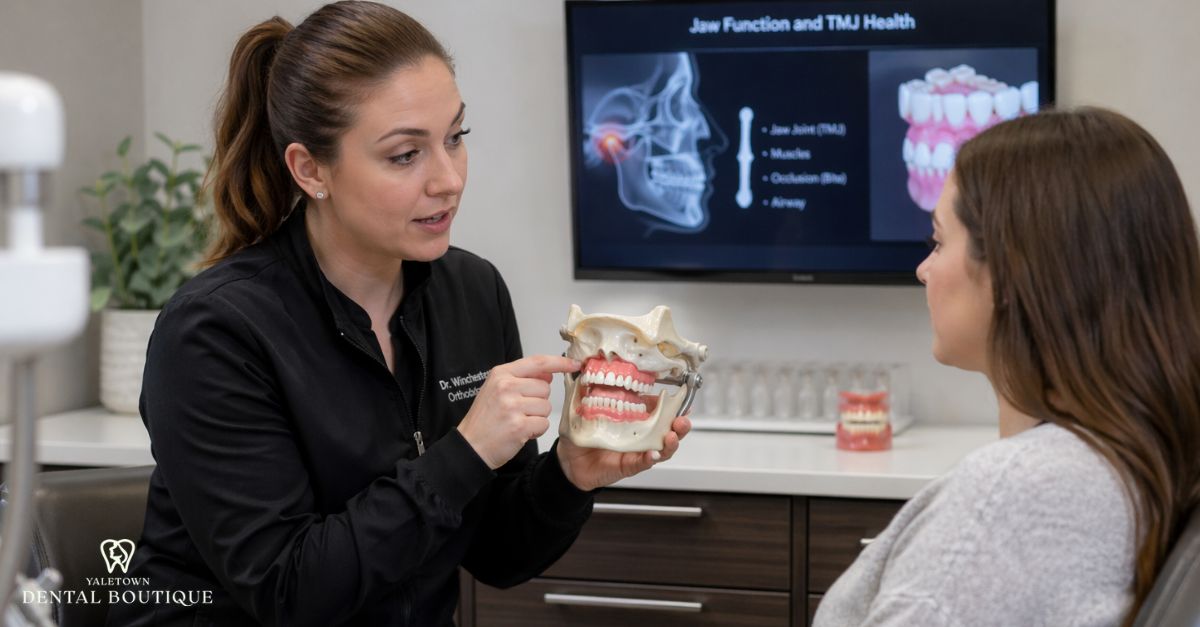
Ongoing monitoring helps track how the jaw joint responds over time, especially if symptoms change.
Regular assessment, including dental exams & diagnosis, allows for adjustments in management as needed, with a focus on maintaining stability, preventing progression, and supporting comfortable function during daily activities.
Can jaw clicking go away on its own?
In some cases, mild jaw clicking may reduce over time, especially when it is related to temporary muscle tension or minor changes in joint movement. However, persistent or worsening symptoms are less likely to resolve without guidance.
Monitoring changes in how the jaw feels and functions can help determine whether evaluation is needed.
The Yaletown Dental Boutique Approach

Jaw clicking is approached by first understanding how the joint is functioning rather than focusing only on the sound itself. Assessment typically includes observing jaw movement, evaluating how the teeth come together, and identifying patterns such as deviation, tension, or imbalance during opening and closing.
This type of evaluation helps distinguish whether the issue is primarily mechanical, muscular, or related to bite alignment. At Yaletown Dental Boutique, TMJ treatment in Yaletown is guided by this diagnostic process, with findings used to determine appropriate next steps for each patient.
Management is then based on the underlying cause rather than applying a single solution. This may involve monitoring, habit changes, or supportive therapies aimed at improving coordination and reducing joint strain.
The focus remains on maintaining stable, comfortable jaw function over time. Rather than aiming for immediate correction, care is guided by gradual improvement, prevention of progression, and support for long-term joint health.
Conclusion
Jaw clicking is often a manageable condition, especially when the underlying cause is understood early. While not every case requires treatment, changes in symptoms or function are worth paying attention to in order to support long-term joint health.
If jaw clicking becomes frequent, changes over time, or begins to affect comfort, a professional evaluation can help identify the underlying cause and prevent further progression.
At Yaletown Dental Boutique, we assess jaw movement, bite function, and contributing factors to determine whether monitoring or targeted care is appropriate. Book an appointment to better understand what your jaw symptoms may indicate and how to manage them effectively.
Why does my jaw click but not hurt?
Jaw clicking without pain is often related to minor changes in joint coordination. In many cases, it does not require treatment unless it becomes frequent or starts affecting movement.
Is jaw clicking a sign of TMJ?
Jaw clicking can be linked to TMJ-related changes, but it is not always a disorder. It becomes more relevant when combined with pain, stiffness, or limited movement.
Can stress cause jaw clicking?
Stress can increase muscle tension and clenching, which may affect how the jaw moves. This can contribute to changes in joint coordination and lead to clicking sounds.
How do you fix a clicking jaw?
Management depends on the cause. Many cases are addressed with simple measures like reducing strain, while others may benefit from further evaluation if symptoms persist or change.
Do night guards help jaw clicking?
Night guards may help reduce pressure from clenching or grinding, which can support joint stability. They are typically considered when muscle activity is contributing to symptoms.
When should I see a dentist for jaw popping?
Evaluation is appropriate if clicking becomes frequent, changes over time, or occurs with pain, locking, or difficulty opening the mouth.