
Panoramic X-Rays in Yaletown A Broad Digital View of Your Smile
Get a broad digital view of your teeth, jaws, and surrounding structures without placing an X-ray sensor against the back teeth. Yaletown Dental Boutique uses digital panoramic imaging to support clinically indicated evaluations and treatment planning.
 Rated as “Excellent” (130 reviews)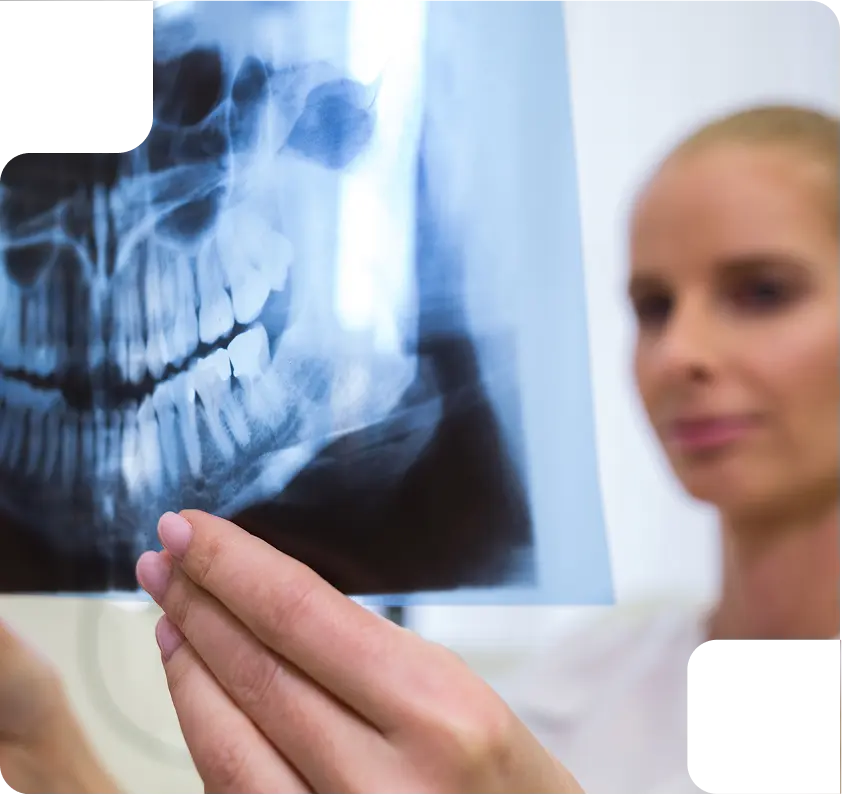
The Comfort-First Scan: No Biting, No Gagging, No Discomfort
Patients with a sensitive gag reflex may find bitewing or periapical X-rays difficult because an image sensor must be positioned inside the mouth. With panoramic imaging, the X-ray detector remains outside the mouth while the machine rotates around the head.
Begin Your Smile Journey
with Dr. Hadianfar
Dr. Sasan Hadianfar, General Dentist

What Is a Panoramic X-Ray? (And What It Sees That Regular X-Rays Miss)
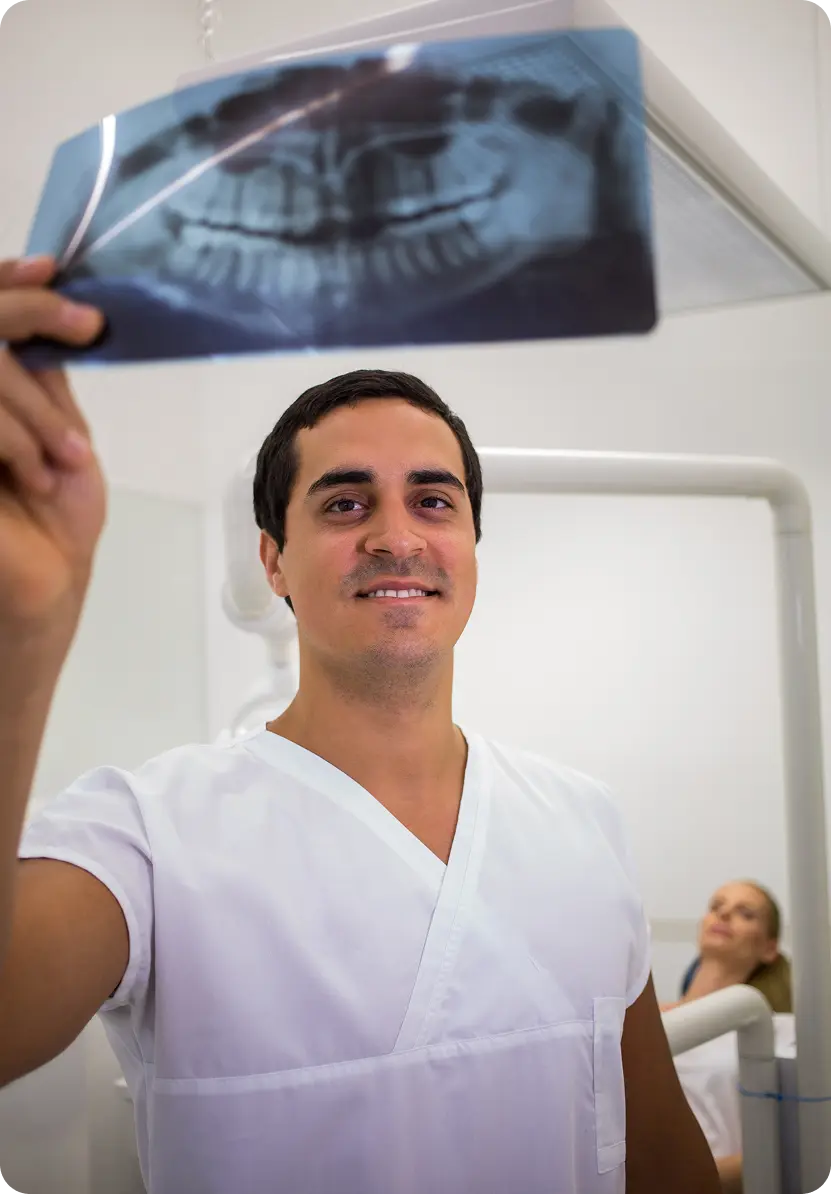
A panoramic X-ray is a specialized digital imaging system that captures a broad, two-dimensional view of the teeth, jaws, and surrounding facial structures in a single image. This wider perspective may help support comprehensive dental evaluations and treatment planning.
Panoramic X-Rays vs. Bitewing X-Rays Understanding the Difference
Both panoramic and bitewing X-rays play important roles in modern dentistry, but they serve different diagnostic purposes. One provides a broad structural overview, while the other focuses on detailed close-up views of specific teeth and surrounding areas.
When Do You Actually Need a Panoramic Jaw Scan?
Panoramic imaging is not required for every dental visit, but it may be recommended for:
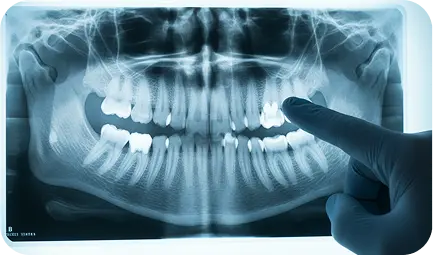
Wisdom Teeth Evaluation and Extraction Planning
Panoramic scans are commonly used before wisdom tooth removal to evaluate tooth positioning, root development, and nearby anatomical structures. This broader view may help dentists and oral surgeons plan extractions more carefully and identify potential treatment considerations beforehand.
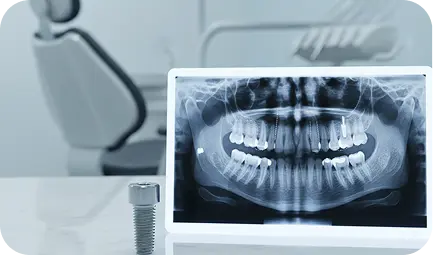
Initial Dental Implant Assessment
A panoramic X-ray may provide an initial overview of tooth position, jaw anatomy, and nearby structures when a dental implant is being considered. Because panoramic images are two-dimensional and may contain magnification or distortion, additional three-dimensional imaging such as CBCT may be recommended when more precise site assessment is needed.
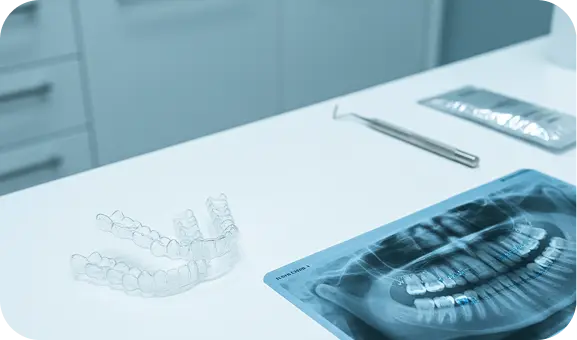
Orthodontic and Clear Aligner Assessments
Panoramic X-rays are often used during orthodontic or clear aligner consultations to review overall tooth positioning, jaw relationships, and root orientation. This broader perspective may assist with treatment planning before teeth are moved through orthodontic care.
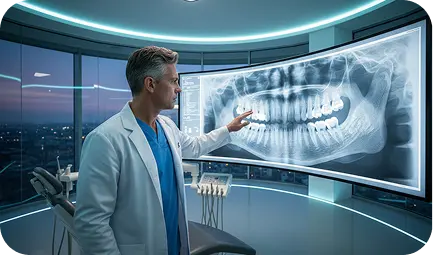
Establishing a Baseline When Clinically Indicated
A panoramic image may be recommended during a new-patient assessment when the examination, dental history, symptoms, or anticipated treatment indicate that a broad view would provide useful diagnostic information. The image may then serve as a reference for appropriate future comparisons.
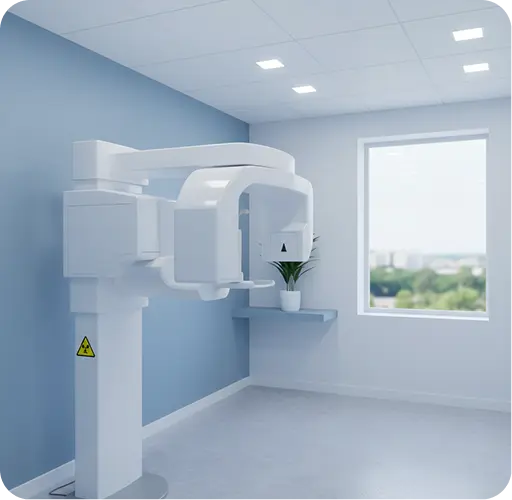
Safety First: Understanding Radiation Exposure
Panoramic imaging uses a small amount of ionizing radiation to create a broad two-dimensional image of the teeth and jaws. The actual dose varies according to the equipment, exposure settings, patient size, and image required. Dental X-rays should be prescribed after a clinical examination and only when the expected diagnostic benefit justifies the exposure. Equipment settings and imaging techniques are selected to obtain the necessary information while keeping radiation exposure as low as reasonably achievable.
- Panoramic imaging uses a relatively low radiation dose
- The exposure varies by equipment and imaging settings
- Images are prescribed according to individual clinical need
- Previous suitable X-rays should be reviewed when available to avoid unnecessary repeat imaging
- Digital images can be reviewed promptly after acquisition
Important Information for
CDCP Patients
Treatment under the Canadian Dental Care Plan is not fully covered. A co-payment will apply.

When Is a Broader Image Helpful?
Small intraoral X-rays and panoramic images provide different types of information. The dentist selects the view that is appropriate for the clinical question rather than routinely taking every type of X-ray.
Modern Panoramic Imaging at Yaletown Dental Boutique
At Yaletown Dental Boutique, digital panoramic imaging is incorporated into a patient-focused diagnostic experience designed to support comfort, efficiency, and informed treatment planning using modern low-dose imaging technology when clinically appropriate.
What Our Patients Say About Us
- Friendly, welcoming, capable staff. Clean environment and positive energy! The dental hygienist, Amir, was a delight, and incredibly efficient and exacting in his work. They were on time and I was in and out in an hour.
- Awesome as always!!!
- Very welcoming clinic to go, for both doctors and staff. They made the dental treatment less stressful for me, happy I chose them. Especially for Amir, who is very warm and professional, I am very glad to have him as my dentist, strongly recommended.
- I had a wonderful experience at this clinic! The entire team was incredibly attentive and helpful. Everything about my issue and the required treatment plan was explained clearly to me. The dental hygienist was top-notch, making me feel calm and genuinely cared for throughout the entire appointment. Thank you so much to the whole team for such warm and professional service!
- Awesome experience, very detailed on ensuring you leave with clean teeth.
- This dentist office is so clean, professional and welcoming. Everyone was great!


Frequently Asked Questions About Panoramic Dental X-Rays
Is a panoramic dental X-ray safe during pregnancy?
Tell the dental team if you are pregnant or may be pregnant before imaging. Dental X-rays are generally postponed during pregnancy unless they are needed to address an urgent clinical concern. The dentist will assess the benefits and risks and use appropriate radiation-protection measures if imaging is necessary.
Do I have to remove my jewelry or piercings for a panoramic scan?
Does a panoramic X-ray show cavities between my teeth?
How often do I need a full jaw panoramic X-ray?
Will my dental insurance cover a panoramic digital scan?
Final Thoughts – A Broader View When Clinically Needed
Panoramic imaging provides a broad two-dimensional view of the teeth, jaws, and surrounding structures without placing a large X-ray sensor against the back teeth. It may be useful for wisdom-tooth assessment, orthodontic evaluation, and initial planning for selected procedures.
Panoramic and intraoral X-rays serve different purposes, and additional imaging may be recommended when more detailed or three-dimensional information is required. At Yaletown Dental Boutique, digital imaging is selected according to each patient’s examination findings and treatment needs.
Patients in Yaletown and Downtown Vancouver can contact the clinic to learn more or schedule an appointment.
Visit Us
Contact
info@yaletown.dental
205 Smithe Street
Vancouver, BC V6B 2P4
Hours
Mon–Fri: 9:00 am – 5:00 pm
Saturday: 9:00 am – 4:00 pm
Sunday: Closed

Request an Appointment Now!