At a Glance:
Getting a dental implant is a multi-step process, not a single visit. It begins with a consultation and imaging, may include prep work like bone grafting, and involves placing a titanium post into your jaw.
Over the next 3–6 months, the implant fuses with bone in a process called osseointegration. Once stable, an abutment and crown are attached, completing your restoration.
A dental implant isn’t just a procedure; it’s a journey. From the very first consultation to the moment your permanent crown is placed, each stage shapes not only your smile but also your confidence in the process. Too often, patients only hear the start or the end of the story, leaving the middle a mystery.
At Yaletown Dental Boutique, we believe clarity matters. When you understand what happens step by step, you walk into treatment with confidence, not hesitation. This guide takes you through the full implant process, from evaluation to crown.
Your Dental Implant Journey: Where It All Begins
Every successful implant treatment starts with careful planning. Before any surgery is scheduled, we take time to evaluate your oral health, bone structure, and long-term goals. This early stage ensures your treatment is not only safe but also tailored to deliver a natural, lasting result.
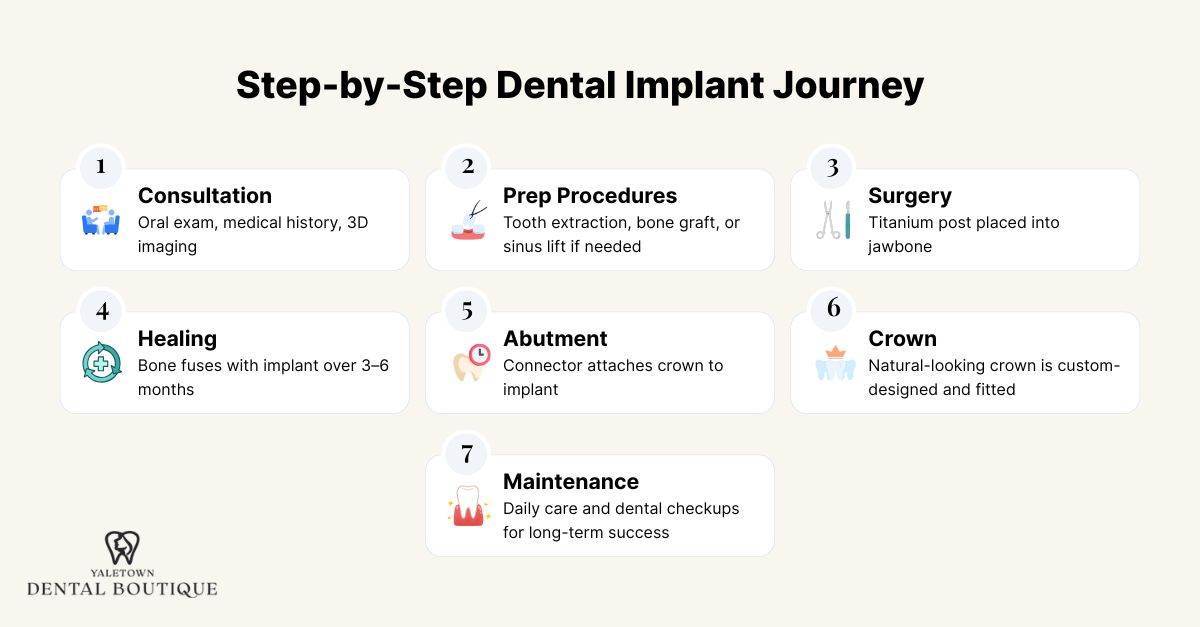
Step 1 – Initial Consultation and Evaluation
The implant process always begins with a detailed consultation. This stage sets the foundation for everything that follows. Because successful implant dentistry isn’t just about placing a titanium post, it’s about planning with precision.
Your visit starts with a thorough review of your dental and medical history. Medications, past procedures, and existing conditions, such as diabetes or osteoporosis, can all impact how well implants heal, so this step is never rushed.\rom there, we move to advanced diagnostics. A CBCT scan (cone beam computed tomography) gives us a 3D view of your jawbone, nerves, and surrounding structures. Unlike a traditional X-ray, this 3D dental imaging allows us to measure bone density, assess sinus placement, and spot any risk factors that could complicate surgery.
Next comes gum and bone health evaluation. We look for signs of gum disease, infection, or bone loss that might need to be addressed before surgery. Sometimes that means recommending periodontal treatment or bone grafting first, to ensure the implant has a strong foundation.
Finally, we integrate smile design into the plan. This isn’t just about function; it’s about creating a tooth replacement that looks seamless with your natural teeth. Digital smile previews let you see the projected outcome before a single step is taken.
Step 2 – Preparatory Procedures (If Needed)
Not every patient can move straight from consultation to surgery. Sometimes the jaw or gums need extra support before an implant can succeed. These steps are about building a strong foundation for long-term results.
Tooth Extraction
If your implant will replace a damaged or failing tooth, extraction is the first step. In some cases, the implant can be placed right away. In others, the site needs a short healing period before surgery.
Bone Grafting
When bone loss has occurred, a graft is used to rebuild volume. This may involve your own tissue or a biocompatible material. Healing usually takes weeks to months, but it greatly improves the implant’s stability and lifespan. Read about implant healing timeline.
Sinus Lift
For the upper back jaw, bone depth can be limited by the sinus cavity. A sinus lift raises the sinus floor and adds bone, creating enough space for the implant post. Despite its complexity, modern techniques make it safe and predictable.
By addressing these needs in advance, we make sure your implant isn’t just placed, it’s placed into an environment built to last.
Step 3 – Dental Implant Surgery
This is the moment where planning turns into action. Implant surgery is usually straightforward and performed under local anaesthesia, sometimes with sedation if you prefer extra comfort.
Anaesthesia and Comfort
Before anything begins, the area is fully numbed so you don’t feel pain. If dental anxiety is a concern, oral sedation is available to help you stay calm.
Placing the Implant Post
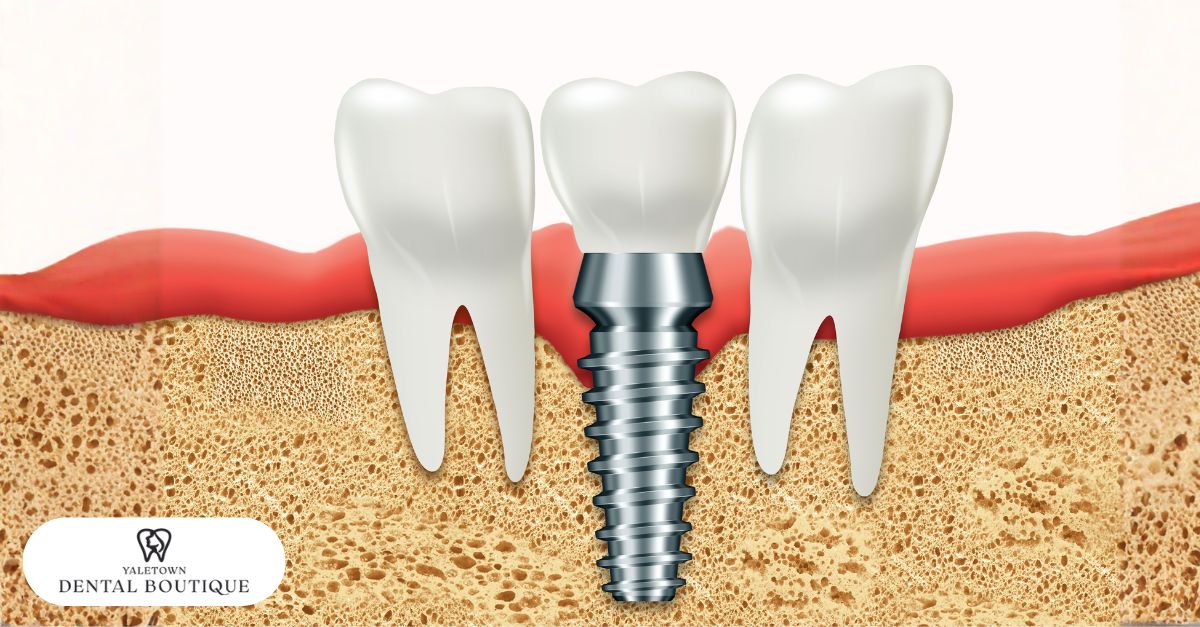
A small opening is made in the gum, and the titanium post (the “artificial root”) is placed into the jawbone at a precise angle. Advanced imaging, such as CBCT scans, guides this step for accuracy and safety.
Closing the Site
Depending on your case, the dentist may place a healing abutment right away or stitch the gum tissue closed over the implant. Both approaches protect the site while your body begins healing.
The procedure typically takes less than an hour for a single implant, and most patients are surprised at how smooth the process feels.
Step 4 – Healing & Osseointegration Phase
Once the implant is in place, the real work shifts to your body. This phase, called osseointegration, is when bone cells gradually fuse with the titanium post, locking it securely in place.
Healing Timeline
The recovery process happens in phases, each with its own milestones:
First Week
Mild swelling and tenderness are common, but these fade with rest, ice, and a soft diet.
Week 2: Back to Normal Routines
By the second week, swelling and bruising are typically gone or minimal, and stitches may dissolve or be removed. Most patients already feel “back to normal” for everyday tasks by day four, with steady improvement continuing into the second week.
Weeks 3–4: Tissue Healing
Soft tissues stabilize and feel more comfortable. Clinical trials show that by the three-week mark, most patients report little to no lingering symptoms. Whether one or two implants were placed, short-term recovery usually follows the same course.
Months 2–3: The Quiet Phase
This is when osseointegration, the fusion of bone and implant, happens silently beneath the surface. You’ll likely feel completely normal in your daily life, while your dentist monitors integration progress. The exact timeline depends on bone quality and individual case factors.
Months 3–6: Ready for Restoration
Once integration is confirmed through clinical checks and imaging, most patients are ready for impressions and placement of their permanent crown or bridge. This is the stage where your implant moves from healing to full restoration.
What to Expect
You can usually return to normal activities within a couple of days, but the deeper healing takes time. Regular check-ins let your dentist confirm stability and rule out infection.
Signs of Healthy Progress
A stable implant feels comfortable, shows no swelling, and allows you to chew gently without pain. If you notice unusual bleeding, severe discomfort, or loosening, that’s a red flag to call your dentist right away.
Step 5 – Abutment Placement & Final Restoration
When your implant has fully integrated, it’s time to connect it to the part where you’ll actually see your new tooth. This stage bridges the hidden foundation with the visible restoration.
Abutment Placement
In some cases, the abutment (the connector piece) is placed during the initial surgery. If not, a quick minor procedure is done once healing is complete. Your dentist reopens the gum, attaches the abutment to the implant, and allows the gum to contour around it for a natural look.
Creating Your Crown
Next comes the customization phase. Digital scans or impressions are taken to design a crown that matches your surrounding teeth in shape, size, and shade. This ensures your restoration blends seamlessly with your smile.
Final Fitting
Once your crown is ready, it’s securely attached to the abutment. At this point, your implant feels, functions, and looks like a natural tooth. You can chew confidently, smile freely, and care for it just like the rest of your teeth.
Long-Term Care and Maintenance
Getting your implant restored with a crown is the end of the surgical journey, but it’s also the beginning of long-term ownership. Unlike a natural tooth, your implant won’t decay, but the surrounding gums and bone still need care to ensure stability.
Daily Care
Treat your implant like the rest of your teeth: brush twice a day with a soft-bristled toothbrush, floss carefully (using implant-safe floss or interdental brushes), and rinse if recommended by your dentist.
Professional Cleanings
Routine check-ups are essential. During cleanings, your hygienist will use special tools designed for implants to avoid scratching the crown or abutment while removing plaque and tartar buildup.
Lifestyle Choices
Habits like smoking, teeth grinding, or neglecting oral hygiene will shorten the life of your implant. Protecting your investment means staying proactive; sometimes that includes wearing a night guard if you clench or grind your teeth at night.
Longevity
With proper care, most implants last at least 10 years or longer. In many cases, they become lifelong solutions.5 The crown may eventually need replacement due to normal wear, but the implant post itself can remain solid for decades.

Why Choose Yaletown Dental Boutique for Dental Implants
When it comes to implant dentistry, the difference lies in precision and planning. At Yaletown Dental Boutique, we don’t just “place” implants, we design them around your smile, lifestyle, and long-term health.
Advanced Technology
We use CBCT 3D imaging and guided surgical tools to map your bone structure with accuracy. This reduces risk, shortens surgery time, and improves outcomes.
Patient-First Philosophy
Every treatment plan is personalized. Whether you need a single front tooth implant or a full mouth restoration, we take time to understand your goals and tailor the process accordingly.
Comfort and Safety
Our sedation options, strict sterilization protocols, and gentle techniques make your experience as stress-free as possible. We’re committed to implant safety at every stage from consultation through healing.
Proven Results
We’ve restored countless smiles with natural-looking crowns that blend seamlessly. Our patients trust us not only for function, but for the confidence a complete smile brings.
With Yaletown Dental Boutique, your implant journey is more than just a procedure; it’s a carefully guided transformation that restores both your health and aesthetics.
Conclusion
Getting a dental implant is more than a procedure; it’s an investment in your health, comfort, and confidence. From the first consultation to the final crown, every step is designed to restore not just your tooth, but the way you eat, speak, and smile every day.
At Yaletown Dental Boutique, we combine advanced imaging, gentle surgical techniques, and custom-designed restorations to deliver results that look natural and last for years to come. Whether you need a single implant or full-mouth implants in Yaletown, you’ll receive a treatment plan tailored to your needs, with your comfort as our top priority.
Ready to take the next step?
Book your personalized consultation today and discover how implant dentistry can transform your smile and your life.
Is the implant procedure painful?
No. Implants are placed under local anesthesia or sedation, so you’ll be comfortable throughout. Some soreness or swelling afterward is normal but usually manageable with over-the-counter medication.
What if I don’t have enough bone for an implant?
In cases of bone loss, procedures like bone grafting or a sinus lift can restore the foundation needed for stable implants. These steps are planned before surgery using advanced imaging like CBCT.
Will my implant look like a natural tooth?
Yes. Each crown is custom-designed to match the shape, color, and alignment of your existing teeth, blending seamlessly with your smile.
Can I get an implant if I smoke or have health conditions?
Implants are still possible, but smoking, diabetes, or certain conditions may slow healing or affect success rates. A full health review during your consultation ensures your plan is safe and effective.