At a Glance:
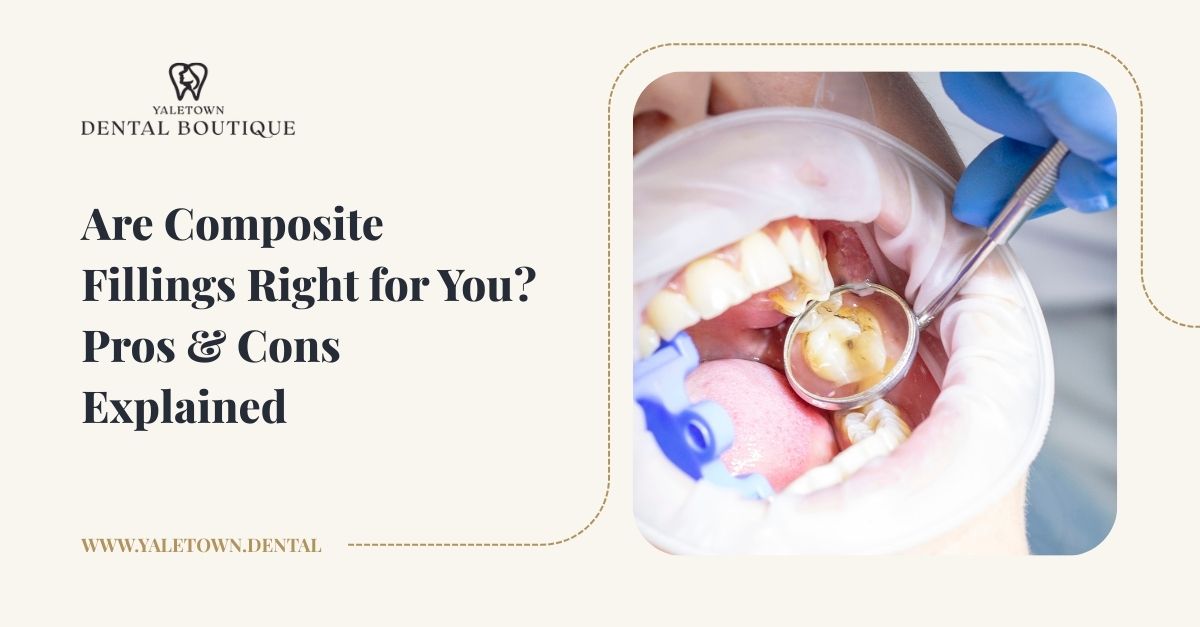
Composite fillings, also known as tooth-coloured fillings, restore cavities with a natural appearance. They bond to the tooth, require less drilling, and are free of mercury or metal. While not as durable as ceramic or amalgam, they work well for small to medium cavities, especially in visible areas. Costs vary based on size, location, and insurance, but with proper care, they can last for years and are safe according to dental authorities.
When you think of dental fillings, you might picture the old silver versions that stand out in your smile. Fortunately, dentistry has advanced, and you can now opt for composite fillings, also known as tooth-coloured restorations, which offer both strength and a natural appearance.
While they provide a healthier and seamless smile, it’s important to understand their advantages and limitations to decide if they suit your teeth and lifestyle.
What are composite fillings?
Composite fillings are restorations designed to repair teeth affected by decay, cracks, or minor fractures without compromising your smile. Instead of metal, they’re made from a blend of resin (a plastic-like material) and fine ceramic or glass particles.
The Material: Resin + Ceramic Particles
The resin works as an adhesive, bonding the restoration securely to your tooth. The ceramic or glass particles add strength and resilience while also mimicking the way natural enamel reflects light. This combination is what makes a tooth-coloured filling both durable and aesthetically pleasing.
How Composite Fillings Are Placed
A composite filling is completed in one visit, with each step designed for precision and comfort.
Anaesthesia and Comfort
Local anaesthetic is often used to numb the area, though very shallow cavities may not require it.
Tooth Preparation
The dentist removes decay and shapes the space. Because composites bond directly to enamel and dentin, less healthy tooth structure needs to be removed compared to amalgam.
Isolation for Precision
To ensure a clean, dry environment during placement, your dentist may use a rubber dam — a thin, flexible sheet that isolates the treatment area from saliva. This helps improve bond strength, reduces
contamination, and increases the long-term success of the filling.
Placement and Curing
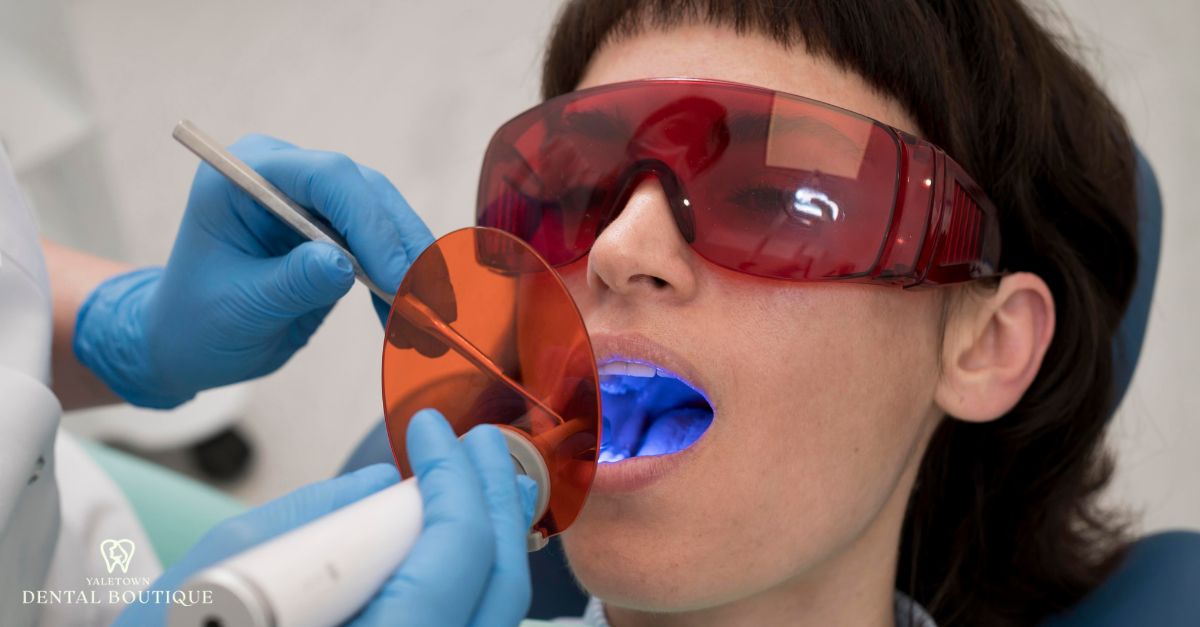
The filling material is applied in thin layers. Each layer is hardened with a curing light, creating a strong and stable restoration.
Shaping and Polishing
Finally, the filling is adjusted to fit your bite and polished until it looks and feels like natural enamel.
Advantages of Composite Fillings
A cavity isn’t just about sealing a gap; it’s about bringing strength and beauty back to the tooth. Composite options do more than patch damage; they restore natural function and appearance in ways older materials can’t.
The advantages of these tooth-coloured restorations extend well beyond aesthetics, offering comfort, safety, and long-term preservation of healthy tooth structure.
Aesthetic Appeal: Tooth-Coloured & Seamless
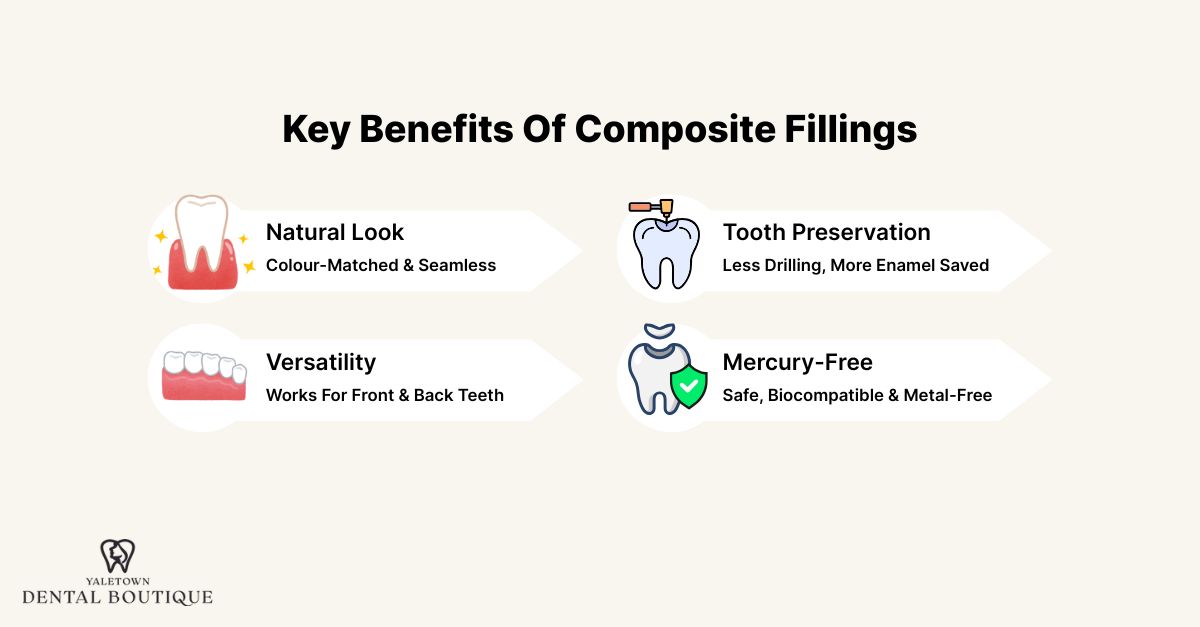
Unlike silver amalgam, a tooth-coloured filling blends seamlessly with your smile. Its shade can be carefully matched to your natural enamel, making the restoration nearly invisible. This makes it especially valuable for front teeth or any area that shows when you talk or smile, where appearance matters just as much as strength.
Bonding Strength: Less Drilling, More Preservation
Because composites chemically bond to tooth structure, they don’t require as much drilling. Instead of removing healthy enamel to “lock in” a filling, your dentist preserves more of your natural tooth. This bond also helps reinforce weakened areas, giving the tooth added stability.
Versatility for Front and Back Teeth
Composite isn’t limited to visible teeth. With proper technique, it works well on molars too, handling small to mid-sized cavities. It can also be shaped to repair chips, close small gaps, or reshape worn edges, making it one of the most adaptable materials in dentistry.
Mercury-Free & Safe
Composites are free of mercury and metal, which appeals to patients who prioritize biocompatibility and safety. They’re also less likely to cause temperature sensitivity compared to metal fillings, since resin doesn’t conduct heat or cold as readily.
Disadvantages of Composite Fillings
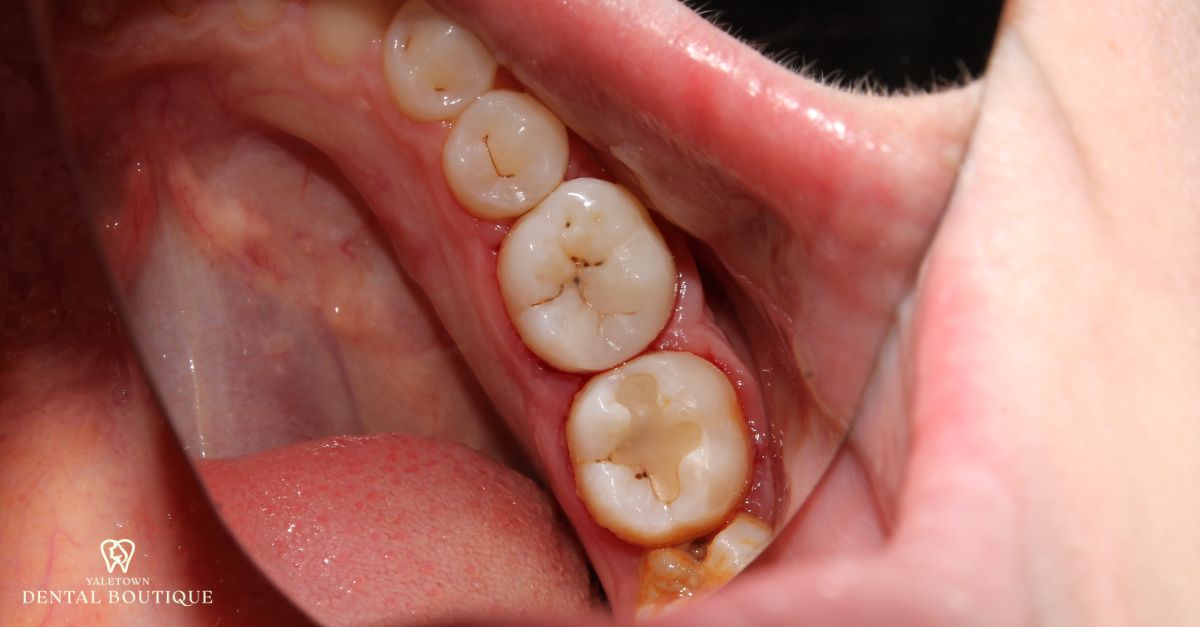
Composite fillings are strong and discreet, but they’re not flawless. Knowing the limitations helps you make an informed choice and avoid surprises down the road.
Shorter Lifespan Compared to Gold or Ceramic
Composite fillings last an average of 7 years. 1
That’s respectable, but gold and ceramic restorations often outlast them, sometimes by decades. If you’re looking for maximum longevity in a high-stress area, composites may not always be the first choice.
Susceptible to Staining and Chipping
Because resin is slightly porous, composites can pick up stains from coffee, tea, or red wine over time. They’re also more prone to chipping than harder materials, especially if you grind your teeth or chew on hard objects like ice.
Technique-Sensitive (Operator Skill Matters)
Placing a composite isn’t a quick, one-step process. It requires precision in layering and curing. A poorly executed filling can fail sooner, which means your dentist’s experience and technique directly affect how well the restoration performs.
Composite vs. Amalgam Fillings: A Comparison
While Yaletown Dental Boutique does not offer amalgam (silver) fillings, many patients still ask how they compare to composite restorations. Below is a clear breakdown to help you understand the key differences and why composite is now the preferred choice for most dental practices.
| Feature | Composite Fillings | Amalgam Fillings |
| Appearance | Tooth-Coloured, Seamless | Silver-Grey, Visible |
| Longevity | About 7 Years (Small To Mid Cavities) | 10-15+ Years (High-Stress Areas) |
| Cost | Higher, Technique-Sensitive Placement | Lower, Budget-Friendly |
| Tooth Impact | Preserves More Natural Structure | Requires More Tooth Removal |
| Biocompatibility | Mercury-Free, Metal-Free | Contains Mercury Alloy |
| Sensitivity | Low Heat/Cold Conduction | Higher Heat/Cold Conduction |
Appearance
When it comes to looks, the difference is immediate:
- Composite: Blends with natural enamel for a seamless look, making it the preferred choice in visible areas.
- Amalgam: Silver in colour and darkens with time, often noticeable when you smile or talk.
Longevity
Durability varies depending on size, location, and bite forces:
- Composite: Reliable for several years, especially in small to mid-sized cavities.
- Amalgam: Known for extended durability, particularly in molars that handle heavy chewing.
Cost
Placement techniques and material differences affect cost:
- Composite: Generally higher due to technique-sensitive placement and extra time required.
- Amalgam: Lower upfront cost, though it involves removing more healthy tooth structure.
Biocompatibility & Health Considerations
Safety and comfort matter as much as strength:
- Composite: Mercury-free and metal-free, with low temperature sensitivity; widely regarded as safe.
- Amalgam: Contains mercury alloy; considered safe by dental associations but less appealing to patients seeking metal-free options.
Overall Performance
Each material excels in different scenarios:
- Composite: Ideal when aesthetics and preservation of natural tooth structure are priorities.
- Amalgam: Best suited for large cavities or high-pressure bite areas where strength and cost are more important than appearance.
Cost of Composite Fillings in Vancouver
The cost of a composite filling in Vancouver is primarily based on the BCDA (British Columbia Dental Association) fee guide, which outlines standardized pricing across the province.
Several clinical factors influence the total fee:
- Tooth Location: Front teeth generally cost less to restore than molars, which handle heavier bite forces.
- Number of Surfaces Filled: A filling on one surface (e.g., the top of a tooth) is less costly than a multi-surface restoration involving the sides or corners.
- Material Costs: Composite resins are more expensive than amalgam materials, contributing to the higher base cost.
- Insurance Coverage: Most dental insurance plans partially or fully cover composite fillings, especially for visible teeth. However, back-tooth coverage may vary by plan.
If you’re unsure what your plan covers or want to explore payment flexibility, our team at Yaletown Dental Boutique is happy to help you understand your options.

Caring for Composite Fillings
The lifespan of a composite filling depends as much on daily care as on the material itself. Smart habits protect the restoration and reduce the need for early replacement.
- Maintain Daily Hygiene: Brushing and flossing protect fillings from bacteria, while professional oral hygiene services help keep teeth and restorations in top condition.
- Be Mindful of Diet: Coffee, tea, and wine can stain; hard foods or chewing on objects may chip the filling.
- See Your Dentist Regularly: Routine visits allow early adjustments if wear or leakage begins.
When to Replace
Composite fillings usually show clear signs when they’re nearing the end of their life:
- Staining or darkened edges
- Small chips or cracks
- Sensitivity to pressure or temperature, read about tooth sensitivity after fillings
- Gaps forming between tooth and filling
Are composite fillings right for you?
Choosing a filling isn’t only about repairing decay; it’s about selecting a restoration that balances function with aesthetics. Composite fillings work beautifully when appearance is a priority, especially in front teeth or visible areas.
For molars or teeth that handle heavy chewing, a stronger material may be recommended. Your dentist will consider bite pressure, oral habits, and the amount of natural tooth left before making a suggestion.
Book a consultation with Yaletown Dental Boutique to discuss your best filling option and ensure your treatment is tailored to both your health and your smile.
Are composite fillings safe?
Safety is one of the first concerns patients raise when choosing a filling material. Composite fillings have been studied extensively, and modern formulations are considered safe and biocompatible by leading dental authorities.
Addressing BPA Concerns
Some patients worry about bisphenol-A (BPA), a compound linked to certain plastics. While trace amounts of BPA-related substances may be present in some older composites, levels are extremely low, well below any threshold considered harmful. Many manufacturers now use BPA-free formulations, further reducing concern.
Health Authority Guidelines
Organizations such as the Canadian Dental Association (CDA) and the American Dental Association (ADA) confirm that composite fillings are safe for both adults and children. They emphasize that the benefits of restoring teeth, preventing decay progression, and preserving oral health far outweigh any theoretical risks.

Composite Fillings at Yaletown Dental Boutique
At Yaletown Dental Boutique, we view composite fillings as more than a means to repair decay; they’re an opportunity to restore both health and aesthetics with precision. Every filling is approached with the same attention to detail as a cosmetic treatment, because we know your smile deserves nothing less.
Our Minimally Invasive Approach
We focus on preserving as much of your natural tooth as possible. By bonding the filling directly to your enamel and dentin, we avoid unnecessary drilling and keep the tooth structure stronger in the long run.
Technology That Elevates Results
Digital imaging, high-quality curing lights, and modern bonding systems allow us to achieve long-lasting, natural-looking results. Each filling is sculpted and polished to blend seamlessly into your smile.
Skilled Dentists & Patient Comfort
Composite restorations are technique-sensitive, and our team has the expertise to place them with accuracy. Comfort is always a priority. We make sure the process is smooth, quick, and pain-free, whether it’s your first filling or a replacement of an older one.
Conclusion
Composite fillings have transformed dentistry by allowing cavity repairs that maintain the natural look of your smile. They are discreet and safe, designed to preserve healthy tooth structure. While they may not last as long as gold or ceramic fillings, their strength and aesthetic appeal make them a popular choice for many patients.
At Yaletown Dental Boutique, we integrate advanced technology with a minimally invasive approach to deliver restorations that look and feel like your own teeth. If you are considering replacing old metal fillings or need a new restoration, we will assist you in selecting the best option for your long-term health and confidence.
Protect your teeth without compromising your smile.
Book a consultation at Yaletown Dental Boutique to learn how composite fillings offer strong, natural-looking results.
Are composite fillings as durable as metal ones?
They're durable, but not as long-lasting as gold or amalgam. On average, composites last several years, especially when placed in smaller cavities and maintained with good oral hygiene.
Do composite fillings stain?
Yes, over time, they can pick up stains from coffee, tea, red wine, or tobacco. Regular dental cleanings and mindful habits help minimize discolouration.
Will my insurance cover composite fillings?
Most dental insurance plans cover them, especially for front teeth. Coverage for back teeth can vary, so it's best to confirm with your provider.
Is getting a composite filling painful?
The procedure is usually painless thanks to a local anaesthetic. For small cavities, anaesthesia may not even be needed.