
At a Glance:
Lumineers are an ultra‑thin brand of veneer that usually requires little or no enamel removal. Traditional veneers, made from porcelain or composite, involve minimal reshaping but deliver stronger bonding, more natural contouring, and longer‑lasting results.
At Yaletown Dental Boutique, we offer porcelain and composite veneers that achieve the same seamless, minimally invasive look many patients seek from Lumineers — with superior precision, esthetics, and durability.
You’ve probably seen stunning smile transformations and wondered — “Are those veneers or Lumineers?”
Both treatments enhance how teeth look, but they aren’t the same. While Lumineers are an ultra‑thin, no‑prep version of veneers, traditional porcelain veneers remain the gold standard for natural, durable, and precisely customized results.
At Yaletown Dental Boutique in Downtown Vancouver, we provide porcelain and composite veneers, not Lumineers, because they allow for better control over shape, colour, and fit. Still, many patients ask how the two compare. Understanding the differences helps you make an informed, confident decision about your smile goals.
What’s the difference between Lumineers and veneers?
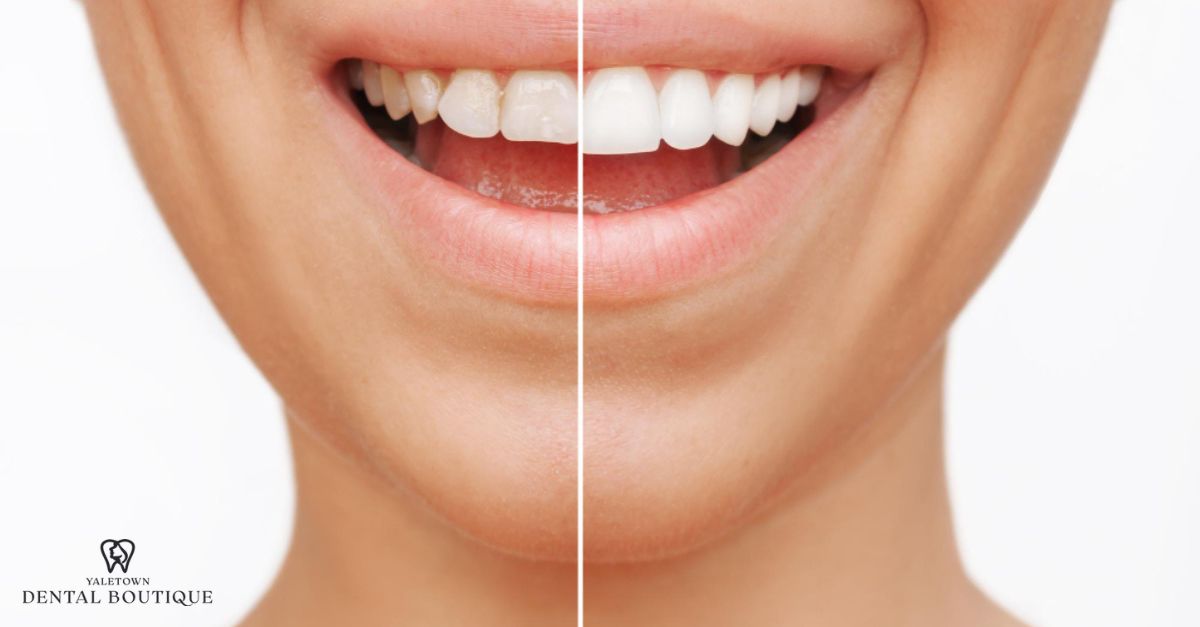
Both Lumineers and veneers are thin, custom-designed shells that cover the front surface of your teeth to improve shape, colour, and overall appearance. But they differ significantly in how they’re applied — and what kinds of transformations they can achieve.
Veneers
Traditional veneers are typically made from porcelain and require slight enamel reshaping to ensure a perfect fit. This preparation allows the veneer to sit flush with the natural tooth and gives the dentist full control over colour, contour, and overall esthetics — making veneers an ideal option for deeper stains, misaligned shapes, or worn enamel.
Lumineers
Lumineers are a brand of ultra-thin porcelain veneers that are usually placed without removing enamel. While they may sound appealing due to their minimally invasive nature, their thinness limits what they can effectively cover. On darker or uneven teeth, they may appear bulky or fail to conceal imperfections fully.
To see how veneers and Lumineers differ in application, here’s a quick step-by-step comparison of each process:
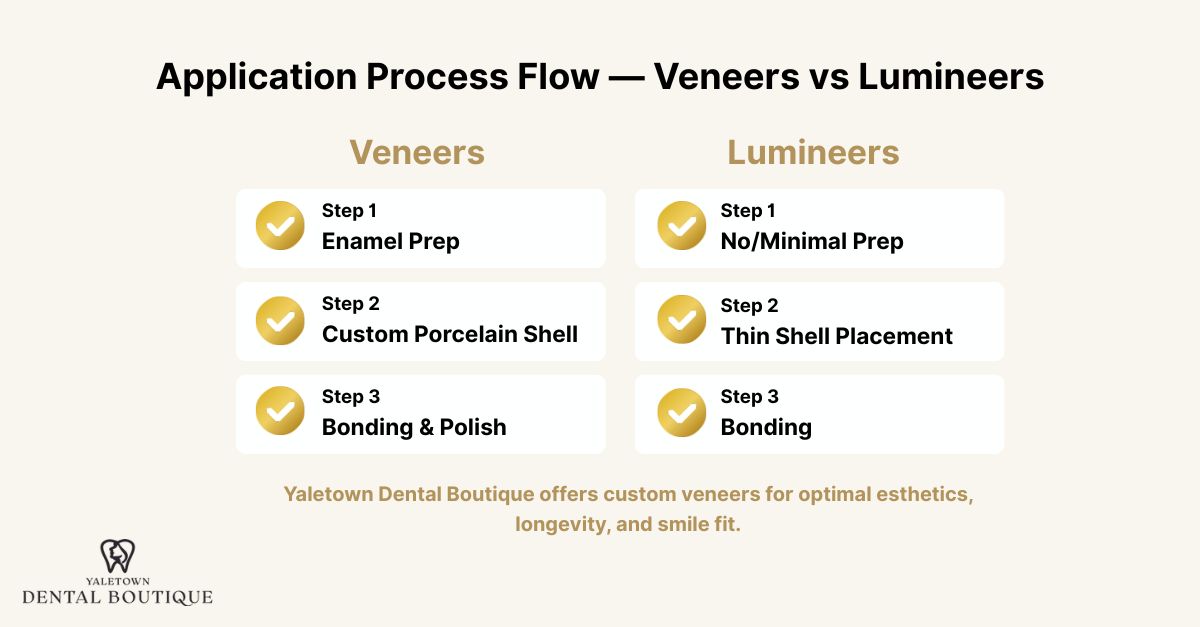
Our approach at Yaletown Dental Boutique prioritizes esthetic control and lasting outcomes. That’s why we offer veneers — not Lumineers — as they provide the most reliable and natural-looking results for a wide range of cosmetic goals.
Thickness and Appearance Comparison
One of the most noticeable differences between veneers and Lumineers lies in their thickness — and how that affects your smile’s final look.
Veneers
Traditional veneers are approximately 0.5 mm thick. Because a thin layer of enamel is removed beforehand, the veneer sits naturally on the tooth without appearing bulky. This allows for seamless blending with your surrounding teeth and more effective coverage of discolouration, chips, or irregular shapes.=
Lumineers
Lumineers are even thinner, measuring around 0.2–0.3 mm — roughly the thickness of a contact lens. While their no-prep application preserves enamel, the ultra-thin material may not adequately mask darker teeth or create balanced contours. In many cases, this leads to a less refined or slightly bulky appearance.
At our clinic, we’ve found that veneers offer the best balance of esthetics and fit — especially for patients seeking precision and subtlety.
Cost of Lumineers vs. Veneers in Vancouver
When comparing cosmetic options, cost often plays a role—but it shouldn’t be the only factor. At Yaletown Dental Boutique, we believe it’s important to weigh long-term value alongside price, durability, and customization.
Several factors influence pricing:
- Number of teeth treated: A single veneer vs. a full smile makeover can significantly affect cost.
- Lab and materials: High-quality porcelain and advanced lab work raise precision and aesthetics.
- Technology: We use digital smile design and CAD/CAM systems for accurate, previewable outcomes.
- Dentist expertise: Our experienced cosmetic team ensures your results align with both esthetics and function.
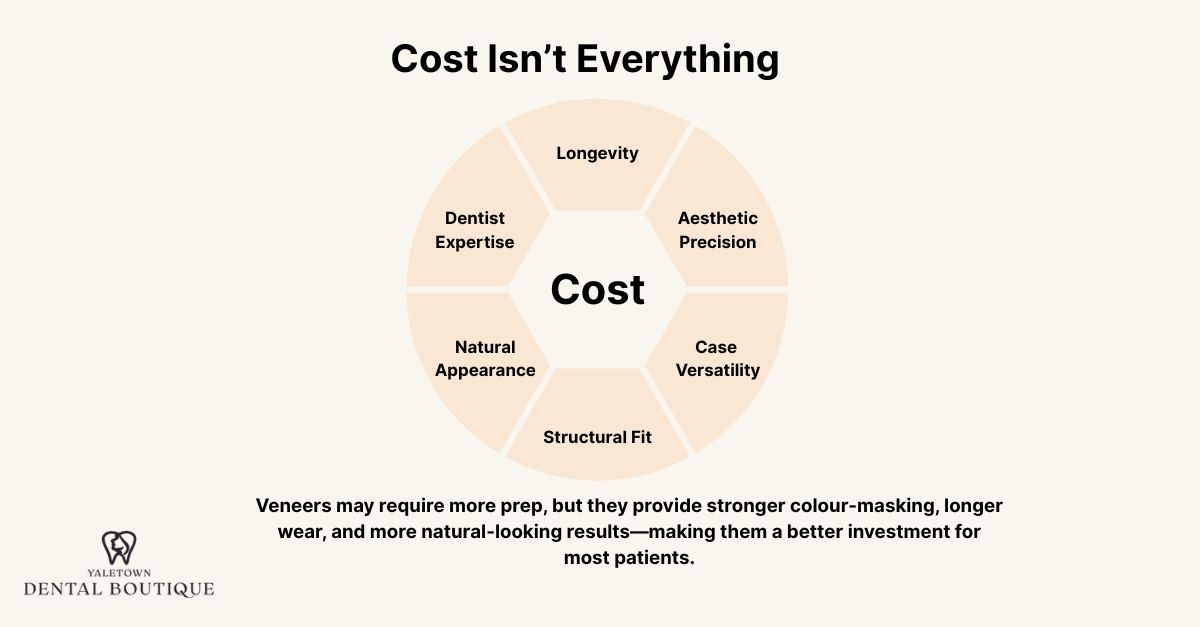
Veneers sometimes cost more upfront due to the preparation and lab customization involved. Still, they also provide stronger colour-masking and structural correction.
Lumineers may appear less invasive, but because they are case-specific, they’re not always the cheaper or longer-lasting choice.
Which option lasts longer?
Durability plays a big role in choosing the right cosmetic solution. While both veneers and Lumineers are made from strong porcelain, their lifespan depends on thickness, application, and maintenance.
Veneers
With proper care, traditional veneers can last 15-20 years1 2 3. The enamel preparation creates a strong bond between the tooth and the porcelain shell, allowing veneers to better withstand bite forces and daily wear. Their structure also resists chipping and staining more effectively.
Lumineers
Lumineers generally last up to 10 years 4 5, but their longevity can be more variable — especially if the underlying teeth are misaligned or if the patient grinds their teeth.
The minimal-prep bonding process can also make them more prone to detachment over time.
For long-term reliability and patient satisfaction, veneers remain the treatment of choice at Yaletown Dental Boutique.
Who should get veneers vs. Lumineers?
Choosing between veneers and Lumineers depends on your enamel condition, cosmetic priorities, and how dramatic a change you want.
Lumineers
Best suited for patients with straight, lightly stained teeth who want minor refinements. Because they require little to no drilling, they’re often marketed as reversible. But their translucency and limited corrective power make them less effective in more complex cases.
Veneers
Ideal for patients seeking significant improvements — such as masking deep stains, reshaping uneven teeth, or correcting worn edges.If you’re primarily looking to brighten your smile without reshaping teeth, explore our teeth whitening options for a non-invasive alternative.
Veneers allow for detailed customization in shape and colour, helping deliver lifelike, long-lasting results that are tailored to your smile.
At Yaletown Dental Boutique, we recommend veneers for the majority of cosmetic cases due to their versatility, durability, and esthetic precision.
Lumineers vs. Veneers: Which One Delivers the Best Smile?
While both are porcelain restorations, veneers offer more control, longevity, and customization — making them our preferred choice at Yaletown Dental Boutique.
Veneers vs. Lumineers: Side-by-Side Comparison | ||
|---|---|---|
| Feature | Veneers | Lumineers |
| Thickness | ~0.5 mm | ~0.2–0.3 mm |
| Tooth Preparation | Requires Enamel Reshaping | Minimal or No Enamel Removal |
| Appearance | Excellent for Deep Stains, Reshaping | Best for Light Refinements |
| Durability | 15–20 Years | Up to 10 Years with Proper Care |
| Comfort | Slight Initial Sensitivity | Preserves Enamel, Minimal Discomfort |
| Ideal Candidate | Discolouration, Chips, Uneven Teeth | Minor Gaps, Slightly Discoloured Teeth |
| Reversibility | Not Reversible | Marketed as Reversible, Not Always Fully |
| Cost Factors | Custom Lab Work, High-End Material | May Be Lower Depending on Complexity |
Why Choose Yaletown Dental Boutique for Your Smile Makeover
At Yaletown Dental Boutique, cosmetic dentistry is both an art and a science. From subtle refinements to full smile makeovers, our approach begins with precision diagnostics and ends with personalized results you can feel confident about.
We specialize in custom veneers — both porcelain and chairside composite — to help you achieve natural-looking results tailored to your smile, not someone else’s. With digital smile design and high-resolution 3D imaging, you’ll be able to preview your transformation before treatment begins.
We don’t offer Lumineers because we believe your smile deserves more than a one-size-fits-all solution. Traditional veneers give us greater control over shape, shade, and symmetry, allowing us to address everything from deep staining to uneven alignment with precision.
Your comfort is our priority. We offer a calm, supportive environment, gentle preparation techniques, and sedation options when needed. And beyond aesthetics, we always ensure that cosmetic results support your bite, speech, and long-term oral health.
Conclusion: Your Best Smile Starts with a Custom Plan
Veneers and Lumineers may seem similar, but they’re not equal in versatility, longevity, or precision. At Yaletown Dental Boutique in Downtown Vancouver, we focus on treatments that deliver the most natural and lasting results — which is why we offer custom veneers instead of Lumineers.
Whether you want to brighten discoloured teeth, correct minor wear, or transform your entire smile, we’re here to guide you with clarity and care. Our veneer process is designed around you — your enamel health, your esthetic goals, and your long-term satisfaction.
Book your personalized veneer consultation today and take the first step toward a confident, radiant smile that feels like you.
Can Lumineers be removed later?
Lumineers are marketed as removable because they involve little or no enamel reduction. However, in practice, even no-prep veneers can slightly alter your teeth, so removal isn’t always risk-free. At Yaletown Dental Boutique, we recommend options that are both reversible when possible and reliable long term.
Do veneers or Lumineers damage my natural teeth?
Both are safe when performed by an experienced cosmetic dentist. Veneers require light enamel reshaping, but this allows for better fit and aesthetics. Lumineers are less invasive but may look bulky or lack full stain coverage. We prioritize techniques that balance beauty and preservation.
Can I get veneers if my tooth is chipped or damaged?
Yes. Veneers are one of the best solutions for repairing chips, worn edges, or discoloration. Our cosmetic dentists will assess the extent of damage and recommend the most appropriate material and prep level for lasting results.
Does insurance cover veneers or Lumineers?
Cosmetic treatments like veneers and Lumineers are typically not covered by insurance. However, some plans may assist with costs if the procedure also restores function. Our team is happy to review your coverage options and provide transparent pricing.