At a Glance:
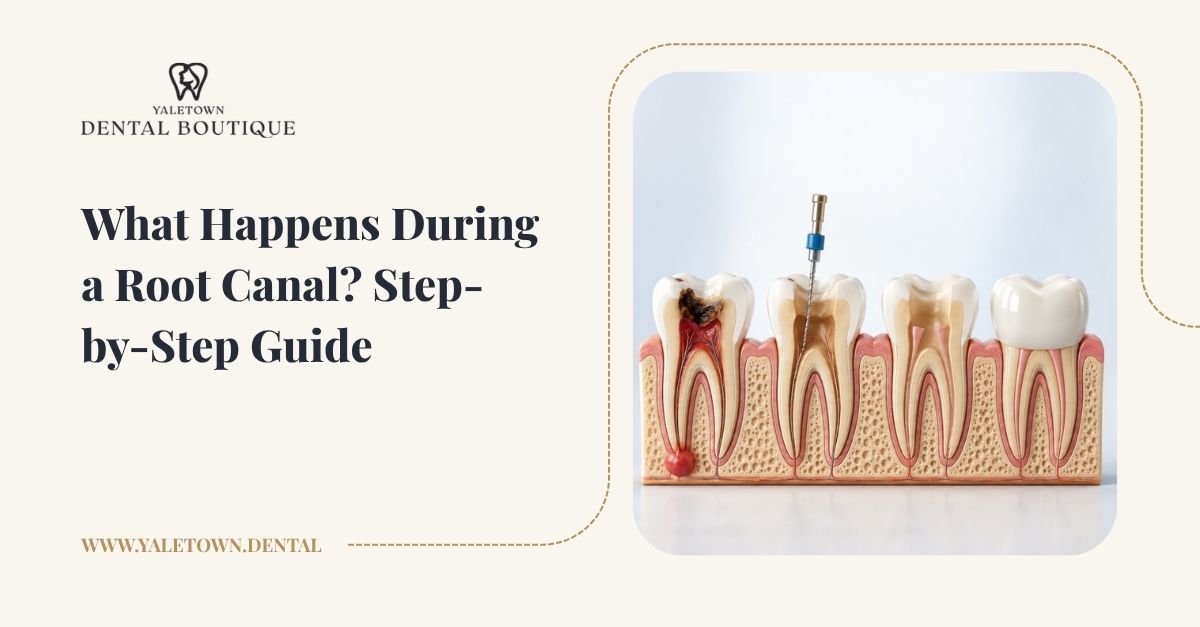
Root canal treatment removes inflamed or infected pulp from inside a tooth, cleans and disinfects the root canal system, and seals the prepared canals before the tooth is restored. Treatment may take one or more appointments depending on the tooth and canal anatomy. Local anesthesia is used during the procedure, and mild tenderness can occur afterward. Whether root canal treatment or extraction is appropriate depends on the tooth’s condition, remaining structure, and individual treatment needs.
 Hearing that you need a root canal can bring up an immediate concern: what is actually going to happen once you sit in the dental chair? Much of the anxiety surrounding treatment comes from not knowing what to expect, along with outdated ideas about how uncomfortable or complicated the procedure may be.
Modern root canal treatment involves diagnosis, local anesthesia, cleaning and shaping of the root canal system, and sealing of the prepared canals.
Understanding what happens during a root canal step by step can make the instruments, sounds, sensations, and different stages of treatment feel much less unfamiliar.
From numbing and isolating the tooth to cleaning the narrow canals and sealing them with gutta-percha, each stage serves a specific purpose. Knowing what may happen during treatment, how long different stages can take, and what recovery may feel like can help you approach the procedure with clearer expectations.
Why the Pulp Gets Infected: A Quick Biology Primer
To understand why root canal treatment may become necessary, it helps to look at the layers inside a tooth. The outer enamel forms the tooth’s hard protective surface. Beneath it is dentin, a more porous layer containing microscopic tubules that communicate with the inner tooth.
At the centre is the dental pulp, soft connective tissue containing nerves, blood vessels, and other cells involved in maintaining and defending the tooth.
With tooth decay, the process typically progresses from enamel → dentin → pulp. As decay advances into dentin, bacteria and their by-products can move through the dentinal tubules and trigger inflammation in the pulp, even before bacteria directly enter the pulp chamber.
If pulp inflammation progresses to loss of pulp vitality, the pulp may become necrotic. Bacteria can then colonize the root canal system and potentially affect the tissues surrounding the root.
Decay is not the only pathway. Cracks, trauma, and problems involving existing restorations can also injure or expose the pulp:
Common Causes of Dental Pulp Infection and How They Progress | ||
|---|---|---|
| Cause | Biological Pathway | Speed of Progression |
| Deep Tooth Decay | Decay progresses through enamel into dentin, allowing bacterial products and eventually bacteria to affect the pulp. | Usually gradual, depending on the depth and progression of decay. |
| Crack or Fracture | A crack can create a pathway through the protective tooth structure, allowing bacteria and irritants to reach deeper tissues. | Can be gradual or more rapid depending on the location and extent of the crack. |
| Dental Trauma | An impact can damage the pulp or disrupt its blood supply, even when the tooth appears intact externally. | Effects may appear soon after an injury or develop later. |
| Repeated Treatment or a Failing Restoration | Repeated dental procedures or leakage around an existing restoration may irritate the pulp or provide a pathway for bacterial contamination. | Often develops over time and may initially cause few noticeable symptoms. |
Pulp damage does not always produce immediate pain. Dental examinations, pulp testing, and appropriate imaging can help identify problems that may otherwise go unnoticed. Regular dental checkups also provide an opportunity to identify decay, damaged restorations, and other concerns before they progress.
Signs You May Need Root Canal Evaluation
Pulp inflammation or infection does not always cause the same symptoms, and some affected teeth may cause little or no noticeable discomfort. A dental examination, pulp testing, and appropriate imaging are needed to determine what is happening inside the tooth.
Possible signs of pulp or root canal problems include:
- Persistent or spontaneous tooth pain, especially pain that occurs without an obvious trigger
- Lingering sensitivity to hot or cold after the temperature stimulus has been removed
- Pain when biting or chewing that may indicate inflammation around the tooth
- Swelling or a pimple-like bump on the gum near the affected tooth
- Tooth discoloration, particularly after previous trauma to the tooth
These symptoms can have several possible causes and do not automatically mean you need root canal treatment. If you are experiencing these symptoms, our root canal therapy at Yaletown Dental Boutique page explains treatment considerations and what to do next.
The Root Canal Procedure: Step-By-Step
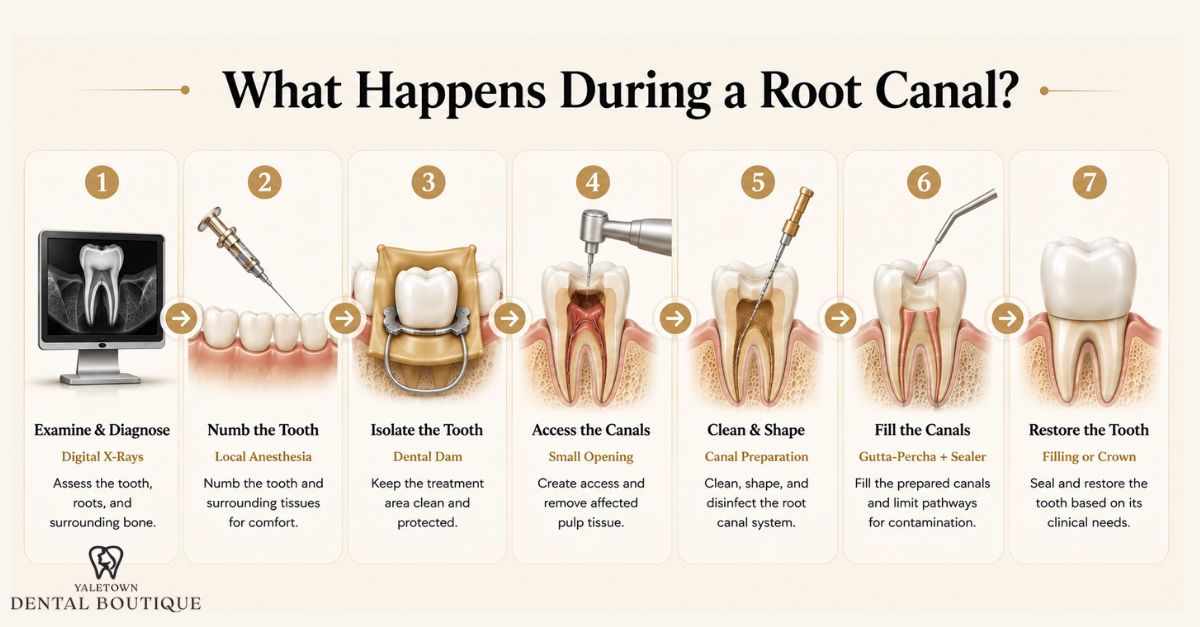
What happens during a root canal can vary depending on the tooth, number and shape of its canals, previous dental work, and the condition of the pulp and surrounding tissues. In general, the procedure moves through a series of stages designed to diagnose the problem, access and clean the root canal system, fill the prepared canals, and restore the tooth.
Here is a closer look at the root canal procedure step by step:
1. Digital X-Rays and Diagnostic Imaging
Before treatment begins, your dentist examines the tooth and reviews dental X-rays to assess the roots, surrounding bone, and signs of infection or other changes. Additional tests may be used to evaluate how the pulp responds to temperature or other stimuli and whether the tooth is tender to pressure.
In selected cases, CBCT imaging may provide a three-dimensional view of the tooth and surrounding structures. It can be useful when conventional imaging does not provide enough information about complex root anatomy, suspected fractures, previous treatment, or other clinical concerns. CBCT is not routinely required for every root canal.
From the patient’s perspective, this stage is similar to a detailed dental examination. You may be asked where and when you experience symptoms, and the tooth may be gently tested before treatment begins.
2. Local Anesthesia and Numbing the Tooth
Local anesthetic is used to numb the tooth and surrounding tissues before the dentist accesses the root canal system. The goal is to make treatment as comfortable as possible, although anesthetic response can vary between patients and clinical situations.
Teeth with significant inflammation can sometimes be more difficult to anesthetize fully. Additional anesthetic techniques may be used when needed based on the tooth and the patient’s response.
You may briefly feel pressure or a small pinch during the injection. Once the anesthetic has taken effect, you may still notice vibration, movement, or pressure during treatment. If you experience sharp or unexpected discomfort, let your dentist know so additional anesthesia or other comfort measures can be considered.
3. Dental Dam Isolation
Once the tooth is numb, a dental dam is placed to isolate it from the rest of the mouth. Dental dam isolation is considered an essential part of nonsurgical root canal treatment because it helps reduce contamination of the root canal system by saliva and oral bacteria.
The dam also helps protect the patient by reducing the risk of swallowing or aspirating instruments and materials and by helping prevent irrigating solutions from contacting the oral tissues. The tooth remains accessible through an opening in the sheet while the surrounding tissues are covered.
You may notice the sheet and supporting frame around the treatment area, but you can continue breathing normally through your nose.
4. Creating the Access Opening
The dentist creates a small opening through the biting surface or back of the tooth to reach the pulp chamber and locate the entrances to the root canals. The exact position and shape of this access cavity depend on the type of tooth and its internal anatomy.
Inflamed, infected, or necrotic pulp tissue can then be removed from inside the tooth. The access is designed to allow the canal system to be located and treated while preserving appropriate tooth structure.
Because the tooth has been anesthetized, you may mainly notice the sound and vibration of the dental handpiece during this stage.
5. Cleaning, Shaping, and Disinfecting the Canals
After the canals are located, small endodontic files are used to clean and shape them. Depending on the case and technique, these may include hand files and motor-driven rotary or reciprocating instruments. The dentist also establishes the working length of the canals to guide instrumentation and filling.
Mechanical cleaning is combined with irrigation. Sodium hypochlorite is widely used in root canal treatment because it has antimicrobial activity and can dissolve organic tissue that instruments may not reach. Other irrigating solutions may also be used as part of the cleaning protocol.
You may hear the dental equipment and feel pressure or vibration during this stage, but the tooth should remain numb during treatment.
6. Filling the Canals with Gutta-Percha
Once the canals have been cleaned, shaped, disinfected, and dried, they are filled through a process called obturation. Gutta-percha, a biocompatible rubber-like material, is commonly used as the core filling material.
Gutta-percha does not seal the canal by itself. It is typically placed together with a root canal sealer, which helps fill small spaces between the gutta-percha and the canal walls. Together, these materials fill the prepared canal space and help seal it as part of the overall effort to reduce pathways for microbial contamination.
This stage usually produces little sensation beyond pressure or movement because the work takes place inside the anesthetized tooth.
7. Temporary or Permanent Restoration
After the canals have been filled, the access opening must be sealed and the remaining tooth structure restored. Depending on the treatment plan, the dentist may place a temporary restoration first or proceed with a definitive restoration.
The type of final restoration depends on factors such as how much tooth structure remains, where the tooth is located, the forces it experiences during chewing, and the extent of previous damage. Some teeth benefit from a dental crown, while others may be restored differently based on the clinical situation.
Until the planned permanent restoration is completed, your dentist may recommend avoiding excessive chewing pressure on the treated tooth.
How long does a root canal take?
A root canal appointment may take roughly 60 to 90 minutes in many routine cases, although treatment time can be shorter or longer depending on the tooth, canal anatomy, diagnosis, and treatment complexity. Some root canals can be completed in one appointment, while others require two or more visits.
Front teeth generally have fewer canals and may take less time to treat than molars. Molars commonly have multiple roots and canals, making cleaning, shaping, and filling the entire canal system more time-consuming.
Root Canal Treatment Time by Tooth Type | ||
|---|---|---|
| Tooth Type | Typical Treatment Complexity | Number of Visits |
| Incisors & Canines | Often Simpler Canal Anatomy | Varies Depending on Case Complexity and Treatment Needs |
| Premolars | May Have One or More Canals | Varies Depending on Case Complexity and Treatment Needs |
| Molars | Multiple Canals and More Complex Anatomy | Varies Depending on Case Complexity and Treatment Needs |
Why might a root canal take longer?
Several factors can increase the amount of time needed for treatment, including:
- Curved or unusually shaped canals that require additional care during cleaning and shaping
- Calcified or narrow canals that can be more difficult to locate and instrument
- Multiple canals, particularly in molars
- Previous root canal treatment when a tooth requires retreatment
- Complex infection or drainage needs that may influence how treatment is staged
- Additional restorative work needed to protect the tooth after the canals have been treated
A second appointment does not necessarily mean something has gone wrong. Depending on the condition of the tooth and the treatment approach, your dentist may choose to complete different stages over separate visits and place a temporary restoration between appointments.
Root Canal vs. Extraction: How to Think about the Decision
When a tooth has significant pulpal damage or infection, the decision is not always simply “root canal or extraction.” An important consideration is whether the tooth is predictably restorable, but the decision also depends on periodontal support, fracture status, overall prognosis, restorative requirements, and the patient’s treatment goals.
Root canal treatment may be considered when the tooth is considered restorable and retaining it is appropriate for your bite and overall oral health. Extraction may be considered when the tooth is too extensively damaged to restore or when other structural or periodontal problems significantly affect its prognosis.
Root Canal vs. Extraction: Which Option Is Right for Your Tooth? | ||
|---|---|---|
| Consideration | Root Canal Treatment May Be Considered When | Extraction May Be Considered When |
| Remaining Tooth Structure | Enough sound tooth remains to support a restoration | Extensive damage leaves insufficient restorable tooth structure |
| Cracks or Fractures | The damage does not make the tooth non-restorable | A fracture extends into an area that prevents predictable restoration |
| Bone & Gum Support | The tooth has adequate periodontal support | Severe periodontal or bone loss compromises support |
| Role of the Tooth | Preserving the tooth supports function and the overall treatment plan | Removing the tooth may better fit the overall clinical situation |
What About the Long-Term Cost?
The financial comparison depends on what happens after each treatment. A root canal may also require a filling, core buildup, or crown. Extraction removes the affected tooth, but replacing the resulting space may involve a dental implant, bridge, or removable prosthesis, each with its own procedures, timeline, and costs.
For that reason, comparing only the initial price of a root canal with the price of an extraction can be misleading. The more useful comparison considers the complete treatment plan, including the restoration needed after root canal therapy or any tooth-replacement treatment planned after extraction.
Neither option is appropriate in every situation. Your dentist needs to assess the tooth clinically and review appropriate imaging before determining whether it can reasonably be restored and discussing the available treatment options with you.
Root Canal Recovery: What to Expect
Recovery after a root canal varies from person to person. Mild tenderness or sensitivity around the treated tooth can occur after treatment, particularly if the tooth or surrounding tissues were inflamed beforehand. The intensity and duration of symptoms vary between patients and cases, but discomfort should generally become less noticeable over time.
Managing Discomfort After Treatment
Your dentist will provide aftercare instructions based on your treatment and health history. Over-the-counter pain medication may be appropriate for some patients, while medication recommendations can vary based on individual health factors. Follow the instructions provided by your dentist or other healthcare professional.
Antibiotics are not routinely required after every root canal. They may be prescribed in certain clinical situations, including some infections with systemic involvement or concern about spread. If antibiotics are prescribed, take them according to the instructions provided by your healthcare professional.
Eating After a Root Canal
Wait until the numbness has worn off before chewing to reduce the chance of accidentally biting your cheek, lip, or tongue. Softer foods may feel more comfortable initially.
If the tooth has a temporary filling or is awaiting its final restoration, avoid hard foods and heavy chewing on the treated tooth until your dentist advises otherwise.
Oral Hygiene During Recovery
Continue brushing and flossing unless your dentist provides different instructions for the treated area. Keeping the tooth and surrounding gums clean remains important, but be gentle around areas that feel tender.
When should you contact your dentist?
Contact your dentist if you experience severe or increasing pain or pressure, visible or increasing swelling, fever or other signs of systemic illness, an uneven bite, a temporary filling or crown that comes out, or symptoms that return after treatment.
For dental symptoms requiring prompt assessment, Yaletown Dental Boutique also provides emergency dental care.
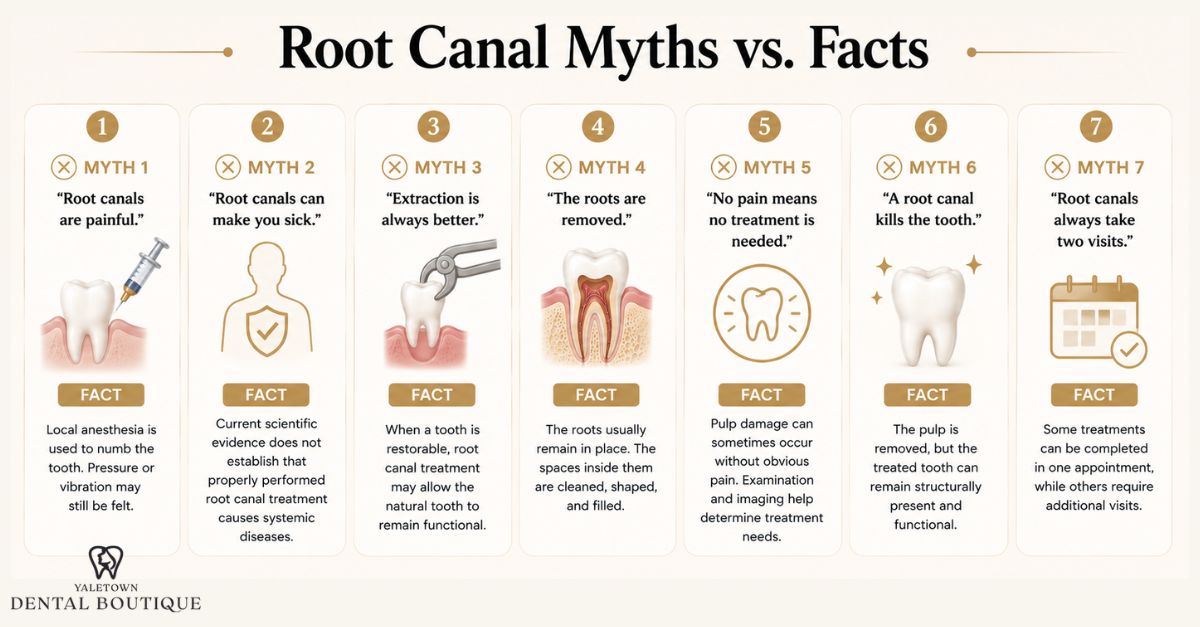
7 Root Canal Myths — Debunked
Root canal treatment is surrounded by misconceptions, many of which come from outdated information or confusion about what the procedure actually involves. Here are seven common root canal myths and the clinical facts behind them.
Myth 1: “Root canals are painful.”
Modern root canal treatment is performed using local anesthesia to numb the tooth and surrounding tissues. Some patients may notice pressure or vibration during treatment, and tenderness can occur afterward. The discomfort associated with an inflamed or infected pulp often originates from the underlying dental condition rather than from the root canal procedure itself.
Myth 2: “Root canals can make you sick.”
There is no established scientific evidence that properly performed root canal treatment causes diseases such as cancer or other systemic illnesses. Claims linking root canals to systemic disease largely stem from outdated theories that are not supported by contemporary endodontic evidence.
Myth 3: “It’s always better to have the tooth pulled.”
Extraction and root canal treatment serve different clinical situations. When a tooth is restorable, root canal treatment may allow it to remain in function. When a tooth cannot reasonably be restored because of factors such as extensive structural damage, fracture, or inadequate periodontal support, extraction may instead be considered.
Myth 4: “A root canal removes the roots of the tooth.”
Root canal treatment does not normally remove the tooth’s roots. The dentist accesses the spaces inside the roots, removes damaged or infected pulp tissue, cleans and shapes the canal system, and fills the prepared canals while the roots remain within the jaw.
Myth 5: “If the tooth doesn’t hurt, I don’t need treatment.”
Pain is not always present when the pulp has been damaged or has lost vitality. Some teeth requiring endodontic assessment may produce few noticeable symptoms. Dentists use the clinical examination, pulp testing, dental history, and imaging to determine the condition of the pulp and tissues around the root.
Myth 6: “A root canal kills the tooth.”
Root canal treatment removes the pulp tissue from inside the tooth, so the treated tooth no longer has a vital pulp. However, the tooth remains in the mouth and can continue to function because it is supported by the periodontal ligament, surrounding bone, and other tissues. An appropriate restoration may be needed to protect the remaining tooth structure.
Myth 7: “Root canals always need two appointments.”
Not every root canal requires multiple appointments. Some cases can be completed in a single visit, while others may require additional appointments depending on canal anatomy, infection, previous treatment, restorative needs, and other clinical factors. Your dentist determines the treatment approach based on the individual tooth.
Conclusion
Knowing what happens during a root canal can make the treatment feel more familiar and easier to prepare for. From diagnosis and local anesthesia to cleaning, filling, restoration, and recovery, each stage has a specific role in treating the affected tooth.
The exact procedure, number of appointments, recovery experience, and final restoration can vary depending on the tooth and your individual clinical needs. A dental examination and appropriate imaging are needed to determine whether root canal treatment is suitable or whether another treatment option should be considered.
If you are considering treatment or have symptoms that may require further assessment, our root canal therapy at Yaletown Dental Boutique page explains the treatment options, preparation, and next steps.
Is a root canal painful?
Local anesthesia is used to numb the tooth and surrounding area during root canal treatment. You may notice pressure or vibration during the procedure, and some tenderness afterward is possible, but experiences vary between patients and teeth.
How long does a root canal procedure take?
A root canal often takes about 60 to 90 minutes per appointment, although the duration varies with the tooth and complexity of its canal system. Some cases can be completed in one visit, while others require additional appointments.
Do I always need a crown after a root canal?
Not every root-canal-treated tooth requires a crown. The appropriate restoration depends on the tooth's location, remaining structure, previous damage, and biting forces. Your dentist will determine whether a filling, crown, or another restoration is appropriate.
How long does a root-canal-treated tooth last?
A properly treated and restored tooth can remain functional for many years, but there is no fixed lifespan. Longevity depends on factors such as the condition of the tooth, quality of the final restoration, oral hygiene, biting forces, and ongoing dental care.
Can a tooth that had a root canal get infected again?
Yes. A previously treated tooth can develop a new or persistent infection if bacteria enter or remain within the root canal system. Depending on the cause and condition of the tooth, further endodontic treatment or another treatment approach may be considered.