At a Glance:
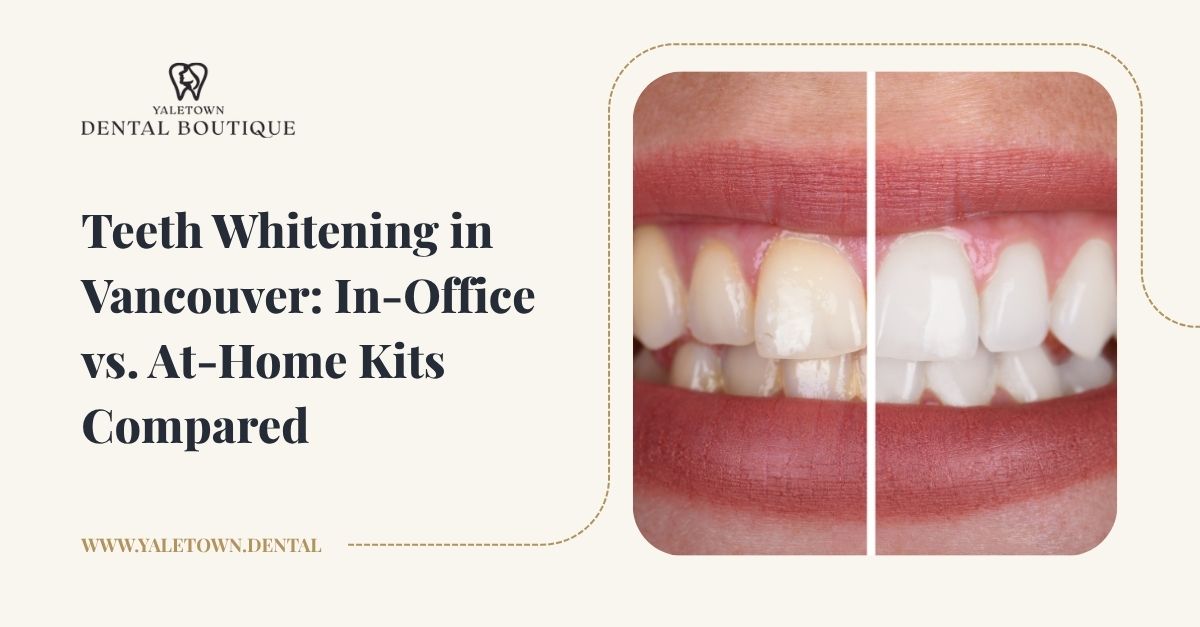
Teeth whitening options in Vancouver include fast, professional in-office treatments and slower at-home kits. In-office whitening delivers stronger results with expert care, while at-home kits are more affordable but require consistency. Your choice depends on budget, staining type, sensitivity, and timeline. A dental consultation helps ensure safe, effective results tailored to your smile.
In Vancouver—especially in style-forward neighbourhoods like Yaletown—your smile plays a big role in how you’re perceived. Whether you’re prepping for a job interview, social event, or just want to feel more confident day to day, whiter teeth can make a noticeable difference.
Teeth whitening is one of the most requested cosmetic treatments, but there’s no one-size-fits-all solution. From over-the-counter strips to professional in-clinic techniques, each method offers its own pros, costs, and timelines.
So how do you choose what’s right for you?
It starts with understanding the differences—and knowing what your smile actually needs.
What Causes Tooth Discolouration
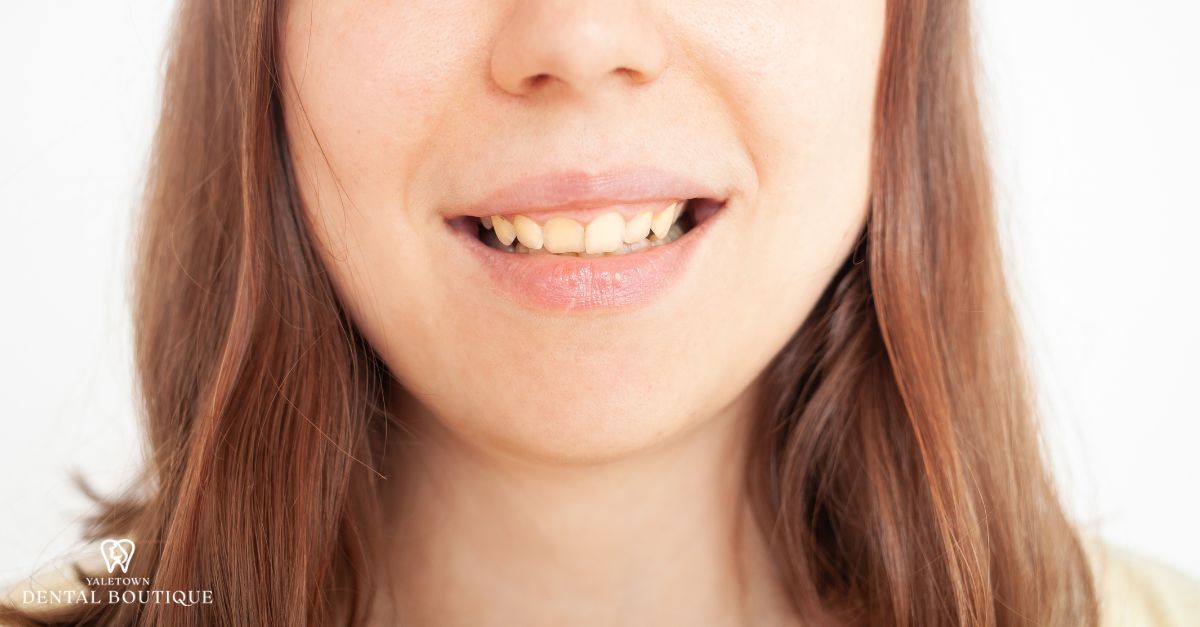
Tooth discolouration is more common than you might think. Some stains develop gradually with age and habits, while others stem from health conditions or medications. Understanding the source of your tooth stains can help you decide whether whitening will work—or if a different treatment is needed.
Below are the most common causes of discolouration dentists see in patients across Vancouver:
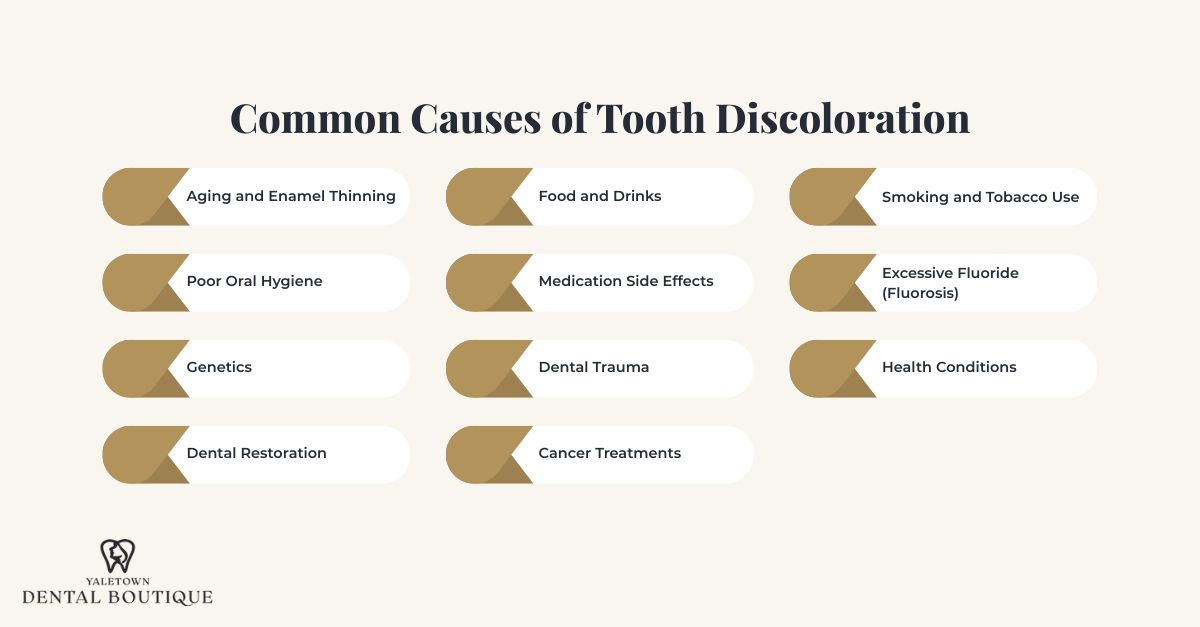
1. Aging and Enamel Thinning
As enamel wears down over time, it exposes more of the yellowish dentin underneath. Even with excellent oral hygiene, older adults often notice darker teeth as a natural part of aging.
2. Food and Drinks
Coffee, tea, red wine, berries, and soy sauce are just a few stain-heavy items that cling to tooth enamel. If not brushed away promptly, their pigments can lead to long-term staining.
3. Smoking and Tobacco Use
Tobacco stains are often deep and resistant to brushing. Both tar and nicotine penetrate enamel and leave behind yellow or brown discolouration that usually requires professional treatment to remove.
4. Poor Oral Hygiene
Plaque and tartar can trap stain-causing substances on your teeth. Without regular brushing and flossing, these deposits build up and dull your smile.
5. Medication Side Effects
Certain antibiotics (like tetracycline or doxycycline) can cause internal discolouration if taken during childhood. Some blood pressure medications, antihistamines, and cancer treatments may also impact tooth colour.
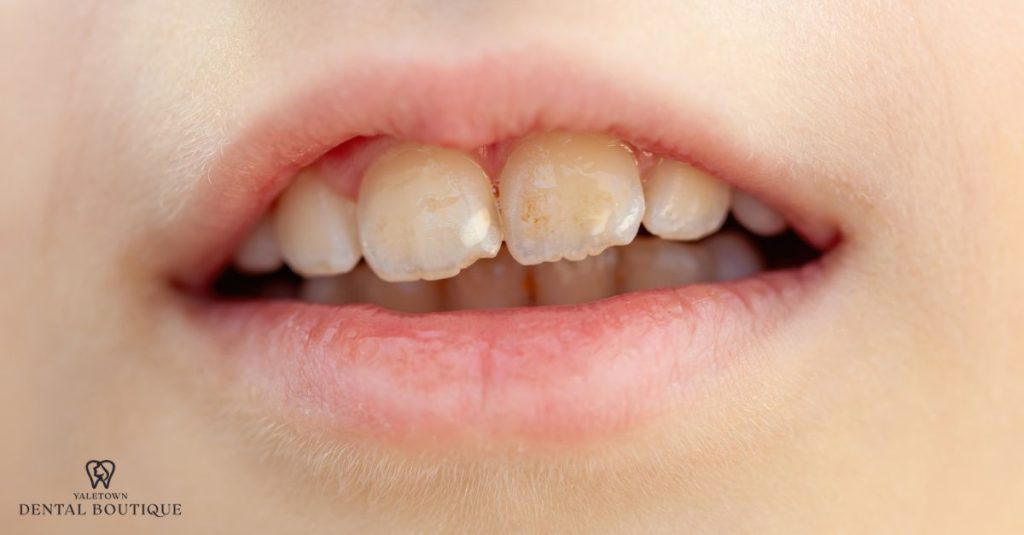
6. Excessive Fluoride (Fluorosis)
Fluoride helps protect teeth, but too much exposure during early development can cause white or brown enamel spots—a condition known as dental fluorosis.
7. Genetics
Some people naturally have thicker or whiter enamel, while others are more prone to yellow, translucent, or grey-toned teeth despite good oral care.
8. Dental Trauma
Injuries to a tooth’s internal structure can cause it to darken over time. A knocked or damaged tooth may turn grey or brown, even if there’s no visible crack.
If you’ve experienced this kind of discolouration, you might wonder, can you whiten a dead tooth? Our cosmetic team offers safe internal whitening solutions to restore a natural, even tone.
9. Health Conditions
Liver disease, metabolic disorders, and conditions like celiac disease can interfere with normal enamel development. These issues may lead to intrinsic stains that don’t respond well to surface whitening.
10. Dental Restorations
Old silver amalgam fillings or root canal-treated teeth can change colour over time, especially when the materials oxidize or the inner tooth darkens.
11. Cancer Treatments
Radiation to the head or neck, as well as some chemotherapy drugs, can alter how teeth form or affect their colour—particularly in children or teens undergoing treatment.
Why Consider Teeth Whitening?
In Vancouver—especially in neighbourhoods like Yaletown—a bright smile can shape first impressions before you even speak. Whether you’re meeting clients, attending a wedding, or simply want to feel refreshed, whiter teeth can boost confidence and presence.
Over time, common habits like coffee, tea, or red wine can leave surface stains. Natural aging also plays a role, making teeth appear dull or yellow even with good oral care.
Teeth whitening offers a simple way to reverse those changes. It’s not just about looking better—it’s about feeling more like yourself.
While over-the-counter strips or LED kits might work for mild cases, they often lead to uneven results or gum sensitivity. These products use lower concentrations of bleaching agents and lack professional monitoring.
In contrast, in-office whitening is safe, efficient, and customized. Treatments are guided by licensed dentists who understand how to protect enamel and manage sensitivity. With advanced tools, results can be faster and longer lasting.
At Yaletown Dental Boutique, every whitening treatment is tailored to your goals, dental history, and comfort level. If you’re also considering veneers, Invisalign®, or other cosmetic dentistry services, whitening can be the perfect first step in your smile transformation.
What is in-office teeth whitening?
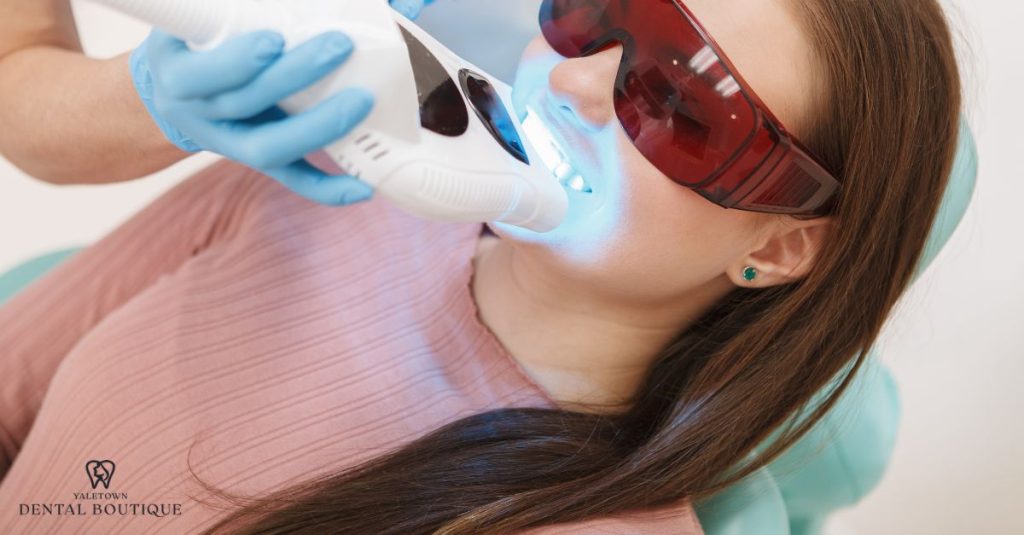
In-office whitening is a professional treatment done by your dentist using high-concentration bleaching agents. Unlike store-bought options, this method provides visible results in a single visit—with expert protection for your gums and enamel.
It’s a popular choice for patients in Vancouver who want fast, safe, and effective whitening under clinical supervision.
Here’s how the in-office process works:
Step 1: Consultation and Exam
Your appointment starts with a dental exam. The dentist checks that your teeth and gums are healthy and that whitening is the right option for you. Pre-treatment photos may be taken to document results.
Step 2: Cleaning and Prep
A hygienist may perform a quick cleaning to remove surface debris and plaque. Then, a cheek retractor is placed to keep your lips and cheeks away from the teeth, ensuring clear access.
Step 3: Gum Protection
A protective gel or barrier is applied to your gums and surrounding tissues. This prevents irritation from the whitening solution.
Step 4: Whitening Gel Application
A peroxide-based bleaching gel is carefully brushed onto the surface of your teeth. It stays on for 15–30 minutes, depending on the product used and your desired level of whitening.
Step 5: Optional Light Activation
Some treatments—such as Zoom—use an LED or laser light to accelerate the whitening process. They may be used to enhance results while reducing sensitivity.
Step 6: Rinse and Repeat
After the first round, the gel is removed and may be reapplied for another session. Most patients see their teeth brighten by several shades in just one visit.
Step 7: Aftercare and Maintenance
You’ll receive instructions on what to avoid for the next 24 to 48 hours—especially dark foods or drinks. Some patients receive take-home touch-up kits or whitening pens to maintain results longer.
How long does in-office whitening take?
The exact time depends on the system used and how many whitening cycles your dentist recommends.
In many cases, you’ll walk out with noticeably brighter teeth after just one visit. That’s why it’s a popular choice for patients preparing for special events like weddings or professional photoshoots.
Is in-office whitening safe?
Yes—when performed by a licensed dentist, in-office whitening is both safe and effective.
Dentists use protective measures to shield your gums, lips, and soft tissue from irritation. They also customize the treatment based on your dental history and sensitivity levels.
Some patients experience mild sensitivity for a day or two afterward, but it usually resolves quickly. If needed, your dentist can recommend products or tips to reduce discomfort.
Whitening treatments like those offered at Yaletown Dental Boutique are designed to be gentle on enamel while still delivering dramatic results.
Who is a good candidate for in-office whitening?
Professional whitening isn’t for everyone—but it’s an excellent choice for many patients who want visible, fast results.
You may be a good candidate if you:
✔ Have healthy teeth and gums with no active decay or untreated gum disease
✔ Want quick whitening results for a special occasion
✔ Have surface stains from coffee, tea, red wine, or tobacco
✔ Prefer dentist-supervised treatment with stronger, safer products
✔ Understand that crowns, veneers, and fillings won’t change colour with whitening
If your tooth discolouration is due to internal factors—like past trauma, medications, or genetic enamel differences—your results may be more limited. In these cases, your dentist might recommend alternative cosmetic options like veneers or cosmetic bonding to achieve your desired look.
A consultation at Yaletown Dental Boutique helps determine whether in-office whitening is right for you—or if another solution may be better for your smile.
What are at-home whitening kits?
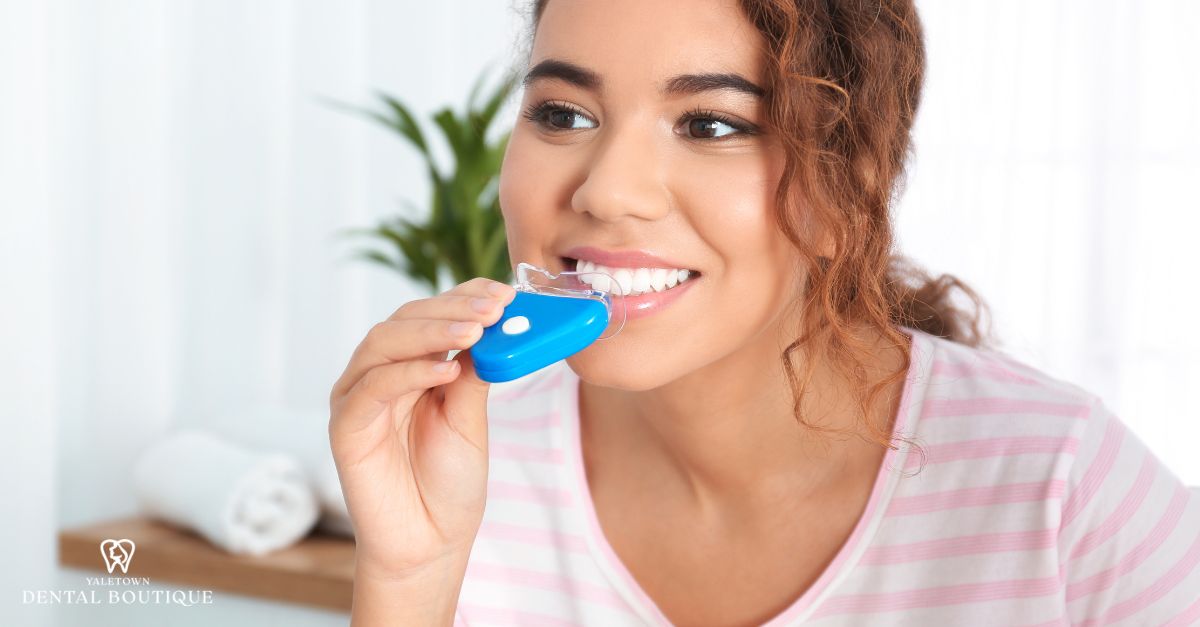
At-home whitening kits are a convenient way to brighten your teeth on your own schedule. They’re widely available in pharmacies, grocery stores, and online—and some dentists also offer custom take-home options with stronger ingredients.
These kits are generally more affordable than in-office treatments, but they require consistent use and may take longer to show results.
Types of At-Home Whitening Kits
Different kits offer different methods and levels of whitening. Here’s what you’ll typically find:
Whitening Strips
Flexible plastic strips coated in peroxide-based gel. These are placed directly on your teeth and usually worn for 30 minutes, twice a day, over 2 weeks.
Whitening Trays
Pre-filled trays or boil-and-bite versions are common. Dentist-made trays offer a better fit and may use stronger gel. Worn daily for a set time.
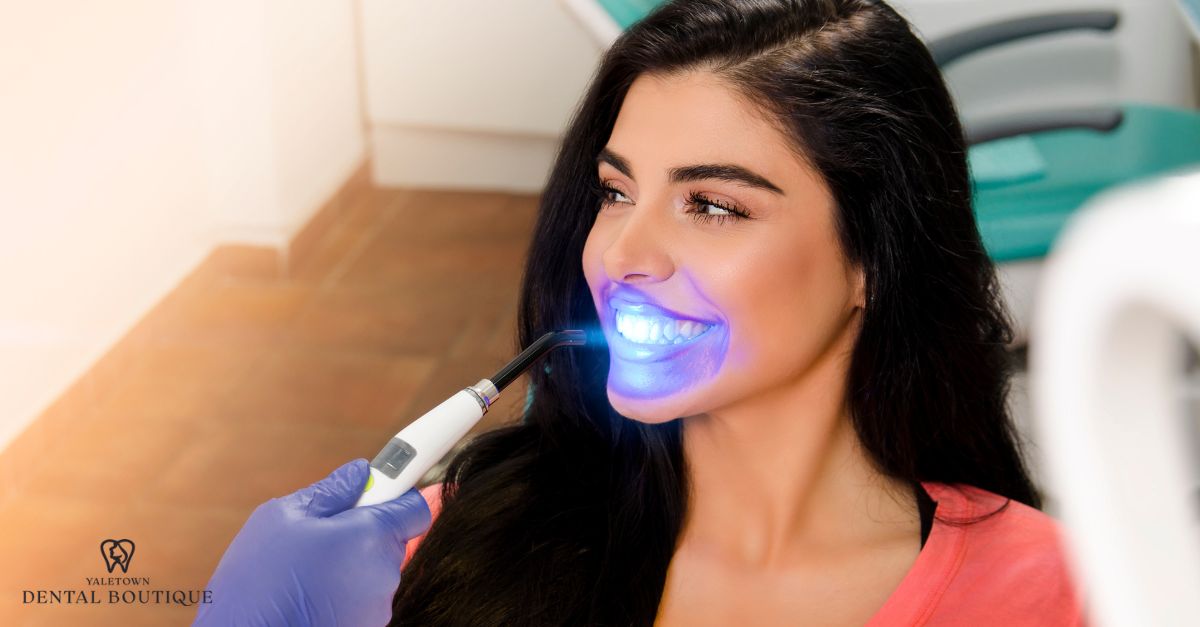
LED Whitening Kits
These include a light device combined with gel to “activate” the whitening process. The light may speed up results slightly, but the gel’s strength is what matters most.
Whitening Pens or Brush-On Gels
Compact and portable, these let you apply gel to individual teeth. Best used for quick touch-ups, but results are typically mild.
Toothpaste and Rinses
Whitening toothpaste, mouthwash, or even gum may help remove surface stains but won’t change the natural colour of your teeth. These are best used as maintenance products.
How At-Home Whitening Kits Work
Most over-the-counter kits use a lower concentration of hydrogen peroxide or carbamide peroxide than what dentists use in-office. This makes them safer for unsupervised use—but it also means the results tend to be slower and less dramatic.
The way you apply the product depends on the type. Strips, trays, pens, or LED devices each come with specific instructions. It’s important to follow these closely—overusing even low-strength products can lead to sensitivity or enamel damage.
For best results, start whitening after a professional dental cleaning to remove surface plaque. Clean teeth allow the whitening agent to work more evenly and effectively.
If you’re unsure which product to try, ask your dentist. Some clinics, like Yaletown Dental Boutique, offer professional-grade take-home kits that balance safety, comfort, and performance.
Who is a good candidate for at-home teeth whitening?
At-home kits work best for people with mild to moderate surface stains who want a gradual, low-cost option.
You’re likely a good fit if you:
✔ Have healthy teeth and gums
✔ Don’t have untreated cavities or gum inflammation
✔ Want to maintain results after professional whitening
✔ Are okay with slower, more subtle improvements
✔ Can follow instructions carefully and avoid overuse
If you’ve had dental work like crowns or veneers, keep in mind that whitening won’t change their colour. And if you have deep, internal stains or sensitivity issues, an in-office treatment may be a better place to start.
Risk of Misuse or Overuse
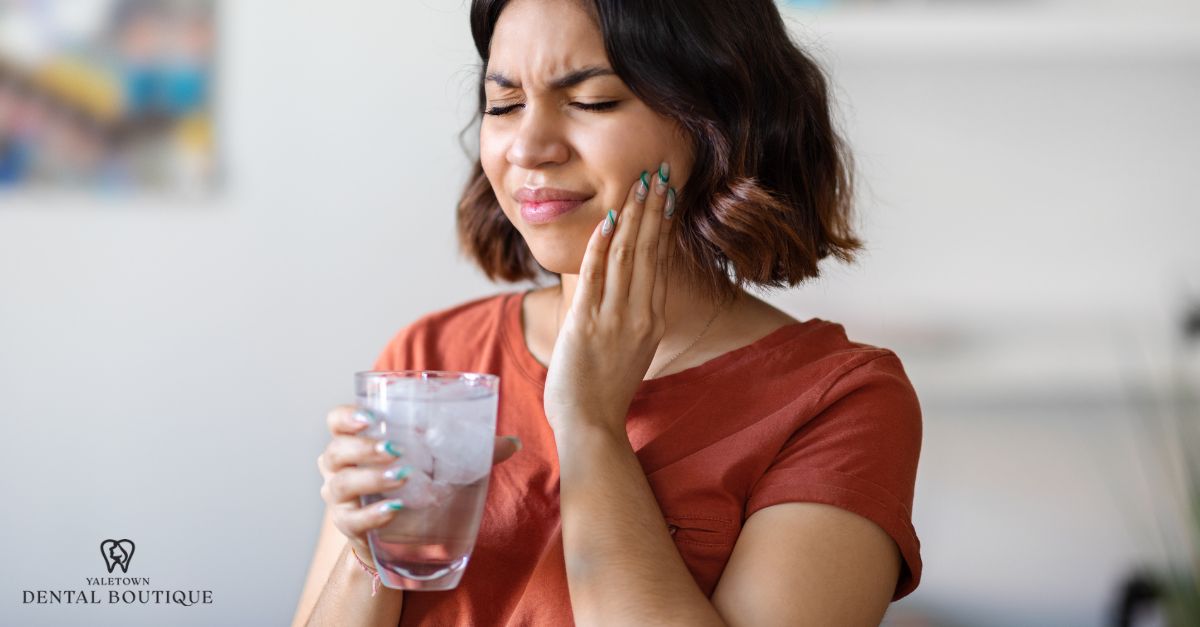
At-home whitening kits are generally safe—but only when used as directed. Misusing these products, or applying them too often, can harm your teeth and gums.
Here’s what can happen with overuse:
⚠️ Tooth sensitivity: Bleaching agents can wear down enamel or irritate nerves inside the tooth.
⚠️ Gum irritation: Whitening gel can spill over and burn soft tissues if trays don’t fit well.
⚠️ Uneven results: Inconsistent application can lead to patchy or blotchy whitening.
⚠️ Enamel damage: Excessive whitening may weaken enamel over time, increasing your risk of cavities or long-term sensitivity.
To avoid these issues, always follow product instructions closely—and take breaks between treatments if recommended. If you experience discomfort or aren’t seeing results, consult your dentist.
For safer outcomes, start with a dental cleaning, then speak with your provider about the best whitening method for your smile goals and oral health.
In-Office vs. At-Home Teeth Whitening: Pros & Cons
Still deciding which whitening option is right for you? Here’s a side-by-side look at the key differences between professional and at-home treatments to help you make an informed choice.
Comparing In-Office and At-Home Teeth Whitening | |||
|---|---|---|---|
| Category | In-Office Whitening | At-Home Whitening Kits | |
| Results |
| Gradual Improvements Over One to Two Weeks or More | |
| Speed | Fast-Acting with Immediate Whitening Effects | Slower Whitening That Builds Over Time | |
| Safety | Supervised by a Licensed Dentist | Higher Risk of Misuse or Irritation if Directions Aren’t Followed | |
| Customization | Tailored to Your Teeth, Enamel Type, and Whitening Goals | One-Size-Fits-All; Less Precise Application | |
| Sensitivity Control | Gums Are Protected and Sensitivity Is Monitored | Greater Risk of Discomfort if Overused | |
| Cost | Higher Initial Cost | More Budget-Friendly | |
| Longevity | Typically Longer-Lasting Results with Proper Aftercare | Shorter Duration; May Require Repeat Applications | |
| Best For | Quick, Reliable Whitening Before Events or for Deep Stains | Mild Staining, Touch-Ups, or Gradual Whitening Preferences | |
| Availability | Only Available Through Licensed Dental Clinics | Widely Available in Stores, Online, or From Dentists | |
| Maintenance | May Include Take-Home Pens or Custom Trays from Your Dentist | Commonly Used to Maintain In-Office Whitening Results | |
Choosing the Right Whitening Option in Vancouver
When deciding between in-office and at-home teeth whitening, consider your goals, lifestyle, and oral health history. There’s no one-size-fits-all solution—but the right choice depends on a few key factors:
- Your Budget: Professional whitening is more of an investment upfront, while at-home kits offer a lower-cost, DIY option.
- Your Timeline: If you want quick results for an upcoming event, in-office treatment is the faster route.
- Staining Severity: Deeper stains respond better to dentist-grade solutions. Surface-level discolouration can often be handled at home.
- Sensitivity: If you’ve experienced gum or tooth sensitivity in the past, a dentist-monitored approach can help you whiten safely.
- Your Expectations: Are you looking for a dramatic change or a subtle refresh over time?
For many patients, the best results come from a combination of both methods. In-office whitening can create a strong foundation, while at-home kits are helpful for occasional touch-ups.
At Yaletown Dental Boutique, we take a personalized approach to every whitening plan. Using advanced tools, our team provides comfortable, effective care tailored to your smile. We also offer custom trays and take-home kits for long-term maintenance.
Whether you’re interested in whitening alone or as part of a broader cosmetic plan—including Invisalign®, veneers, or dental implants—we’ll help you find the safest and most effective solution for your goals.
Conclusion
A whiter smile can make a strong impact—on your confidence, your appearance, and how you feel walking into a room.
Some people want quick, dramatic whitening results for a special occasion. Others prefer a slower, more gradual improvement they can manage at home. Both paths can work—it just depends on your needs, timeline, and comfort.
At Yaletown Dental Boutique, we offer in-office whitening with the latest technology, as well as custom take-home kits to help you maintain results on your schedule. Every plan is tailored, so you get care that matches your goals—not a one-size-fits-all treatment.
If you’re ready to explore your options, book a consultation with our Vancouver team. We’ll guide you toward a brighter, healthier-looking smile—at your pace, on your terms.
Is in-office teeth whitening worth it?
Yes. Professional whitening provides faster, more reliable results compared to over-the-counter kits. You’ll see a noticeable difference after one visit, with long-lasting effects and dentist-monitored safety.
How is professional whitening different from at-home kits?
In-office treatments use stronger whitening agents and are applied under expert supervision. This leads to more even results, faster outcomes, and reduced risk of sensitivity or gum irritation.
How long do results from in-office whitening last?
Results can last up to 2-3 years depending on your habits, oral hygiene, and follow-up care. Avoiding dark foods and drinks and using dentist-recommended products can help extend your results.
Are whitening kits safe for your teeth?
Most kits are safe when used correctly. Problems usually happen when products are overused or applied improperly. If you’re unsure which one is right for you, speak with your dentist first.